
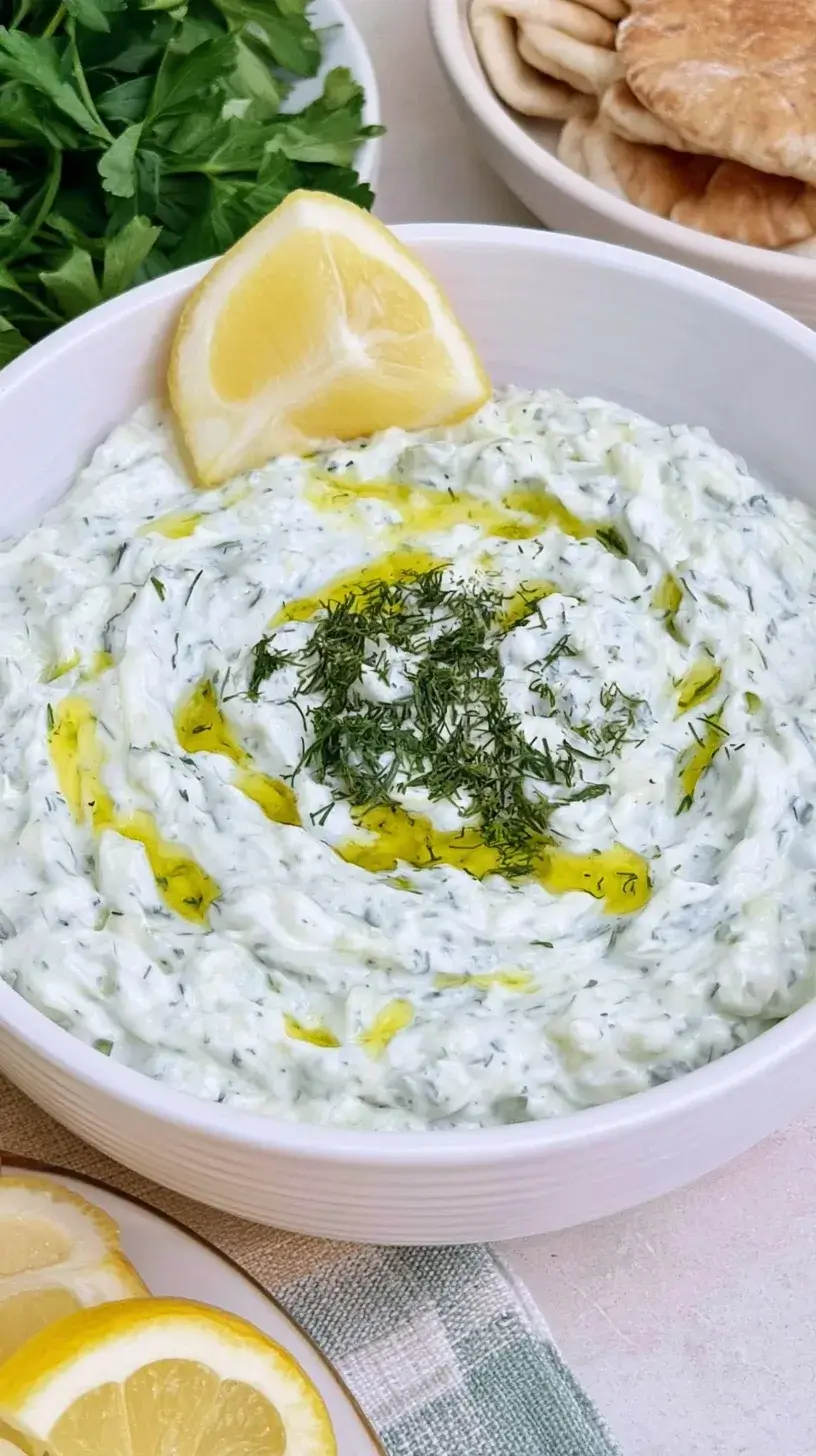
This easy tzatziki sauce recipe brings authentic Greek flavor to your kitchen in just 5 minutes. Made with creamy Greek yogurt, crisp cucumber, fresh garlic, and aromatic herbs, this tangy, refreshing sauce is perfect for gyros, grilled meats, or as a healthy dip. Once you try this homemade version, you’ll never go back to store-bought. It’s healthy, versatile, and incredibly easy to make!
Why This Homemade Tzatziki Sauce Beats Store-Bought
Fresh, Tangy, and Creamy Greek Yogurt Sauce
Homemade tzatziki sauce is in a completely different league from store-bought versions. The freshness of the ingredients shines through in every bite. Creamy Greek yogurt provides a rich, tangy base that’s both satisfying and healthy. Fresh cucumber (properly drained) adds a crisp, cooling crunch that balances the tanginess. Fresh garlic provides pungent warmth that mellows beautifully as the sauce sits. Fresh dill and mint add bright, herbaceous notes that dried herbs simply can’t match. The combination creates a sauce that’s simultaneously creamy, tangy, refreshing, and complex. Store-bought versions often contain preservatives, stabilizers, and lack the fresh, vibrant flavor of homemade. Once you taste the difference, you’ll always make it yourself.
Ready in Just 5 Minutes – No Cooking Required
One of the best things about tzatziki sauce is how incredibly quick and easy it is to make. There’s no cooking involved—just chop, mix, and you’re done. The active prep time is about 5 minutes (though you’ll want to let it chill for at least 30 minutes for flavors to meld). The most time-consuming part is draining the cucumber, which you can do while you prep other ingredients. This makes it perfect for last-minute dinners, quick appetizers, or meal prep. It’s also a great recipe for beginner cooks—there’s no way to mess it up, and the results are always delicious. The simplicity means you can make it regularly without it feeling like a chore, ensuring you always have fresh, homemade sauce on hand.
Perfect for Gyros, Grilled Chicken, and Lamb Chops
Tzatziki is the quintessential Greek sauce, and it’s traditionally paired with gyros, souvlaki, and other Greek meats. It’s absolutely perfect with grilled chicken—slather it on chicken gyros, chicken souvlaki, or simple grilled chicken breasts. It’s equally delicious with lamb chops, lamb souvlaki, or ground lamb patties. The cool, tangy sauce cuts through the richness of the meat and adds a refreshing contrast. But don’t limit yourself to Greek cuisine—tzatziki is amazing with grilled fish, beef kebabs, pork tenderloin, or even roasted vegetables. It works as a sandwich spread, burger topping, or wrap sauce. The versatility means you’ll find yourself making it regularly for all kinds of meals, not just Greek night.
Healthy, High-Protein, Low-Calorie Condiment
Unlike many sauces and condiments that are loaded with calories and unhealthy fats, tzatziki is actually good for you. Greek yogurt is high in protein (about 10 grams per 1/2 cup), which helps keep you full and satisfied. It’s also rich in probiotics, which support gut health. Cucumber provides hydration and vitamins with minimal calories. Garlic offers immune-boosting properties and antioxidants. Fresh herbs add vitamins and antioxidants. A typical 2-tablespoon serving of tzatziki contains only about 25-30 calories, making it one of the lowest-calorie condiments you can use. It’s naturally gluten-free, vegetarian, and can be made dairy-free with coconut yogurt. This means you can enjoy generous amounts without guilt, making it perfect for weight loss, healthy eating, or anyone watching their calorie intake.
Ingredients for Authentic Greek Tzatziki Sauce
Greek Yogurt: Fage, Chobani, or Oikos
The foundation of great tzatziki is good Greek yogurt. You want thick, creamy, full-fat Greek yogurt for the best texture and flavor. Fage Total 2% or 5% is the gold standard—it’s authentically Greek, incredibly thick, and has a perfect tangy flavor. Chobani Plain Greek Yogurt is another excellent choice, widely available and consistently good. Oikos Triple Zero is a good lower-calorie option, though it’s slightly less thick. Avoid regular yogurt or “Greek-style” yogurt, which aren’t as thick and will make your tzatziki watery. You’ll need about 2 cups (16 oz) of Greek yogurt for a standard recipe. Some traditional recipes use a combination of Greek yogurt and sour cream for extra richness, but pure Greek yogurt works beautifully. Make sure it’s plain, unflavored yogurt—vanilla or fruit-flavored will ruin the sauce!
English Cucumber, Garlic Cloves, and Lemon Juice
The cucumber is the star vegetable in tzatziki. English cucumbers (also called Persian or seedless cucumbers) are ideal because they have thinner skin, fewer seeds, and less water than regular cucumbers. You’ll need 1 large or 2 medium English cucumbers. The key is properly draining the cucumber—grate it, then squeeze out as much liquid as possible using a clean kitchen towel or cheesecloth. This prevents watery tzatziki. For garlic, you’ll need 3-4 large cloves, minced or grated. Fresh garlic is essential—garlic powder won’t provide the same punch. Lemon juice (2-3 tablespoons, fresh-squeezed) adds brightness and acidity that balances the richness of the yogurt. Some recipes also include a tablespoon of white wine vinegar or red wine vinegar for extra tang.
Fresh Dill, Fresh Mint, and Olive Oil
Fresh herbs are what make tzatziki taste authentic and vibrant. Fresh dill (2-3 tablespoons, finely chopped) is traditional and provides a bright, slightly anise-like flavor that’s essential to the sauce. Fresh mint (1-2 tablespoons, finely chopped) adds a cooling, refreshing note that complements the cucumber beautifully. Some recipes use only dill, while others use a combination of both. Dried herbs won’t provide the same fresh flavor, so if you can’t get fresh, it’s better to skip them entirely. Extra virgin olive oil (1-2 tablespoons) adds richness and helps carry the flavors. Use good-quality olive oil for best results. The olive oil also gives the sauce a beautiful sheen and silky mouthfeel.
Salt, Pepper, and Optional Vinegar
Seasoning is crucial for balanced flavor. You’ll need about 1 teaspoon of salt (adjust to taste), which helps draw out moisture from the cucumber and enhances all the flavors. Freshly ground black pepper (1/4 to 1/2 teaspoon) adds a subtle warmth and complexity. Some recipes include 1 tablespoon of white wine vinegar or red wine vinegar in addition to the lemon juice for extra tang. This is optional but adds depth. A pinch of sugar (1/4 teaspoon) can help balance the acidity if your yogurt is very tangy. Some traditional Greek recipes also include a tiny pinch of sugar to round out the flavors. Taste and adjust seasoning as needed—tzatziki should be tangy, slightly salty, and well-balanced.

How to Make Tzatziki Sauce Step by Step
Preparing and Draining the Cucumber Properly
The most important step in making tzatziki is properly preparing the cucumber. Start by washing 1-2 English cucumbers. You can peel them completely, leave the skin on, or partially peel (creating stripes) for visual appeal. The skin adds color and nutrients, so many people leave it on. Grate the cucumber using a box grater or food processor with the grating attachment. Place the grated cucumber in a clean kitchen towel, cheesecloth, or fine-mesh strainer. Squeeze and press firmly to remove as much liquid as possible. This step is crucial—if you skip it, your tzatziki will be watery. You should be able to remove about 1/2 to 3/4 cup of liquid from the cucumber. Don’t worry about removing every last drop, but get it as dry as you reasonably can. Set the drained cucumber aside.
Mixing Greek Yogurt with Garlic and Lemon
In a large mixing bowl, combine 2 cups of Greek yogurt with 3-4 minced garlic cloves. The garlic will be quite strong initially but will mellow as the tzatziki sits. Add 2-3 tablespoons of fresh lemon juice (start with 2, taste, and add more if needed). If you’re using vinegar, add 1 tablespoon now. Add 1-2 tablespoons of extra virgin olive oil. Stir everything together until well combined. The mixture should be smooth and creamy. At this point, you can taste and adjust the lemon juice and garlic—if you want more tang, add more lemon. If you want more garlic punch, add another clove. Remember that the flavors will meld and mellow slightly as the tzatziki chills, so it’s okay if it tastes a bit strong now.
Adding Fresh Herbs and Seasoning to Taste
Add the drained cucumber to the yogurt mixture. Add 2-3 tablespoons of finely chopped fresh dill and 1-2 tablespoons of finely chopped fresh mint (if using). Add 1 teaspoon of salt and 1/4 to 1/2 teaspoon of freshly ground black pepper. Stir everything together until well combined. Taste and adjust seasoning—this is the most important step. Does it need more salt? More lemon? More garlic? Adjust until it tastes balanced to you. The tzatziki should be tangy, slightly salty, with prominent garlic and herb flavors. If it tastes flat, it probably needs more salt or lemon. If it’s too tangy, a tiny pinch of sugar can help balance it. Remember that the flavors will continue to develop as it chills.
Chilling Time for Best Flavor Development
While you can eat tzatziki immediately, it’s much better after chilling. Cover the bowl with plastic wrap or transfer to an airtight container and refrigerate for at least 30 minutes, ideally 1-2 hours. This chilling time allows the flavors to meld and the garlic to mellow. The cucumber will also release a bit more liquid, which you can stir back in or drain off depending on your preference. Tzatziki tastes best after a few hours or even overnight, making it perfect for making ahead. Before serving, give it a good stir and check the seasoning—you may need to add a bit more salt or lemon after chilling. Tzatziki will keep in the refrigerator for 3-4 days, though it’s best within the first 2 days. The cucumber will continue to release liquid, so you may need to drain some off before serving.
Serving Suggestions for Your Homemade Tzatziki
Classic Pairings: Gyros, Souvlaki, and Pita Bread
Tzatziki is traditionally served with Greek meats and breads. It’s the essential sauce for chicken gyros, lamb gyros, or beef gyros—slather it generously on the pita with the meat, tomatoes, onions, and lettuce. It’s equally perfect with souvlaki (Greek skewers) of chicken, lamb, or pork. Serve it alongside warm pita bread for dipping, or use it as a spread in pita pockets filled with grilled meat and vegetables. For a complete Greek meal, serve tzatziki with dolmades (stuffed grape leaves), spanakopita (spinach pie), or Greek salad. The cool, tangy sauce complements the salty, savory flavors of Greek cuisine perfectly. During summer, set up a Greek buffet with various meats, pita, tzatziki, and sides for a fun, interactive meal.
Grilled Meats: Chicken, Lamb, and Beef Kebabs
Tzatziki is incredibly versatile with grilled meats beyond just Greek cuisine. It’s amazing with grilled chicken—slather it on grilled chicken breasts, thighs, or tenders. It’s perfect with lamb chops or lamb patties, where the cool sauce balances the rich, gamey flavor of lamb. It’s equally delicious with beef kebabs, steak, or burgers. The sauce works as a condiment, dipping sauce, or marinade base. For kebabs, serve tzatziki alongside for dipping, or use it as a finishing sauce. For burgers, use it instead of mayo or ketchup for a Mediterranean twist. It’s also great with grilled fish, especially salmon or white fish. The versatility means you’ll find yourself making it regularly for all kinds of grilled meat dinners throughout the year.
As a Dip: Vegetables, Chips, and Falafel
Tzatziki makes an excellent dip for all kinds of snacks and appetizers. Serve it with fresh vegetables—carrot sticks, cucumber slices, bell pepper strips, cherry tomatoes, or celery. It’s perfect with pita chips, tortilla chips, or crackers for a quick appetizer. It’s traditionally served with falafel, either as a dipping sauce or slathered on falafel sandwiches. It’s also great with hummus (serve both dips together for variety), baba ganoush, or other Middle Eastern dips. For parties, arrange tzatziki in a bowl surrounded by vegetable sticks and pita chips for a healthy, colorful appetizer platter. It’s also delicious with fried foods like french fries, sweet potato fries, or onion rings—the cool sauce balances the hot, crispy fried food beautifully.
Mediterranean Bowl and Salad Topping
Tzatziki is perfect for Mediterranean-style bowls and salads. For a Mediterranean bowl, start with a base of rice, quinoa, or couscous. Add grilled chicken, lamb, or falafel. Top with chopped vegetables (tomatoes, cucumbers, onions, lettuce), olives, feta cheese, and a generous dollop of tzatziki. Drizzle with olive oil and lemon juice. For salads, use tzatziki as a dressing or topping. It’s particularly good on Greek salad, cucumber salad, or any salad with Mediterranean flavors. You can thin it slightly with extra lemon juice or olive oil to make it more dress-like. It’s also amazing on roasted vegetable bowls, grain bowls, or Buddha bowls. The creamy, tangy sauce adds moisture and flavor to any bowl-style meal.
Storage, Variations, and Common Questions
How Long Does Tzatziki Last in the Refrigerator?
Properly stored, homemade tzatziki will keep in the refrigerator for 3-4 days. Store it in an airtight container to prevent it from absorbing other flavors. The cucumber will continue to release liquid as it sits, so you may need to drain some off before serving or stir it back in depending on your preference. The garlic flavor will intensify over time, so tzatziki often tastes even better on day 2. After 3-4 days, the quality starts to decline, and the cucumber can become mushy. Always use clean utensils when serving to prevent contamination. If the tzatziki develops an off smell, unusual color, or mold, discard it immediately. For best quality, make only what you’ll use within a few days, or see freezing options below.
Making Ahead for Meal Prep and Parties
Tzatziki is perfect for making ahead, which makes it ideal for meal prep and parties. You can make it up to 2 days in advance, and it will actually taste better as the flavors meld. For meal prep, make a big batch on Sunday and use it throughout the week on lunches, dinners, and snacks. For parties, make it the morning of or the day before, then transfer to a serving bowl and garnish with fresh herbs, a drizzle of olive oil, and a sprinkle of paprika or sumac for visual appeal. Tzatziki doesn’t need to be served ice cold—let it sit at room temperature for 15-20 minutes before serving for best flavor. For large gatherings, make multiple batches rather than one huge batch, as it’s best within 2-3 days of making.
Dairy-Free and Vegan Tzatziki Alternatives
Traditional tzatziki is not vegan due to the Greek yogurt, but it’s easily adapted. For dairy-free or vegan tzatziki, substitute the Greek yogurt with unsweetened coconut yogurt (the thick, creamy kind in a tub, not the drinking kind). Coconut yogurt provides similar thickness and tang, though it will have a slight coconut flavor that’s usually masked by the other ingredients. Another option is cashew yogurt or almond milk yogurt, though these are often thinner. For extra thickness, you can strain plant-based yogurt through cheesecloth for a few hours. Some people use silken tofu blended until smooth as a base, though this is less traditional. The rest of the ingredients (cucumber, garlic, lemon, herbs, olive oil) are already vegan, so no other substitutions are needed. The flavor will be slightly different but still delicious.
Can I Add Other Herbs or Spices?
While traditional tzatziki uses dill and sometimes mint, you can certainly experiment with other herbs and flavors. Fresh parsley adds a bright, grassy note. Fresh chives provide a mild onion flavor. Fresh oregano adds a more assertive, Mediterranean flavor (use sparingly). For spices, a pinch of sumac adds tangy, lemony notes. A sprinkle of paprika or cayenne adds color and heat. Some people like to add a bit of grated onion along with the garlic for extra depth. Roasted garlic (instead of raw) provides a sweeter, milder garlic flavor. Caramelized onions add sweetness and complexity. While these aren’t traditional, they can create delicious variations. Just remember that the beauty of tzatziki is its simplicity, so don’t overcomplicate it. Start with the classic recipe, then experiment once you’ve mastered the basics.
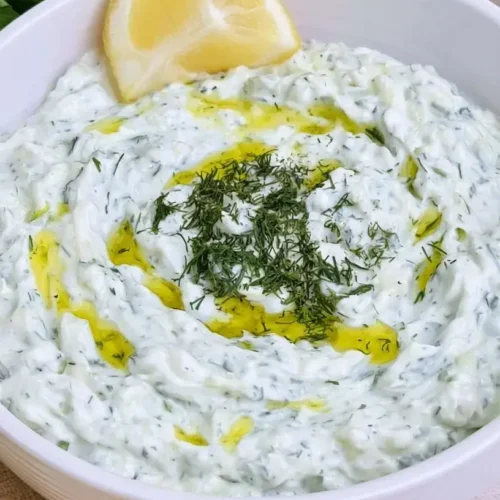
Tzatziki Sauce

Ingredients
- 2 cups Greek yogurt full-fat preferred
- 1-2 English cucumbers
- 3-4 cloves garlic minced
- 2-3 tablespoons fresh lemon juice
- 2-3 tablespoons fresh dill finely chopped
- 1-2 tablespoons fresh mint finely chopped (optional)
- 1-2 tablespoons extra virgin olive oil
- 1 teaspoon salt
- 1/4-1/2 teaspoon black pepper
- 1 tablespoon white wine vinegar optional
Instructions
- Grate cucumber using box grater. Place in clean kitchen towel and squeeze firmly to remove excess liquid.
- In large bowl, combine Greek yogurt, minced garlic, and lemon juice.
- Add drained cucumber, dill, mint (if using), and olive oil.
- Add salt, pepper, and vinegar (if using). Stir well to combine.
- Taste and adjust seasoning—add more salt, lemon, or garlic as needed.
- Cover and refrigerate at least 30 minutes for flavors to meld.
- Stir before serving. Garnish with fresh herbs and drizzle of olive oil.