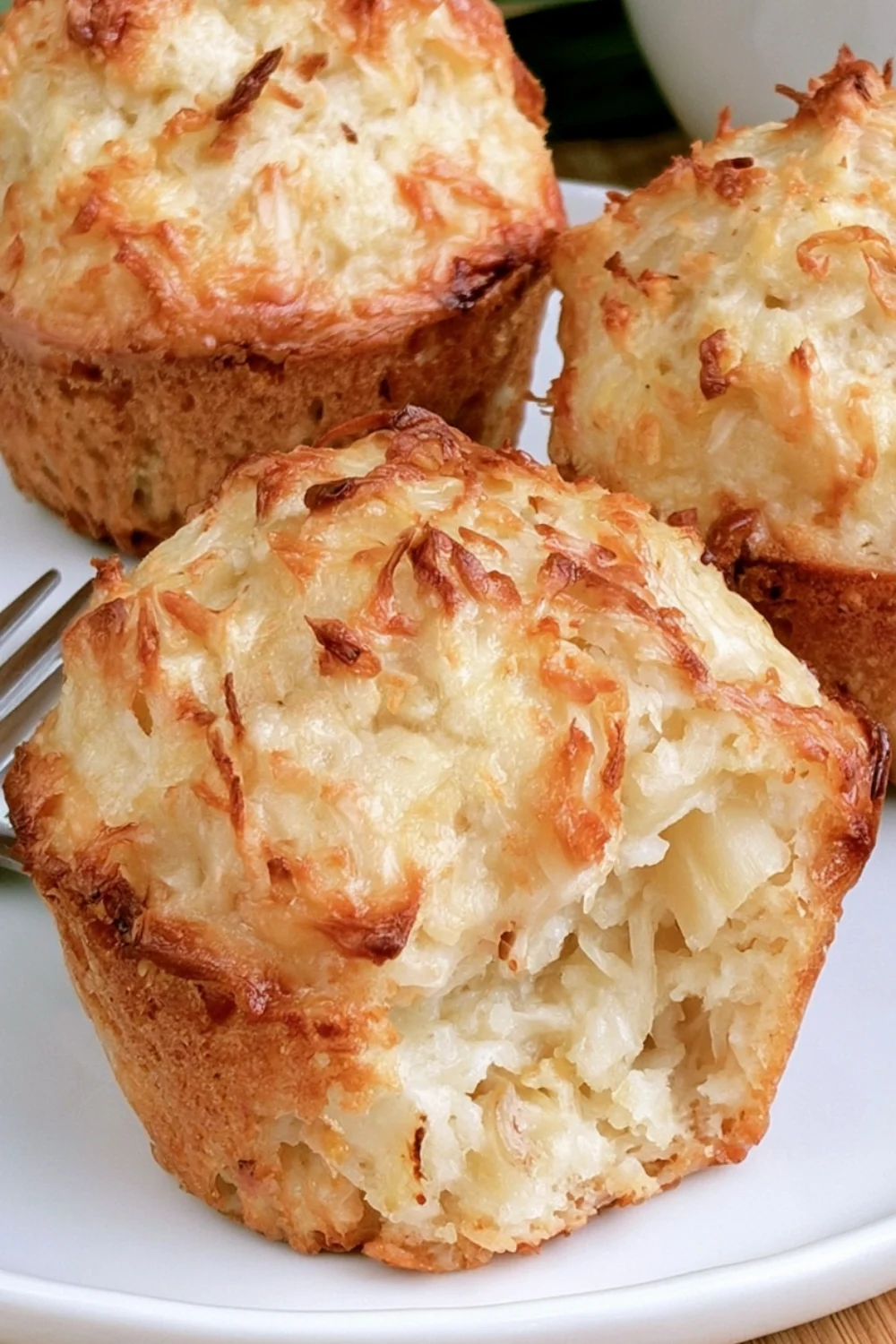
Start your morning with these tropical, protein-packed muffins that taste like a vacation in every bite. These coconut pineapple cottage cheese muffins come together in just 30 minutes, making them perfect for busy weekdays or lazy weekend brunches.
Why You’ll Love These Coconut Pineapple Cottage Cheese Muffins
Moist, Tropical Flavor with Real Pineapple and Coconut
These muffins deliver authentic tropical flavors in every bite. Real pineapple chunks provide natural sweetness and juicy bursts, while coconut flakes add subtle nuttiness and pleasant texture. The combination creates a taste experience reminiscent of a tropical getaway, right from your home oven.
The pineapple’s natural acidity balances beautifully with the mild tang of cottage cheese, creating a sophisticated flavor profile that’s both comforting and exciting. Unlike many muffins that rely heavily on added sugars, these get much of their sweetness from the fruit itself.
High-Protein Breakfast from Blended Cottage Cheese
Cottage cheese is the secret weapon in these muffins, providing approximately 14 grams of protein per cup. When blended until smooth, it creates an incredibly moist batter while boosting the nutritional profile significantly. This makes each muffin a satisfying breakfast option that keeps you full longer than traditional baked goods.
The protein content helps stabilize blood sugar levels, preventing the mid-morning energy crash that often follows sugary breakfast choices. This makes these muffins ideal for active individuals, growing children, or anyone seeking a more balanced start to their day.
Ready in 30 Minutes for Busy Mornings
From preheating your oven to pulling golden muffins from the rack, this recipe respects your time. The 30-minute timeline includes prep work, mixing, baking, and initial cooling—perfect for those mornings when you need something homemade but don’t have hours to spare.
The straightforward method means no complicated techniques or special equipment beyond basic kitchen tools. Even beginner bakers can achieve professional-looking results without stress or fuss.
Freezer-Friendly for Meal Prep
These muffins freeze beautifully, making them ideal for batch cooking and meal prep sessions. Bake a double batch on Sunday, freeze individually wrapped muffins, and enjoy homemade breakfast throughout the week. Simply thaw overnight in the refrigerator or warm briefly in the microwave for a fresh-baked taste any day.
The freezer-friendly nature also means you can keep emergency breakfast options on hand for unexpected guests or particularly hectic mornings. They maintain their moisture and flavor even after freezing, unlike many baked goods that become dry or crumbly.
Ingredients & Substitutions
Cottage Cheese: Full-Fat vs Low-Fat, Blending Tips
Full-fat cottage cheese produces the richest, most tender muffins with superior moisture retention. The higher fat content contributes to a more luxurious mouthfeel and helps carry the tropical flavors effectively. However, low-fat or even fat-free cottage cheese works well if you’re watching calories—just expect slightly less richness.
Before adding to your batter, blend the cottage cheese until completely smooth. This eliminates any curd texture and ensures even distribution throughout the muffins. A standard blender or food processor works perfectly, requiring just 30-60 seconds to achieve the desired consistency.
Pineapple Options: Crushed, Chunks, or Fresh
Canned crushed pineapple offers convenience and consistent sweetness year-round. Drain it well in a fine-mesh strainer, pressing gently to remove excess liquid that could make your muffins soggy. The smaller pieces distribute evenly throughout the batter.
Fresh pineapple chunks provide brighter flavor and firmer texture. Cut them into small, pea-sized pieces for even distribution. If using fresh pineapple, you may want to add an extra tablespoon of sweetener since canned pineapple is typically packed in syrup.
Frozen pineapple works in a pinch—just thaw completely and drain thoroughly before using. Avoid adding frozen pineapple directly to the batter, as the ice crystals will create unwanted moisture.
Flour Choices: All-Purpose, Whole Wheat, or Almond Flour
All-purpose flour creates the lightest, most tender crumb structure that most people expect from muffins. It provides reliable results and is widely available in most kitchens.
Whole wheat flour adds fiber and nutrients while creating a slightly denser, heartier texture. For best results, substitute up to half the all-purpose flour with whole wheat rather than using 100% whole wheat, which can make muffins too heavy.
Almond flour works beautifully for gluten-free versions while adding healthy fats and protein. Use about 25% more almond flour by volume compared to all-purpose flour, and expect a slightly denser but still delicious result.
Sweeteners & Add-Ins: Coconut Flakes, Vanilla, Cinnamon
Granulated white sugar provides reliable sweetness and helps create tender crumb structure. Brown sugar adds moisture and subtle molasses notes that complement the tropical flavors beautifully.
Unsweetened coconut flakes enhance the tropical theme while adding pleasant chewiness. Toast them lightly in a dry pan before adding to intensify their flavor and aroma.
Pure vanilla extract rounds out the flavor profile, while a pinch of cinnamon adds warmth that pairs wonderfully with pineapple. Consider adding a tablespoon of lime zest for extra brightness if you enjoy citrus notes.
Step-by-Step Instructions
Preheat Oven and Prepare Muffin Tin
Begin by preheating your oven to 375 degrees Fahrenheit (190 degrees Celsius). This temperature creates the perfect environment for achieving golden-brown tops while ensuring the centers cook through properly.
Line a standard 12-cup muffin tin with paper liners or grease each cup thoroughly with cooking spray or butter. Paper liners make cleanup easier and help prevent sticking, while greased cups create slightly crispier edges that some people prefer.
If you don’t have a muffin tin, this batter also works well in a mini muffin pan (reduce baking time to 12-15 minutes) or even as a small loaf cake (increase baking time to 35-40 minutes).
Blend Wet Ingredients for a Smooth Batter
In your blender or food processor, combine the cottage cheese, eggs, melted butter or oil, vanilla extract, and your chosen sweetener. Blend on high speed for 30-60 seconds until the mixture is completely smooth and uniform in texture.
The blending step is crucial for eliminating any cottage cheese curds and creating the smoothest possible batter. This ensures even distribution of ingredients and prevents unexpected textural surprises in your finished muffins.
Pour the blended wet ingredients into a large mixing bowl. There’s no need to clean the blender yet—you’ll use it again if you want to make additional batches.
Mix Dry Ingredients and Fold in Pineapple
In a separate bowl, whisk together your flour, baking powder, baking soda, salt, and any additional spices like cinnamon or nutmeg. Whisking ensures even distribution of leavening agents, which is essential for consistent rise and texture.
Create a well in the center of the dry ingredients and pour in the wet mixture. Using a wooden spoon or silicone spatula, gently fold the ingredients together until just combined. A few small lumps are perfectly fine—overmixing creates tough, dense muffins.
Gently fold in the drained pineapple and coconut flakes, distributing them evenly throughout the batter without overworking the mixture.
Bake Time, Cooling, and Storage Tips
Divide the batter evenly among the prepared muffin cups, filling each about two-thirds full. This allows room for proper rising without overflowing.
Bake for 18-22 minutes, rotating the pan halfway through for even browning. The muffins are done when the tops are golden brown and a toothpick inserted into the center comes out clean or with just a few moist crumbs.
Cool the muffins in the pan for 5 minutes before transferring them to a wire rack. This brief cooling period helps them set properly and makes removal easier.
Store cooled muffins in an airtight container at room temperature for up to 2 days, in the refrigerator for up to 5 days, or freeze for up to 3 months.
Pro Tips for Perfect Muffins
How to Get Domed, Bakery-Style Tops
Start with a hot oven—375 degrees Fahrenheit is ideal for creating the initial burst of steam that helps muffins rise quickly. The high heat sets the exterior before the interior fully cooks, creating those desirable domed tops.
Fill your muffin cups generously, about two-thirds to three-quarters full. Don’t be tempted to underfill hoping for more muffins—this actually prevents proper rising and creates flat tops.
Let your batter rest for 5-10 minutes before baking. This brief rest allows the flour to fully hydrate and the leavening agents to begin working, resulting in better rise and texture.
Avoiding Soggy Bottoms from Pineapple Moisture
Properly draining your pineapple is the single most important step for preventing soggy muffins. Place the pineapple in a fine-mesh strainer and press gently with a spoon or spatula to remove as much liquid as possible.
Consider adding a tablespoon of extra flour to absorb any remaining moisture from the fruit. This small adjustment can make a significant difference in the final texture.
Bake on the middle rack of your oven for even heat distribution. If you notice the bottoms browning too quickly, place a second baking sheet on the rack below to create a buffer.
Adjusting Bake Time for Jumbo vs Standard Muffins
Standard muffins typically require 18-22 minutes at 375 degrees Fahrenheit. Jumbo muffins need 25-30 minutes at the same temperature, while mini muffins are usually done in 12-15 minutes.
Always check for doneness with a toothpick rather than relying solely on time. Oven temperatures vary, and factors like altitude and humidity can affect baking times.
For jumbo muffins, consider reducing the oven temperature to 350 degrees Fahrenheit and extending the baking time slightly. This prevents the exterior from overbrowning before the center is fully cooked.
Make-Ahead and Reheating Methods
Prepare the dry and wet ingredients separately the night before, storing them in covered containers in the refrigerator. In the morning, simply combine and bake for fresh muffins with minimal effort.
Baked muffins can be wrapped individually in plastic wrap and frozen for up to 3 months. Thaw overnight in the refrigerator or at room temperature for about an hour.
Reheat frozen or refrigerated muffins in a 350-degree oven for 5-10 minutes, or microwave individually for 20-30 seconds. The oven method restores the exterior crispness better than microwaving.
Serving, Nutrition & FAQs
Best Ways to Serve (Yogurt, Fruit, Coffee Pairings)
These tropical muffins pair beautifully with Greek yogurt for an extra protein boost. The creamy yogurt complements the muffin’s texture while adding probiotics for digestive health.
Serve alongside fresh fruit like berries, mango, or papaya to enhance the tropical theme. The fresh fruit adds brightness and additional nutrients to your breakfast plate.
Coffee pairings work exceptionally well—try a medium roast with notes of chocolate or nuts to complement the coconut and pineapple. For tea lovers, Earl Grey or chai provide lovely flavor contrasts.
Approximate Macros: Protein, Carbs, Fat per Muffin
Each standard muffin contains approximately 180-200 calories, depending on your specific ingredient choices. The cottage cheese contributes about 6-8 grams of protein per muffin, making these significantly more protein-rich than typical breakfast baked goods.
Carbohydrate content ranges from 22-26 grams per muffin, with about 12-15 grams coming from natural and added sugars. The fiber content is approximately 1-2 grams per muffin, higher if you use whole wheat or almond flour.
Fat content typically falls between 7-9 grams per muffin, primarily from the cottage cheese and any added butter or oil. Using full-fat cottage cheese increases the fat content slightly but improves overall satisfaction and flavor.
Can I Make These Dairy-Free or Gluten-Free?
For dairy-free versions, substitute the cottage cheese with blended silken tofu or dairy-free yogurt. The texture will be slightly different but still delicious. Use coconut oil or vegan butter instead of regular butter.
Gluten-free adaptations work well using your favorite gluten-free flour blend. Look for blends that include xanthan gum, or add 1/4 teaspoon per cup of flour to help with structure and binding.
Many people successfully use almond flour alone for a grain-free, paleo-friendly version. Expect a denser texture and slightly different flavor profile, but the tropical ingredients still shine through beautifully.
How Long Do They Last in the Fridge or Freezer?
At room temperature in an airtight container, these muffins stay fresh for up to 2 days. The high moisture content from the cottage cheese and pineapple means they don’t last as long at room temperature as drier muffins.
Refrigerated in an airtight container, they maintain quality for 4-5 days. The cooler temperature slows staling and helps preserve the moisture content.
Frozen individually wrapped muffins stay fresh for up to 3 months. Label with the date and rotate stock to ensure you’re using the oldest muffins first. They thaw quickly and taste nearly as good as fresh-baked.

Easy Coconut Pineapple Cottage Cheese Muffins

Ingredients
- 1 cup full-fat cottage cheese
- 2 large eggs
- 1/4 cup melted butter or coconut oil
- 1 teaspoon vanilla extract
- 1/3 cup granulated sugar
- 1 1/2 cups all-purpose flour
- 2 teaspoons baking powder
- 1/2 teaspoon baking soda
- 1/4 teaspoon salt
- 1 cup crushed pineapple well drained
- 1/2 cup unsweetened coconut flakes
- 1 teaspoon cinnamon optional
Instructions
- Preheat oven to 375 degrees Fahrenheit (190 degrees Celsius). Line a 12-cup muffin tin with paper liners or grease thoroughly.
- In a blender, combine cottage cheese, eggs, melted butter, vanilla, and sugar. Blend for 30-60 seconds until completely smooth.
- In a large bowl, whisk together flour, baking powder, baking soda, salt, and cinnamon.
- Pour the blended wet ingredients into the dry ingredients. Fold gently with a spatula until just combined. A few lumps are fine.
- Gently fold in the drained pineapple and coconut flakes, distributing evenly throughout the batter.
- Divide batter evenly among muffin cups, filling each about two-thirds full.
- Bake for 18-22 minutes, rotating the pan halfway through, until tops are golden brown and a toothpick inserted in the center comes out clean.
- Cool in the pan for 5 minutes, then transfer to a wire rack to cool completely.
- Store in an airtight container at room temperature for up to 2 days, refrigerate for up to 5 days, or freeze for up to 3 months.