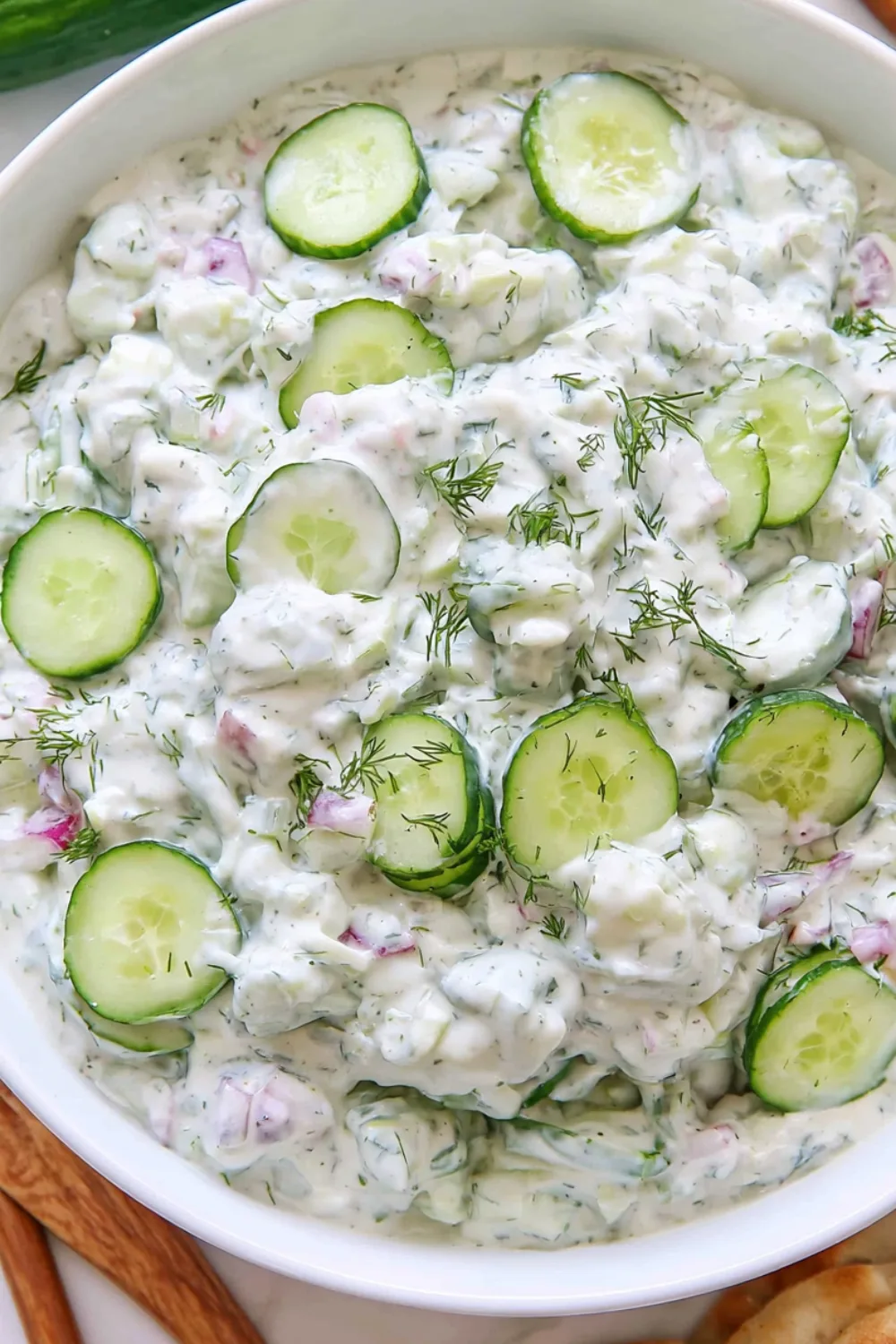
Cool, creamy, and incredibly refreshing, this tzatziki cucumber salad is the perfect antidote to hot summer days and spicy main dishes. With its simple ingredients and bright flavors, this Greek-inspired side dish has become a staple at barbecues, dinner parties, and family meals around the world.
Why This Tzatziki Cucumber Salad Is a Summer Staple
Cool, Creamy, and Ultra-Refreshing
This salad provides immediate cooling relief on hot days, making it the perfect companion to grilled meats and spicy dishes. The combination of cold cucumber and creamy yogurt creates a refreshing sensation that’s both satisfying and hydrating.
The high water content in cucumbers combined with the cooling properties of yogurt makes this salad naturally temperature-regulating. It’s no coincidence that similar dishes appear in cuisines from hot climates around the Mediterranean and Middle East.
The light, fresh flavors cleanse the palate between bites of richer foods, making each mouthful of your main dish taste as vibrant as the first. This makes it an ideal side for heavy meals or rich proteins.
Perfect Side for Grilling and BBQs
The salad’s cool temperature and light texture provide the perfect counterpoint to hot, smoky grilled foods. It cuts through the richness of fatty meats while complementing their charred, savory flavors.
Unlike many side dishes that compete for oven space during grilling season, this salad requires no cooking whatsoever. You can prepare it while your grill preheats and have it ready exactly when you need it.
The flavors actually improve as they sit, making this an ideal make-ahead side for outdoor entertaining. Prepare it in the morning and let the flavors meld while you focus on your main course preparations.
Quick to Make with Simple Ingredients
From start to finish, this salad comes together in about 15 minutes, with most of that time being hands-off draining and chilling. The actual active preparation time is just 5-7 minutes.
Every ingredient is readily available in standard grocery stores, with no exotic or hard-to-find components. This accessibility makes it a reliable option for impromptu dinners or when you need a quick side dish.
The simple ingredient list means fewer opportunities for error and more consistent results. Even beginning cooks can achieve restaurant-quality results with minimal effort or experience.
Pairs with Gyros, Kebabs, and Pita
The Greek origins of this salad make it a natural companion to other Mediterranean dishes. It’s traditionally served with gyros, souvlaki, and various grilled meat preparations.
The creamy texture and tangy flavors complement the charred, seasoned flavors of kebabs and skewers beautifully. The salad’s cooling effect balances the heat from spiced meat preparations.
Warm pita bread becomes the perfect vehicle for scooping up both the salad and any accompanying main dishes. The combination creates a complete, satisfying meal that’s greater than the sum of its parts.
Ingredients & Prep Tips
Choosing the Right Cucumber Variety
English cucumbers are ideal for this salad due to their thin skin, small seeds, and mild flavor. They require no peeling and have a more delicate texture than standard slicing cucumbers.
Persian cucumbers work equally well and are often available in smaller sizes perfect for individual portions. They have similar characteristics to English cucumbers with slightly firmer flesh.
Standard slicing cucumbers can be used but should be peeled and seeded to prevent bitterness and excess water. The thicker skin and larger seeds can detract from the smooth texture you’re aiming for.
Avoid waxed cucumbers if possible, as the wax coating can affect the final texture and flavor. If you must use waxed cucumbers, peel them thoroughly to remove the coating.
Greek Yogurt: Thick vs Regular, Straining Tips
Full-fat Greek yogurt provides the richest flavor and creamiest texture. The higher fat content carries flavors better and creates a more luxurious mouthfeel than low-fat versions.
Regular plain yogurt can be strained to achieve Greek yogurt consistency. Line a fine-mesh strainer with cheesecloth or coffee filters and let the yogurt drain in the refrigerator for 2-4 hours.
The thickness of your yogurt affects the final consistency of the salad. Thicker yogurt creates a more substantial, dip-like texture, while thinner yogurt creates a more pourable, dressing-like consistency.
Ensure your yogurt is completely plain with no added flavors or sweeteners. Vanilla or fruit-flavored yogurts will clash with the savory herbs and garlic in the recipe.
Garlic, Lemon, Olive Oil, and Herbs (Dill, Mint)
Fresh garlic provides the best flavor, but the amount can be adjusted based on your preference and the freshness of your garlic. Older garlic tends to be more pungent than fresh.
Lemon juice should be freshly squeezed for the brightest flavor. Bottled lemon juice can work in a pinch but lacks the vibrant acidity that fresh lemon provides.
High-quality extra virgin olive oil makes a significant difference in the final flavor. Choose a fruity, mild olive oil that complements rather than overwhelms the other ingredients.
Fresh dill and mint provide the characteristic herbal notes that define this salad. Dried herbs can substitute in emergencies but lack the bright, fresh flavor of their fresh counterparts.
Salting Cucumber to Remove Excess Water
Salting the grated or diced cucumber draws out excess moisture through osmosis, preventing your salad from becoming watery. This step is crucial for achieving the right texture.
After salting, let the cucumber sit for 10-15 minutes, then squeeze out the released liquid using a clean kitchen towel or cheesecloth. This step can remove up to half the cucumber’s water content.
Don’t skip this step even if you’re in a hurry. Watery tzatziki is the most common complaint about this dish, and proper draining prevents this issue entirely.
Save the drained cucumber water for use in smoothies or as a base for cold soups. It contains nutrients and flavor that shouldn’t be wasted.
How to Make Tzatziki Cucumber Salad
Grate or Dice Cucumber and Drain Well
Using a box grater, food processor, or mandoline, grate the cucumber into small, uniform pieces. Grating creates more surface area for the salt to work and results in better drainage.
Alternatively, dice the cucumber into small, pea-sized pieces for a chunkier texture. This method requires more thorough salting and draining to achieve the same results.
Place the prepared cucumber in a fine-mesh strainer or colander and sprinkle generously with salt. Toss to distribute the salt evenly throughout the cucumber pieces.
Let the cucumber sit for 10-15 minutes to allow the salt to draw out moisture. You’ll see liquid pooling at the bottom of your strainer as the process works.
Mix Yogurt, Garlic, Lemon, and Seasonings
In a large mixing bowl, combine the Greek yogurt with minced garlic, fresh lemon juice, and a drizzle of olive oil. Start with conservative amounts of garlic and lemon, as you can always add more.
Add salt and white pepper to taste. White pepper is traditional and provides heat without visible black specks, but black pepper works fine if that’s what you have available.
Mix thoroughly until all ingredients are well combined and smooth. The mixture should be creamy and uniform in color and texture.
Taste and adjust seasonings as needed. Remember that the flavors will meld and intensify slightly as the salad chills, so don’t over-season at this stage.
Combine and Adjust Salt, Acid, and Herbs
Add the thoroughly drained cucumber to the yogurt mixture and stir gently to combine. Be careful not to break up the cucumber pieces too much during mixing.
Add chopped fresh dill and mint, reserving some for garnish if desired. The herbs should be finely chopped for even distribution throughout the salad.
Taste and adjust the balance of salt, acid, and herbs. The salad should be well-seasoned but not overly salty, with bright acidity from the lemon and fresh herbal notes.
If the mixture seems too thick, thin it with a small amount of the reserved cucumber water or additional lemon juice. If too thin, add more yogurt or drain the cucumber further.
Chill Time for Best Flavor
Cover the bowl tightly with plastic wrap and refrigerate for at least 1 hour before serving. This chilling time allows the flavors to meld and the garlic to mellow slightly.
For best results, make the salad 2-4 hours ahead of serving time. This allows maximum flavor development while maintaining the fresh, bright characteristics.
Stir gently before serving to redistribute any ingredients that may have settled. The salad should be served cold for the most refreshing experience.
Don’t let the salad sit for more than 24 hours before serving, as the cucumber can become too soft and the flavors may become muted.
Serving Suggestions & Variations
Serve with Grilled Chicken, Lamb, or Fish
Grilled chicken thighs or breasts marinated in lemon, garlic, and herbs create a perfect pairing. The salad’s cooling effect balances the chicken’s savory, slightly charred flavors.
Lamb kebabs or grilled lamb chops complement the Greek flavors beautifully. The salad’s tanginess cuts through the lamb’s richness while enhancing its distinctive flavor.
Grilled fish, particularly Mediterranean varieties like sea bass or branzino, pairs wonderfully with the bright, fresh flavors. The salad adds moisture and contrast to the flaky fish texture.
Add Feta, Olives, or Red Onion for Extra Bite
Crumbled feta cheese adds salty, tangy notes that enhance the Greek theme. Add it just before serving to prevent it from becoming too soft in the yogurt mixture.
Kalamata olives provide briny depth and visual contrast. Chop them roughly and fold them in gently to distribute throughout the salad.
Thinly sliced red onion adds crunch and mild sharpness. Soak the slices in cold water for 10 minutes before adding to mellow their bite and improve their color.
Turn It into a Dip for Pita and Veggies
Thicken the mixture slightly by draining the cucumber more thoroughly or adding extra yogurt. This creates a dip consistency perfect for pita chips or fresh vegetables.
Serve with warm pita bread cut into triangles, either toasted or fresh. The warm bread contrasts beautifully with the cold dip.
Create a vegetable platter with cucumber slices, carrot sticks, bell pepper strips, and cherry tomatoes. The dip becomes the centerpiece of a healthy, satisfying appetizer.
Lighter Dressing Ideas for Bowls
Thin the mixture with additional lemon juice and a splash of water to create a pourable dressing. This works beautifully over grain bowls or green salads.
Drizzle over Mediterranean grain bowls featuring quinoa, chickpeas, tomatoes, and grilled vegetables. The creamy dressing ties all the components together.
Use as a sauce for falafel wraps or Mediterranean sandwiches. The cooling effect balances the spiced, fried falafel perfectly.
Storage, Nutrition & FAQs
How Long It Lasts in the Fridge
Properly stored in an airtight container, this salad stays fresh for 3-4 days in the refrigerator. The high acidity from lemon juice helps preserve it longer than many fresh salads.
Keep it covered to prevent absorption of refrigerator odors and to maintain moisture. Uncovered tzatziki can develop off-flavors and dry out quickly.
Stir before each serving to redistribute ingredients that may have settled. Some liquid separation is normal and can be stirred back in.
Best Containers to Prevent Watery Salad
Glass containers with tight-fitting lids work best for storage. They don’t absorb flavors or odors and allow you to see the contents easily.
Avoid containers with large air spaces, as excess air can cause the salad to dry out. Choose containers that match the volume of your salad as closely as possible.
If storing for multiple days, place a piece of plastic wrap directly on the surface before sealing the container. This prevents a skin from forming on top.
Approximate Calories and Macros per Serving
A typical 1/4 cup serving contains approximately 60-80 calories, depending on the fat content of your yogurt and the amount of olive oil used. The salad is naturally low in calories while being satisfying.
Protein content ranges from 3-5 grams per serving, primarily from the Greek yogurt. This makes it a more substantial side dish than many vegetable-based options.
Carbohydrate content is low, typically 4-6 grams per serving, with minimal sugar. The cucumber provides fiber and nutrients without significant calories.
Dairy-Free or Vegan Yogurt Swaps
Coconut-based Greek yogurt alternatives work well for dairy-free versions. Choose plain, unsweetened varieties and be aware that coconut flavor may be subtly present.
Cashew-based yogurt provides rich, creamy texture with neutral flavor. Many brands offer excellent options that mimic the texture of dairy yogurt remarkably well.
Soy-based yogurts are widely available and work adequately, though they may be slightly thinner than dairy versions. Strain them briefly if needed to achieve the desired consistency.
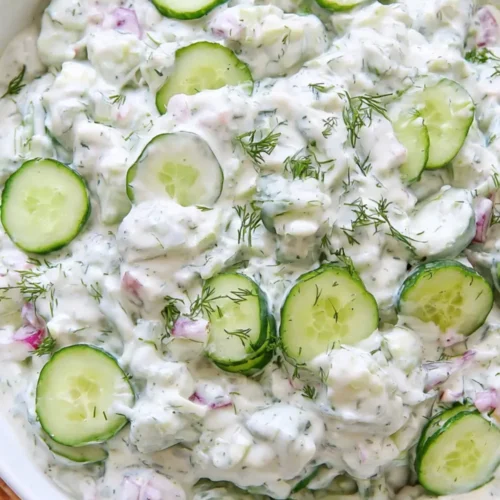
Easy Tzatziki Cucumber Salad

Ingredients
- 2 large English cucumbers or 4 Persian cucumbers
- 2 cups full-fat Greek yogurt
- 3-4 cloves garlic minced
- 2 tablespoons fresh lemon juice
- 2 tablespoons extra virgin olive oil
- 1/4 cup fresh dill finely chopped
- 2 tablespoons fresh mint finely chopped
- 1 teaspoon salt plus more for draining cucumber
- 1/2 teaspoon white pepper or black pepper
- Optional: 1/4 cup crumbled feta cheese
Instructions
- Prepare the cucumber: Grate the cucumbers using a box grater or food processor. Alternatively, dice into small, pea-sized pieces.
- Place the grated or diced cucumber in a fine-mesh strainer or colander. Sprinkle generously with salt and toss to distribute evenly.
- Let the cucumber sit for 10-15 minutes to allow the salt to draw out excess moisture.
- Using a clean kitchen towel or cheesecloth, squeeze out as much liquid as possible from the cucumber. This step is crucial to prevent watery salad.
- Make the dressing: In a large mixing bowl, combine Greek yogurt, minced garlic, lemon juice, and olive oil. Mix until smooth and well combined.
- Add salt, white pepper, chopped dill, and chopped mint. Stir to distribute the herbs evenly.
- Combine: Add the thoroughly drained cucumber to the yogurt mixture. Stir gently to combine without breaking up the cucumber pieces too much.
- Taste and adjust seasonings as needed. Add more salt, lemon juice, or herbs to achieve your preferred balance.
- Cover tightly with plastic wrap and refrigerate for at least 1 hour before serving. For best results, make 2-4 hours ahead to allow flavors to meld.
- Stir gently before serving. Garnish with additional fresh herbs if desired. Store in an airtight container in the refrigerator for up to 4 days.