
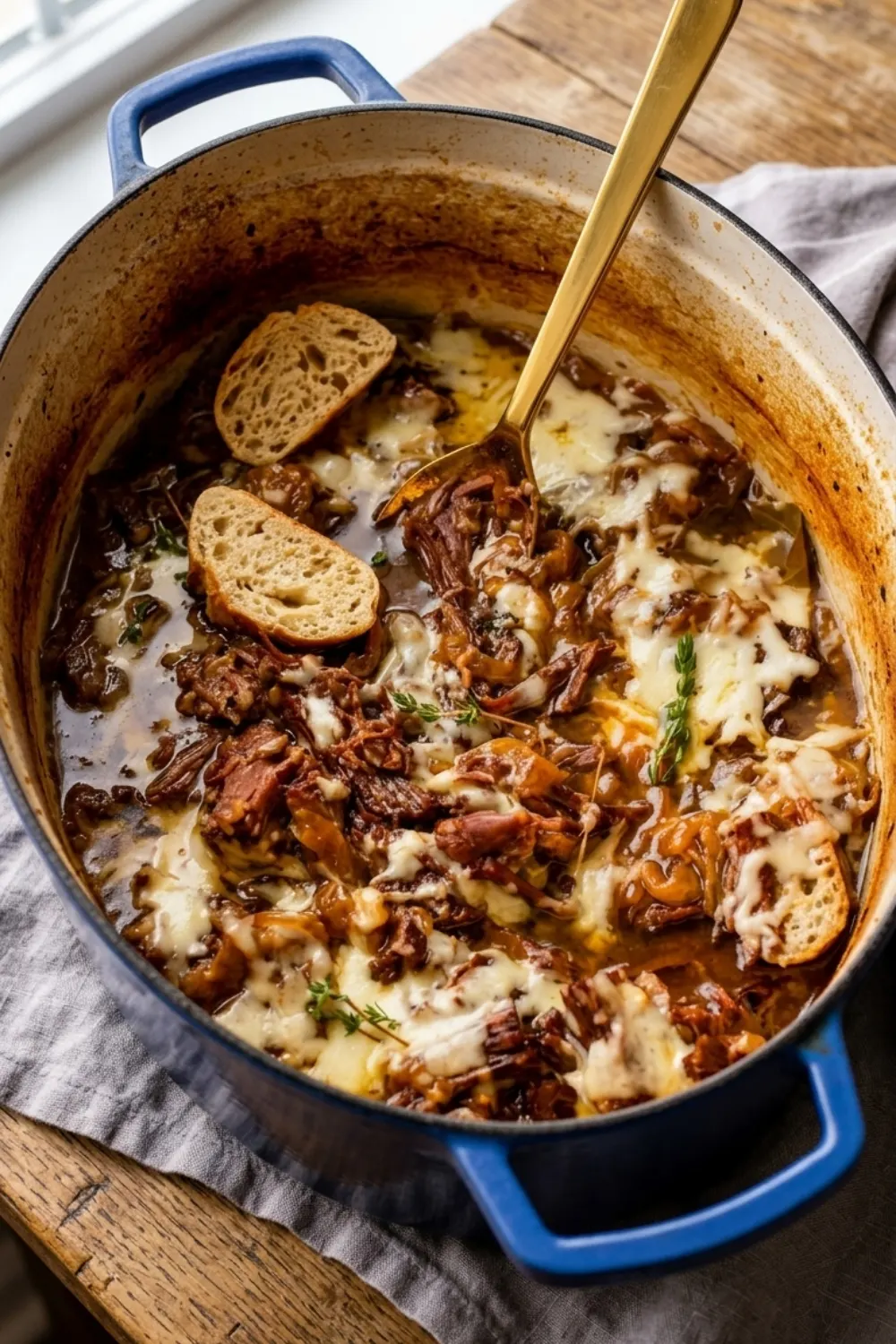
This French onion pot roast is a cozy, slow-braised beef dinner inspired by the deep, savory flavor of French onion soup. A chuck roast cooks low and slow with caramelized yellow onions, beef broth, garlic, thyme, Worcestershire sauce, and a rich onion gravy until the meat becomes tender enough to pull apart with a fork.
It is an ideal Sunday dinner, holiday main dish, or make-ahead family meal. Serve this French onion roast beef over creamy mashed potatoes, buttered egg noodles, rice, or crusty bread so you can enjoy every spoonful of the rich onion gravy.
Ingredients for French Onion Pot Roast
The best French onion pot roast starts with a well-marbled beef chuck roast and plenty of onions. The long cooking time transforms simple ingredients into a deeply flavored, comforting meal.
Choosing the Best Beef Chuck Roast
Boneless beef chuck roast is the best cut for this recipe because it has enough marbling and connective tissue to become tender during slow braising. Unlike leaner cuts, chuck roast benefits from long, gentle cooking in liquid.
Choose a roast around 3 to 4 pounds for a family-size meal. Look for a piece with visible marbling throughout the meat rather than a very lean roast. The fat slowly melts during cooking and helps keep the beef moist.
If you cannot find chuck roast, a shoulder roast, blade roast, or round roast may work, but the final texture can vary. Chuck remains the most reliable option for a fall-apart pot roast.
Yellow Onions and Caramelized Onion Flavor
Yellow onions are ideal because they become sweet, soft, and deeply savory as they cook. Use a generous amount—about three large onions—for the most noticeable French onion flavor.
Slice the onions thinly and as evenly as possible. Consistent slices cook at the same rate and caramelize more evenly. Do not rush this step; onions need time over moderate heat to develop their rich golden-brown color.
The onions will reduce significantly during cooking. What looks like a large amount at the beginning becomes a concentrated layer of flavor in the gravy.
Beef Broth, Worcestershire Sauce, and Aromatics
Beef broth or beef stock creates the braising liquid and becomes the base of the onion gravy. Use a broth you enjoy, preferably low sodium, so you can control the salt level yourself.
Worcestershire sauce adds umami, gentle tang, and depth. Garlic, thyme, bay leaves, black pepper, and a little Dijon mustard round out the savory flavor. Dry white wine can be added for extra complexity, but it is optional.
A small amount of flour helps thicken the final gravy. You can use cornstarch slurry instead if you need a gluten-free option.
Thyme, Bay Leaves, and Optional Cheese Toppings
Fresh thyme is lovely with beef and caramelized onions, but dried thyme also works well. Bay leaves add subtle herbal flavor during braising and should be removed before serving.
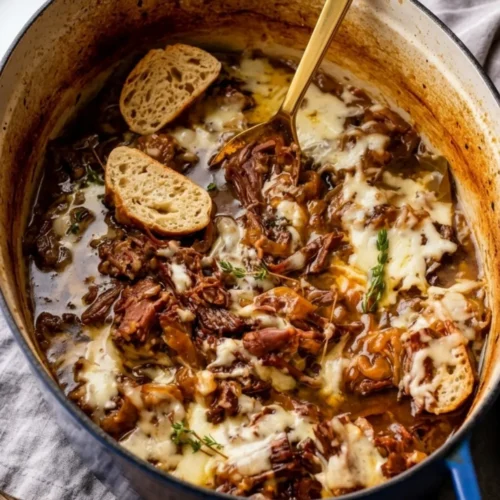
For a stronger French onion soup feeling, top individual servings with toasted bread and melted Gruyère, Swiss, or provolone cheese. This is optional, but it makes the meal especially comforting.
If you use cheese, add it only to individual portions or just before serving. Adding cheese to the entire pot can make leftovers harder to store and reheat.
How to Caramelize Onions for Pot Roast
Caramelized onions are the heart of this recipe. They take patience, but the process is simple: cook sliced onions gently in butter and olive oil until they soften, reduce, and turn a rich golden brown.
How to Slice Onions for Even Cooking
Cut the onions in half from root to stem, peel away the skin, then slice each half into thin half-moons. Aim for slices around 1/8 to 1/4 inch thick.
Slices that are too thick take much longer to cook, while extremely thin slices can burn easily. Similar-sized slices are the most important factor.
Do not worry if the onion slices look like too much for the pot at first. They will soften and shrink dramatically as they cook.
The Best Heat Level for Caramelized Onions
Cook onions over medium-low to medium heat. High heat can brown the outside quickly but often burns the natural sugars before the onions have time to soften fully.
Start with butter and olive oil in a Dutch oven or heavy oven-safe pot. Add onions with a pinch of salt and cook slowly, stirring every few minutes.
As the onions soften, they will release moisture. Keep cooking until that liquid evaporates and the onions begin to turn golden. This process usually takes 25 to 35 minutes.
How Long It Takes to Develop Deep Onion Flavor
True caramelized onions are not ready in five or ten minutes. They need time to become soft, jammy, and deep golden brown.
Expect about 25 to 35 minutes of cooking, depending on your pot, heat level, onion quantity, and how thinly they are sliced. If onions begin to stick before they are browned, add one or two tablespoons of water or broth and scrape up the flavorful browned bits.
The finished onions should smell sweet and savory, not sharp or raw. Their color should be golden brown rather than dark or burnt.
How to Prevent Onions From Burning
Stir the onions regularly, especially as they begin to brown. If the bottom of the pot darkens too quickly, lower the heat and add a splash of water, broth, or wine.
Use a heavy-bottomed Dutch oven when possible because it distributes heat more evenly. Thin pots may create hot spots that cause burning.
Do not walk away for long near the end of caramelizing. Once onions have lost most of their moisture, they can go from golden to burned quickly.
How to Cook French Onion Pot Roast
After the onions are caramelized, sear the chuck roast, build the braising liquid, and cook everything slowly until tender. The low-and-slow method is what turns a firm piece of beef into a fork-tender roast.
Searing Chuck Roast for Deep Beef Flavor
Pat the chuck roast dry with paper towels and season it generously with salt and black pepper. Drying the surface helps the meat develop a better brown crust.
Heat oil in the Dutch oven over medium-high heat. Sear the roast for about four to five minutes per side, including the edges if possible, until it develops a deep brown crust.
Do not rush the sear or move the roast constantly. Let it sit against the hot pot so the Maillard browning can develop. Remove the browned roast to a plate while you finish the sauce.
Building a Rich Onion Gravy
Add garlic to the caramelized onions and cook briefly. Sprinkle flour over the onions and stir for about one minute; this removes the raw flour taste and begins thickening the sauce.
Slowly pour in beef broth, scraping up the browned bits from the bottom of the pot. Stir in Worcestershire sauce, Dijon mustard, thyme, bay leaves, and optional wine.
Return the seared roast and any juices from the plate to the Dutch oven. The liquid should come about one-third to halfway up the roast. You do not need to submerge it completely.
Dutch Oven Cooking Instructions
Cover the Dutch oven tightly and cook at 325°F (165°C) for about 3 to 3 1/2 hours. Turn the roast once halfway through cooking if possible, then return the lid and continue braising.
The exact cooking time depends on the thickness of the roast and the amount of connective tissue in the cut. Do not rely only on the clock; pot roast is ready when it becomes fork-tender.
If the liquid reduces too much during cooking, add more warm beef broth. Keep the lid on as much as possible to retain moisture and steady heat.
How to Know When Pot Roast Is Fork-Tender
The roast is ready when a fork slides into the meat easily and twists with very little resistance. It should pull apart into tender pieces without needing to be sliced firmly.
If the beef is still tough, it usually needs more time, not less. Continue braising in 20- to 30-minute increments and check again. Tough chuck roast becomes tender only after enough time for connective tissue to break down.
For whole beef roasts, food-safety guidance lists 145°F (63°C) followed by a rest time as the minimum safe temperature, but pot roast texture is typically best only after long braising at a much higher final internal temperature.canr.msu
Slow Cooker and Oven Tips
This recipe is written for a Dutch oven, but it can be adapted for a slow cooker. The most important principle is the same: allow enough gentle cooking time for the chuck roast to become tender.
Can You Make French Onion Pot Roast in a Slow Cooker?
Yes. Caramelize the onions and sear the chuck roast in a skillet or Dutch oven first, then transfer both to a slow cooker. Add the beef broth, Worcestershire sauce, garlic, herbs, and seasonings.
Cook on low for 8 to 9 hours or on high for 4 to 5 hours, until the beef is fork-tender. If you need to thicken the gravy, transfer the liquid to a saucepan and simmer it with a cornstarch slurry, or use the slow cooker’s high setting with the lid slightly open.
The slow cooker is convenient, but do not skip searing the beef and caramelizing the onions if you want the deepest flavor.
Best Temperature for Oven-Braised Pot Roast
A 325°F (165°C) oven is a reliable temperature for pot roast. It is warm enough to maintain a gentle braise without cooking the exterior too quickly.
A lower oven temperature, such as 300°F (150°C), can also work but may require more time. A higher temperature can shorten the cooking time slightly, but it may increase the chance of the braising liquid reducing too quickly.
Keep the Dutch oven covered tightly. Steam and moisture trapped inside the pot help the roast braise evenly and stay tender.
How to Prevent a Dry or Tough Pot Roast
Use chuck roast, do not skip the braising liquid, and keep the pot tightly covered. The roast should cook slowly in a moist environment, not dry-roast in the oven.
If the meat is tough, continue cooking it. This is a common pot roast issue: the beef may have reached a safe temperature but has not yet cooked long enough for the connective tissue to soften.
Avoid slicing the roast immediately after cooking. Let it rest in the gravy for 10 to 15 minutes before shredding or slicing so it remains juicy.
How to Thicken Onion Gravy if Needed
The flour added before the broth should create a lightly thickened gravy. If you prefer a thicker sauce, remove the roast once it is tender and simmer the gravy on the stovetop for five to 10 minutes.
For a cornstarch method, mix one tablespoon cornstarch with one tablespoon cold water until smooth. Whisk it into the simmering gravy and cook until thickened.
Taste the gravy after reducing. Add salt, pepper, Worcestershire sauce, or a small splash of broth as needed to balance the flavor.
Serving, Storage, and Variations
French onion pot roast is versatile enough for a casual family dinner or a special meal. The rich onion gravy pairs especially well with starchy sides, while fresh vegetables add balance.
What to Serve With French Onion Pot Roast
Creamy mashed potatoes are the classic choice because they hold the rich onion gravy beautifully. Buttered egg noodles, polenta, rice, cauliflower mash, or mashed sweet potatoes also work well.
For vegetables, serve roasted carrots, green beans, Brussels sprouts, asparagus, broccoli, or a simple green salad. A crisp salad with a lemony dressing balances the richness of the beef and gravy.
Crusty bread, toasted baguette slices, or garlic bread are excellent for soaking up extra onion gravy.
Mashed Potatoes, Bread, and Roasted Vegetables
Make the meal feel like French onion soup by serving the roast with toasted baguette slices and melted Gruyère or Swiss cheese. Add the cheese only at serving time so it stays melted and appealing.
Roasted vegetables can cook on a separate sheet pan during the final 30 to 40 minutes of pot roast cooking. Carrots, parsnips, potatoes, and Brussels sprouts all develop a nice sweetness that complements caramelized onions.
For a lower-carb option, serve the roast over cauliflower mash with roasted green beans or sautéed spinach.
How to Store and Reheat Pot Roast
Cool leftovers and refrigerate them in shallow airtight containers within two hours. Shallow containers cool food faster and help keep leftovers safe.foodsafety
Store French onion pot roast in the refrigerator for 3 to 4 days. Keep the beef covered with some onion gravy so it stays moist.foodsafety+1
Reheat portions in a covered skillet, saucepan, microwave, or 325°F (165°C) oven until hot throughout. Reheat leftovers to 165°F (74°C) for food safety.foodsafety+1
Can You Freeze French Onion Pot Roast?
Yes. French onion pot roast freezes well because the beef stays protected by the gravy. Let it cool completely, then portion the beef and onion gravy into freezer-safe containers or freezer bags.
Freeze for up to 2 to 3 months for the best quality. Thaw overnight in the refrigerator before reheating.
If the gravy seems separated after thawing, warm it slowly and stir well. Add a splash of beef broth if needed to restore the desired consistency.
French Onion Pot Roast Recipe Card

Ingredients
- 3 to 4 pounds boneless beef chuck roast
- 1 1/2 teaspoons salt divided
- 1 teaspoon black pepper divided
- 2 tablespoons olive oil divided
- 2 tablespoons unsalted butter
- 3 large yellow onions thinly sliced
- 4 garlic cloves minced
- 2 tablespoons all-purpose flour
- 2 1/2 cups low-sodium beef broth plus more as needed
- 1 tablespoon Worcestershire sauce
- 1 tablespoon Dijon mustard
- 1 teaspoon fresh thyme leaves or 1/2 teaspoon dried thyme
- 2 bay leaves
- 1/2 cup dry white wine optional; replace with additional beef broth if omitted
- 1 tablespoon chopped fresh parsley for garnish, optional
- Toasted baguette slices and shredded Gruyère or Swiss cheese optional for serving
Instructions
- Preheat the oven to 325°F (165°C). Pat the chuck roast dry with paper towels. Season all sides with 1 teaspoon salt and 1/2 teaspoon black pepper.
- Heat 1 tablespoon olive oil in a large Dutch oven over medium-high heat. Sear the chuck roast for 4 to 5 minutes per side, until deeply browned. Transfer the roast to a plate.
- Reduce the heat to medium-low. Add the remaining 1 tablespoon olive oil and butter. Add the sliced onions and remaining 1/2 teaspoon salt. Cook for 25 to 35 minutes, stirring regularly, until onions are soft, deeply golden, and caramelized.
- Add garlic and cook for 30 seconds. Sprinkle flour over the onions and stir for 1 minute.
- Slowly pour in wine, if using, and beef broth. Scrape the bottom of the pot to loosen browned bits. Stir in Worcestershire sauce, Dijon mustard, thyme, bay leaves, and remaining 1/2 teaspoon black pepper.
- Return the seared chuck roast and any collected juices to the Dutch oven. The liquid should reach about one-third to halfway up the roast. Add a little more broth if needed.
- Cover the Dutch oven tightly and bake for 3 to 3 1/2 hours. Turn the roast once halfway through cooking if desired.
- Check the roast after 3 hours. It is ready when fork-tender and easy to pull apart. If it is still tough, cover and cook for another 20 to 30 minutes, then check again.
- Remove bay leaves. Transfer the roast to a serving platter or shred it gently into large pieces. If desired, simmer the onion gravy on the stovetop for 5 to 10 minutes to thicken.
- Spoon caramelized onions and gravy over the beef. Garnish with parsley and serve with mashed potatoes, noodles, rice, or crusty bread.