
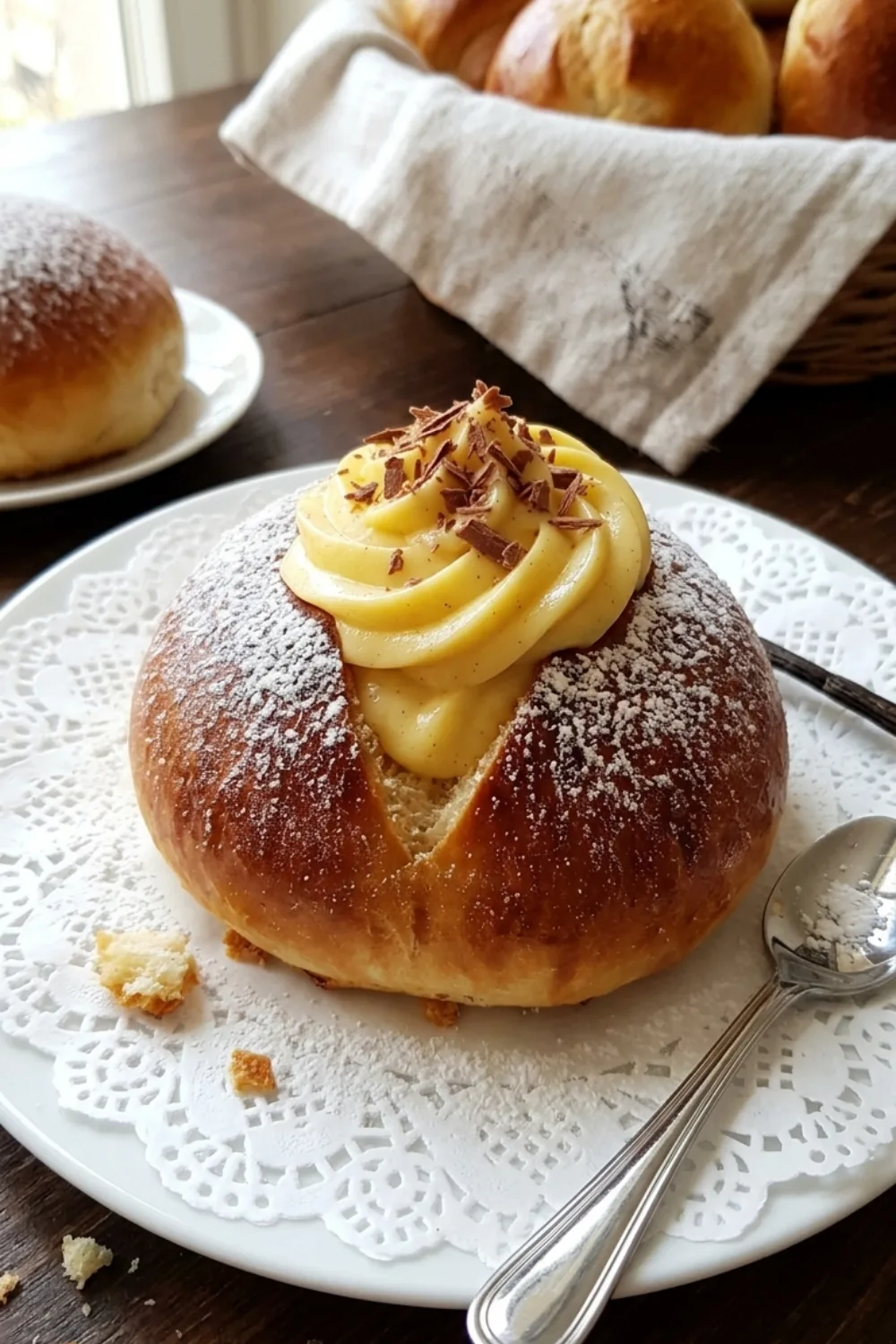
Why You’ll Love These Custard Cream Buns
Custard Cream Buns combine the best parts of a soft milk bread and a vanilla pastry cream dessert. The bread is tender and gently sweet, while the custard filling is creamy, smooth, and rich with vanilla flavor.
They are inspired by Cream Pan, a popular Japanese-style custard-filled bun found in many Asian bakeries. Similar buns are described as soft, sweet bread filled with silky vanilla custard, often enjoyed as a breakfast treat, snack, or afternoon-tea pastry.sudachirecipes+1
Soft, fluffy bakery-style buns
The dough is enriched with milk, egg, butter, and sugar. These ingredients make the buns tender and soft rather than crusty like a rustic bread roll.
Bread flour is recommended because it gives the dough enough strength to hold the custard filling while still creating a fluffy texture. You can use all-purpose flour if needed, but the buns may be slightly less chewy and structured.
Creamy vanilla custard filling
The homemade custard uses milk, egg yolks, sugar, cornstarch, butter, vanilla, and a pinch of salt. Cornstarch thickens the custard so it can be enclosed inside the dough without leaking too easily.
Chilling is important. Warm or loose custard is difficult to shape inside the buns, while cold custard is easy to portion and seal. Custard-bun recipes commonly recommend chilling the filling until it is firm before the shaping stage.whattocooktoday+1
Perfect for breakfast, brunch, or tea
These buns are not overly sweet, so they work well with coffee, tea, or milk. They are also a lovely addition to a weekend brunch spread alongside fresh fruit, eggs, and pastries.
For a bakery-style presentation, dust cooled buns with powdered sugar, brush them with melted butter and roll them in sugar, or sprinkle with shredded coconut.
Easier than they look
Although homemade yeast dough can seem intimidating, the process is simple when divided into stages:
- Cook and chill the custard.
- Mix and knead the dough.
- Let the dough rise.
- Fill and shape the buns.
- Let them rise again.
- Bake until lightly golden.
A stand mixer makes kneading easier, but you can knead the dough by hand for about 12–15 minutes.
Ingredients for Vanilla Custard Cream Buns
The recipe has two important components: a thick vanilla custard and a soft enriched milk-bun dough.
Milk, egg yolks, sugar, and cornstarch
The custard starts with whole milk, egg yolks, sugar, and cornstarch. Whole milk creates the creamiest flavor, though 2% milk can work if needed.
Egg yolks add richness and help create the characteristic yellow color of vanilla custard. Cornstarch thickens the mixture and makes it stable enough to use as a filling.
Whisk the egg yolks, sugar, and cornstarch completely before adding warm milk. This prevents lumps and helps you create smooth pastry cream.
Vanilla and butter
Vanilla extract is easy and reliable. Vanilla bean paste gives a stronger flavor and adds attractive vanilla specks to the custard.
Butter is stirred into the hot custard after cooking. It adds shine, richness, and a smoother texture. A small pinch of salt makes the vanilla flavor taste fuller and balances the sweetness.
Bread flour, yeast, and warm milk
Bread flour has more protein than all-purpose flour, which helps the dough become elastic and able to stretch around the custard filling. Use all-purpose flour only if bread flour is unavailable.
Instant yeast can be mixed directly with the flour. If you use active dry yeast instead, dissolve it first in the warm milk with a pinch of sugar and wait until foamy before adding it to the flour.
Warm milk should feel comfortably warm—not hot. Aim for approximately 100–110°F / 38–43°C. Milk that is too hot can damage yeast, while cold milk can slow down the rising process.
Butter, egg, and sugar for enriched dough
Butter makes the buns soft and tender. Add it gradually after the dough begins to form so the gluten structure develops properly.
Egg adds color, richness, and softness. Sugar lightly sweetens the dough and gives yeast some food for fermentation. Do not add extra flour too quickly during kneading; a slightly tacky dough creates softer buns than a dry, heavily floured dough.
How to Make Custard Cream Buns
Making custard buns requires patience, but each stage is simple. The main goal is to create cold, thick custard and soft, elastic dough that seals securely around the filling.
Make and chill the vanilla custard
Heat the milk until steaming, but do not boil it. Whisk egg yolks, sugar, cornstarch, and salt in a separate bowl until smooth.
Slowly stream some of the warm milk into the egg mixture while whisking. This technique is called tempering. It warms the eggs gradually, so they do not scramble when returned to the saucepan.
Cook the custard over medium-low heat while whisking constantly. Once it thickens and bubbles, keep whisking for another 30–60 seconds to fully activate the cornstarch.
Remove the pan from heat, then stir in butter and vanilla. Spread the custard into a shallow container, cover it directly with plastic wrap, and chill it thoroughly. The custard needs to be cold and firm before you try to place it inside the buns.
Mix and knead the enriched dough
Combine flour, yeast, sugar, and salt in the bowl of a stand mixer. Add warm milk and egg, then mix until a rough dough forms.
Knead for several minutes before adding butter. This builds initial gluten structure. Then add softened butter one tablespoon at a time and continue kneading until the dough becomes smooth and stretchy.
To test if the dough is ready, stretch a small piece gently between your fingers. If it can stretch into a thin, translucent layer without tearing immediately, it has developed enough gluten. This is often called the windowpane test.
Let the dough rise
Place the dough in a lightly oiled bowl, cover it, and let it rise in a warm, draft-free place until doubled in size. Depending on room temperature, this usually takes 60–75 minutes.
If your kitchen is cool, place the covered bowl in an unheated oven with only the oven light on, or near a warm—not hot—spot in the kitchen.
Do not rush the rise. Under-proofed dough creates dense buns, while properly risen dough feels puffy, light, and easier to shape.
Fill and seal the buns carefully
Once the dough has risen, gently press out large air bubbles and divide it into 10 equal portions. Keep the pieces covered with a towel while you shape them so they do not dry out.
Flatten one piece into a small disk, leaving the center a little thicker. Add cold custard in the middle, then bring the edges up and over the filling. Pinch firmly to seal the seams.
Place each bun seam-side down on the prepared baking sheet. A good seal is essential: if the seam opens, custard can leak during baking.
Shaping techniques for custard cream buns commonly involve portioning cold custard, wrapping it with dough, pinching the edges closed, placing buns seam-side down, and giving them a second proof before baking.ruchikrandhap
Tips, Storage, and FAQs
Custard-filled buns are best on the day they are baked, when the bread is at its softest and the filling is fresh. Because the filling contains milk and egg yolks, handle and store them carefully.
How to prevent custard from leaking
Follow these tips to reduce leakage:
- Chill the custard until thick and firm.
- Do not overfill the buns.
- Leave a thicker center when flattening the dough.
- Pinch the seam tightly closed.
- Place buns seam-side down on the baking sheet.
- Do not stretch the dough so thin that it tears.
- Avoid over-proofing the filled buns.
- Bake until the dough is set and lightly golden.
If small amounts of custard leak out, the buns will still taste delicious. Allow them to cool before moving them from the baking sheet.
Why are my buns dense or dry?
Dense buns usually happen because the dough did not rise long enough, the yeast was inactive, the dough was over-floured, or the dough was not kneaded enough.
Dry buns can result from baking too long or adding too much flour. Measure flour carefully by spooning it into the measuring cup and leveling it, rather than scooping directly from the bag.
Use an oven thermometer if you suspect your oven runs hot. Bake until lightly golden; deeply browned buns may be overbaked.
How to store custard cream buns
Because these buns contain egg-and-dairy custard, refrigerate leftover filled buns in an airtight container. They should not sit at room temperature for extended periods.
For the best quality, eat them within 1–2 days. A Japanese cream-pan recipe advises refrigerating custard-filled buns and notes that the bread can firm up in the fridge; it also suggests briefly warming the bun or letting it rest at room temperature before eating.sudachirecipes+1
You can warm a refrigerated bun in the microwave for about 8–12 seconds. Do not overheat it, because the custard can become very hot and may burst from the bun.
Can you freeze custard cream buns?
Yes, but freezing affects the texture slightly. Freeze completely cooled buns individually wrapped in plastic wrap, then place them in a freezer-safe bag or container.
For best quality, use them within 1 month. Thaw overnight in the refrigerator, then let stand at room temperature for 15–20 minutes or warm gently in a low oven.
Some bakers prefer freezing baked custard buns rather than refrigerating them for several days because refrigeration can firm up the bread; however, because the buns contain custard, do not leave thawed buns at room temperature for long.savorymomskitchen+1
Frequently asked questions
Can I use store-bought custard?
Yes. Use a thick, chilled vanilla custard or pastry cream. Avoid very loose pudding because it is more likely to leak from the buns during baking.
Can I use all-purpose flour instead of bread flour?
Yes. The buns will still work, but bread flour usually produces a slightly chewier, stronger dough that holds the filling more securely.
Can I make the custard ahead of time?
Yes. Make the custard up to one day ahead. Keep it covered with plastic wrap touching the surface and refrigerate until ready to use.
Can I make the dough by hand?
Yes. Mix ingredients in a large bowl, then knead on a lightly floured surface for 12–15 minutes. Add the butter gradually as you knead. The dough should become smooth, elastic, and slightly tacky.
Why did my custard become lumpy?
The heat may have been too high, or the custard may not have been whisked constantly. You can often fix small lumps by straining the warm custard through a fine-mesh sieve before chilling it.

Custard Cream Buns: Soft Homemade Buns with Vanilla Custard

Ingredients
Vanilla custard filling
- 1 1/2 cups whole milk
- 3 large egg yolks
- 1/3 cup granulated sugar
- 3 tablespoons cornstarch
- 1 tablespoon unsalted butter
- 1 teaspoon vanilla extract or vanilla bean paste
- 1 pinch salt
Soft milk bun dough
- 3 cups bread flour
- 2 1/4 teaspoons instant yeast
- 1/4 cup granulated sugar
- 1/2 teaspoon salt
- 3/4 cup warm whole milk
- 1 large egg room temperature
- 4 tablespoons unsalted butter softened
- 1 teaspoon vanilla extract optional
- Egg wash
- 1 large egg
- 1 tablespoon milk or water
Optional toppings
- Powdered sugar
- Pearl sugar
- Sweetened shredded coconut
- Sliced almonds
Instructions
- Heat milk in a saucepan over medium-low heat until steaming but not boiling.
- Whisk egg yolks, sugar, cornstarch, and salt in a bowl until smooth.
- Slowly whisk about 1/2 cup warm milk into the egg mixture. Pour the mixture back into the saucepan.
- Cook over medium-low heat, whisking constantly, until thick and bubbling. Cook for 30–60 seconds more.
- Remove from heat and whisk in butter and vanilla. Transfer to a shallow bowl, press plastic wrap onto the surface, and chill for at least 1 hour.
- For the dough, combine bread flour, instant yeast, sugar, and salt in a stand mixer bowl.
- Add warm milk, egg, and vanilla if using. Mix on low until a shaggy dough forms.
- Knead for 5 minutes. Add softened butter one tablespoon at a time, then knead 6–8 minutes more until smooth and elastic.
- Place dough in a lightly greased bowl, cover, and let rise for 60–75 minutes until doubled.
- Punch down dough and divide into 10 equal pieces. Flatten one piece into a 4-inch round and add about 1 1/2 tablespoons chilled custard in the center.
- Gather dough edges over the custard, pinch tightly to seal, and place seam-side down on a parchment-lined baking sheet. Repeat with remaining dough.
- Cover buns loosely and let rise for 30–40 minutes. Preheat oven to 350°F / 175°C.
- Whisk egg with milk or water and lightly brush over buns.
- Bake for 15–18 minutes, until lightly golden.
- Cool for 5 minutes on the tray, then transfer to a wire rack. Serve slightly warm or at room temperature.