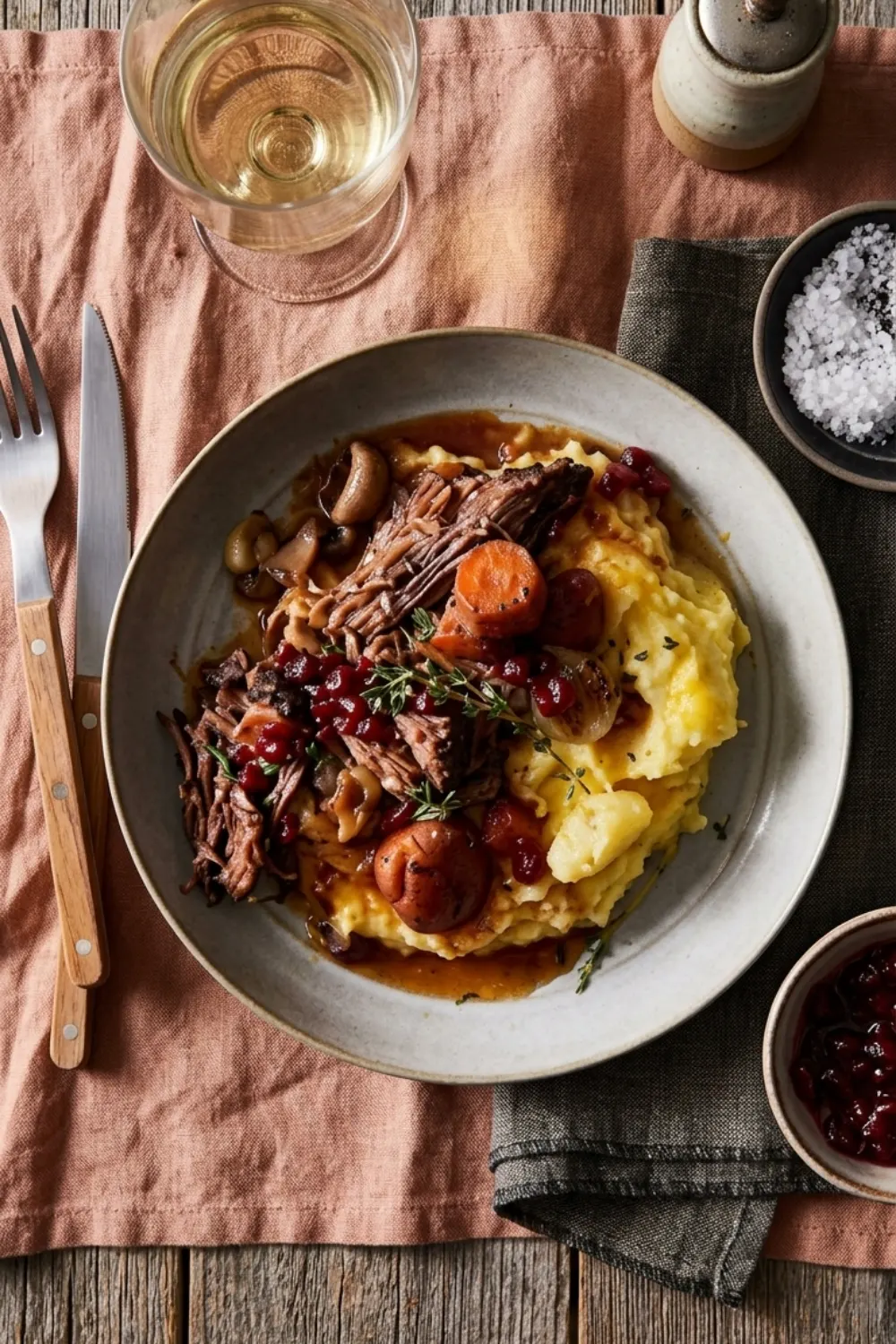
This tender Rosh Hashanah pot roast is a comforting, make-ahead holiday main dish made with slowly braised beef, onions, carrots, garlic, herbs, and a rich savory gravy. The beef cooks low and slow until it is fork-tender, deeply flavorful, and easy to slice for a festive dinner.
A Dutch oven is ideal for this recipe because you can sear the beef, build the braising liquid, and cook everything in one pot. Serve this holiday pot roast with mashed potatoes, sweet Rosh Hashanah rice, roasted vegetables, or warm challah for a generous meal that feels special without requiring last-minute work.
Note about the title: “Rosh Hashanah” is the complete, commonly used name of the Jewish New Year. Keep your target phrase, “Pot Roast Hashanah Recipes,” in your SEO title or a supporting heading if needed, but use the full phrase “Rosh Hashanah pot roast” naturally throughout the article for clarity and search relevance.
Why Pot Roast Is Perfect for Rosh Hashanah
A slow-cooked pot roast is a wonderful choice for Rosh Hashanah because it feeds a group, can be prepared in advance, and becomes even more flavorful after resting in its gravy overnight. Instead of spending the holiday managing a last-minute meal, you can make most of the dish a day before and simply reheat it before serving.
Pot roast is made from a tougher, flavorful cut of beef that becomes tender through gentle braising. The roast is first browned to create deeper savory flavor, then cooked covered in broth, aromatic vegetables, herbs, and seasonings. Over several hours, the connective tissue in the beef softens, creating a tender roast and a naturally rich sauce.
For a Jewish holiday meal, this recipe is flexible enough to fit many family traditions. You can keep the flavors classic with onions, carrots, garlic, thyme, and beef broth, or you can add symbolic sweet ingredients such as honey, dates, dried apricots, pomegranate juice, or a touch of silan, also known as date syrup.
This version uses a balance of savory and lightly sweet flavors. A small amount of honey and tomato paste deepens the gravy without turning it into a sweet roast. The result is a tender beef dinner that pairs easily with traditional holiday side dishes.
Pot Roast vs. Brisket for Rosh Hashanah
Both pot roast and brisket are popular choices for holiday dinners, but they have different textures and cooking needs. Brisket comes from the breast area of the cow and is often sliced thinly against the grain after braising. Chuck roast comes from the shoulder and is especially well suited to classic pot roast because it becomes tender, juicy, and rich during a long cook.
If you prefer a roast that can be sliced into thick, tender pieces and served with vegetables, chuck roast is an excellent option. If your family traditionally serves brisket, you can use brisket in this recipe, although the cooking time may need adjustment depending on its thickness.
Why It Is a Great Make-Ahead Dish
Pot roast is one of the best holiday dishes to prepare a day ahead. Once cooled, the beef rests in the sauce and absorbs more flavor. The chilled fat also rises and firms on the surface, making it easy to remove before reheating.
For the neatest slices, refrigerate the cooked roast overnight in its braising liquid. Slice the cold beef against the grain the next day, return the slices to the sauce, and reheat gently. This method keeps the meat moist and gives you clean, attractive portions for your Rosh Hashanah table.
Ingredients for Tender Holiday Pot Roast
A successful pot roast begins with the correct cut of beef. Boneless chuck roast is the most reliable option because it has enough marbling and connective tissue to stay moist during a long braise. Look for a roast weighing about 3½ to 4 pounds for eight servings.
Onions, carrots, celery, and garlic create the aromatic base of the gravy. They cook with the beef and add sweetness, savory depth, and body to the braising liquid. Tomato paste contributes a rich, concentrated flavor and helps give the finished sauce a beautiful deep color.
Beef broth forms the base of the cooking liquid. A dry red wine is optional but recommended for extra depth; choose a wine you would enjoy drinking. If you prefer not to use wine, replace it with additional beef broth. A small amount of honey adds gentle sweetness suitable for a festive Rosh Hashanah meal, while Dijon mustard, thyme, rosemary, and bay leaves bring balance.
Choosing the Best Cut of Beef
Use one of the following cuts:
- Boneless chuck roast, the best all-purpose option for classic pot roast.
- Shoulder roast, which becomes tender with slow braising.
- Blade roast, another flavorful shoulder-area cut.
- Brisket, if you prefer a more traditional holiday-style sliced beef dish.
Avoid lean cuts such as eye of round if possible. Lean roasts can become dry and stringy during long cooking because they do not have enough marbling for a moist pot roast.
Vegetables and Aromatics
Carrots are classic in pot roast because they become tender and naturally sweet. Yellow onions cook down into the gravy and help create a rich sauce. Celery is optional but adds an extra layer of savory flavor.
You may add small potatoes to the pot, but keep in mind that they can become very soft during a long braise. For a cleaner presentation, many cooks prefer serving mashed potatoes, roasted potatoes, or sweet Rosh Hashanah rice on the side.
Kosher and Holiday Considerations
If you are serving a kosher-style holiday meal, use kosher-certified beef broth and confirm that your other packaged ingredients fit your dietary needs. Because this recipe is a meat main course, do not serve dairy sides or dairy-based sauces with it if you are following kosher separation practices.
The recipe card below uses no butter, cream, or dairy. It is naturally dairy-free when prepared with the listed ingredients.
How to Make Rosh Hashanah Pot Roast
Begin by taking the chuck roast out of the refrigerator about 30 minutes before cooking. Pat it very dry with paper towels. Dry meat browns better, and the browning step creates the deep flavor that makes a pot roast taste rich rather than flat.
Season the roast generously with kosher salt and black pepper. Heat olive oil in a large Dutch oven over medium-high heat, then sear the roast for about 4 to 5 minutes per side. Do not rush this step. A dark brown crust on the outside of the meat adds flavor to both the beef and the sauce.
Transfer the browned roast to a plate. Reduce the heat to medium, then add onions, carrots, celery, and garlic to the same pot. Cook them until they begin to soften. Stir in tomato paste and let it cook for about one minute. This removes the raw tomato taste and develops a deeper flavor.
Pour in red wine, if using, and scrape the browned bits from the bottom of the pot. Those browned bits are full of flavor. Add beef broth, honey, Dijon mustard, thyme, rosemary, and bay leaves. Return the roast to the pot along with any juices collected on the plate.
The liquid should come about one-third to halfway up the sides of the meat. Cover the Dutch oven tightly and cook it in a 325°F (165°C) oven for approximately 3 to 3½ hours. Turn the roast once halfway through cooking if possible.
The roast is done when a fork slides into the meat easily and twists with very little resistance. If the beef still feels firm, it needs more time. Tough pot roast is usually undercooked, not overcooked; continue braising it in 20- to 30-minute increments until tender.
How to Make a Rich Gravy
After removing the cooked roast and vegetables, skim any excess fat from the surface of the braising liquid. Discard the bay leaves. You can serve the sauce as it is, with soft vegetables mixed in, or blend part of the vegetables into the liquid for a thicker gravy.
For an even thicker sauce, make a cornstarch slurry by mixing 1 tablespoon cornstarch with 1 tablespoon cold water. Bring the sauce to a gentle simmer on the stovetop, then whisk in the slurry. Simmer for one to two minutes, until thickened.
Taste the gravy before serving. Add more salt, pepper, or a small amount of honey if necessary. If the sauce tastes too sweet, a splash of lemon juice or red wine vinegar can brighten and balance it.
Slow Cooker Method
To make this Rosh Hashanah pot roast in a slow cooker, sear the beef and sauté the aromatics in a skillet first. Transfer everything to a large slow cooker, then cook on low for 8 to 9 hours or on high for 5 to 6 hours, until fork-tender.
For the best gravy, transfer the cooking liquid to a saucepan after cooking and simmer it on the stovetop until slightly reduced. You can also use the cornstarch slurry method to thicken it.
Dutch Oven and Slow Cooker Options
A Dutch oven is the best option when you want deep caramelized flavor, a rich gravy, and a one-pot cooking method. The heavy pot retains heat well and allows the beef to braise evenly in the oven.
A slow cooker is useful when you need a more hands-off option. It is especially convenient if you want to start the pot roast in the morning and have it ready later in the day. The key is to sear the meat first, because slow cookers do not create the same browned crust.
The oven method generally creates a more concentrated sauce because some moisture evaporates during braising. In a slow cooker, the lid traps almost all moisture, so you may need less broth or may need to thicken the sauce after cooking.
Oven Temperature and Cooking Time
For a 3½- to 4-pound chuck roast, cook at 325°F (165°C) for 3 to 3½ hours. If the roast is larger or thicker, it may need 4 hours. Rather than relying only on the clock, test tenderness with a fork.
Low, gentle cooking is the goal. High oven temperatures can cause the braising liquid to boil aggressively, which may make the outer part of the meat dry before the center becomes tender.
How to Know When Pot Roast Is Done
A fully cooked pot roast should be fork-tender. Insert a fork into the thickest part of the meat and twist gently. If the meat resists or feels rubbery, it needs more cooking time.
For food safety, beef should reach a safe internal temperature, but tenderness matters most for this cut. The long braising process needs time to soften the connective tissue. Once tender, let the roast rest for 15 to 20 minutes before slicing.
Common Pot Roast Problems
If your roast is tough, return it to the pot, cover it, and continue cooking. It likely needs more time.
If the sauce is thin, simmer it uncovered after removing the roast and vegetables, or thicken it with cornstarch slurry.
If the sauce is greasy, use a spoon to skim the fat or chill the dish overnight and remove the hardened fat before reheating.
Serving, Storing, and Make-Ahead Tips
Serve this tender holiday pot roast on a platter with sliced beef, carrots, onions, and plenty of gravy spooned over the top. Fresh thyme, rosemary, pomegranate arils, or chopped parsley can add a simple festive garnish.
For a Rosh Hashanah dinner, pair the roast with sweet apple-and-honey rice, roasted root vegetables, glazed carrots, mashed potatoes, challah, or a crisp green salad. The savory gravy is especially good with rice or potatoes because they absorb every bit of flavor.
Let the roast cool before storing it. Refrigerate leftovers in an airtight container with enough gravy to keep the meat moist. Pot roast will keep for up to 4 days in the refrigerator.
To freeze, arrange sliced beef with gravy in a freezer-safe container. Freeze for up to 3 months. Thaw overnight in the refrigerator and reheat slowly in a covered baking dish or saucepan. Add a splash of beef broth if the gravy has thickened too much.
Make It One Day Ahead
Cook the entire pot roast one day before serving. Let it cool in the braising liquid, then refrigerate it covered. The next day, remove the solidified fat from the surface, slice the roast against the grain, and return the slices to the gravy.
Warm the roast gently in a 325°F (165°C) oven until hot. Avoid boiling the sliced beef, which can make it dry.
Best Way to Slice Pot Roast
Always slice pot roast against the grain. Look for the long lines running through the meat, then cut across them rather than in the same direction. This shortens the muscle fibers and makes each bite feel more tender.
If the roast begins to fall apart instead of slicing neatly, that is not a problem. Simply serve it in large tender pieces with plenty of gravy.
Tender Rosh Hashanah Pot Roast

Ingredients
For the pot roast
- 1 boneless chuck roast 3½ to 4 pounds
- 2 teaspoons kosher salt divided
- 1 teaspoon black pepper divided
- 2 tablespoons olive oil
- 2 large yellow onions sliced
- 4 medium carrots peeled and cut into 2-inch pieces
- 2 celery stalks cut into 2-inch pieces
- 5 garlic cloves minced
- 2 tablespoons tomato paste
- 1 cup dry red wine optional
- 2 cups beef broth preferably low-sodium
- 2 tablespoons honey
- 1 tablespoon Dijon mustard
- 1 teaspoon dried thyme or 2 teaspoons fresh thyme leaves
- 1 teaspoon dried rosemary or 2 teaspoons chopped fresh rosemary
- 2 bay leaves
Optional gravy thickener
- 1 tablespoon cornstarch
- 1 tablespoon cold water
For serving
- Chopped fresh parsley or fresh thyme
- Pomegranate arils optional
- Mashed potatoes sweet Rosh Hashanah rice, or challah
Instructions
- Preheat the oven to 325°F (165°C). Pat the chuck roast dry with paper towels. Season all sides with 1½ teaspoons kosher salt and ¾ teaspoon black pepper.
- Heat olive oil in a large Dutch oven over medium-high heat. Sear the roast for 4 to 5 minutes per side, until deeply browned. Transfer the roast to a plate.
- Reduce the heat to medium. Add the onions, carrots, and celery to the pot. Cook for 5 to 6 minutes, stirring occasionally, until the onions begin to soften.
- Add the garlic and cook for 30 seconds. Stir in the tomato paste and cook for 1 minute.
- Pour in the red wine, if using. Scrape the browned bits from the bottom of the pot. Simmer for 2 to 3 minutes.
- Add the beef broth, honey, Dijon mustard, thyme, rosemary, bay leaves, remaining ½ teaspoon salt, and remaining ¼ teaspoon black pepper. Stir to combine.
- Return the roast and any collected juices to the Dutch oven. The liquid should reach about one-third to halfway up the sides of the roast. Add a little more broth if needed.
- Cover tightly with a lid and transfer the pot to the oven. Cook for 3 to 3½ hours, turning the roast once halfway through, until the beef is fork-tender.
- Transfer the roast to a cutting board and let it rest for 15 to 20 minutes. Remove and discard the bay leaves. Skim excess fat from the braising liquid.
- If you prefer thicker gravy, bring the sauce to a gentle simmer on the stovetop. Mix cornstarch and cold water in a small bowl, then whisk the slurry into the sauce. Simmer for 1 to 2 minutes, until thickened.
- Slice the pot roast against the grain or serve it in large tender pieces. Arrange on a platter with carrots and onions, then spoon the gravy over the top. Garnish with parsley, thyme, or optional pomegranate arils.