
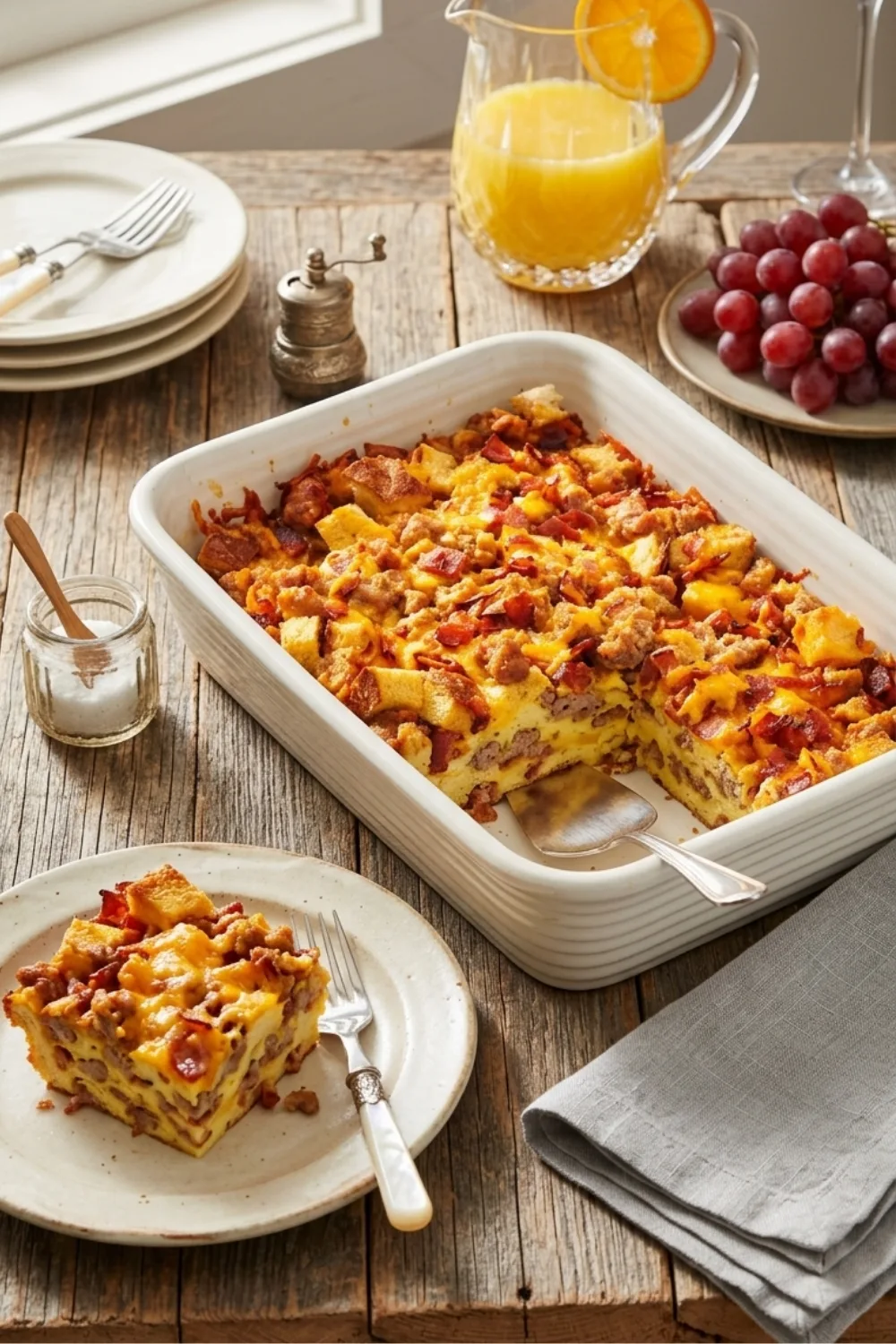
This sausage cheese strata is a savory overnight breakfast casserole made with crusty bread, seasoned breakfast sausage, eggs, milk, and melted cheese. It is an easy make-ahead brunch recipe that bakes into a golden, fluffy, custardy casserole—perfect for holidays, weekends, or feeding guests.
Summary: A cheesy sausage breakfast strata with cubes of bread soaked in a flavorful egg custard. Assemble it the night before, refrigerate overnight, and bake it fresh in the morning for an effortless family breakfast or brunch.
Servings: 8
Prep time: 20 minutes
Chill time: 4 hours to overnight
Cook time: 45–55 minutes
Total time: About 1 hour 15 minutes, plus chilling time
Cuisine: American
Course: Breakfast, Brunch, Casserole
What Is a Sausage Cheese Strata?
A strata is a baked breakfast casserole made by layering bread, fillings, cheese, and an egg-and-milk custard. As the dish rests in the refrigerator, the bread absorbs the custard. When baked, it becomes tender in the center with a lightly crisp, golden top.
Sausage cheese strata is an excellent way to use day-old bread and turn simple ingredients into a filling breakfast. It is similar to a savory bread pudding, but it is made for breakfast or brunch rather than dessert.
A savory breakfast bread pudding
The basic structure of a breakfast strata is easy: cubed bread forms the base, cooked sausage provides savory flavor, cheese adds richness, and eggs with milk hold everything together.
The bread is not just an extra ingredient—it is what gives strata its unique soft, custardy texture. Choose sturdy bread that can absorb the egg mixture without completely falling apart.
Why strata is ideal for brunch
A sausage cheese strata serves a crowd without requiring you to stand at the stove cooking individual eggs, pancakes, or breakfast sandwiches. You can prepare everything in advance, then bake it while you set the table or prepare coffee.
It is especially helpful for Christmas morning, Easter brunch, Mother’s Day, weekend gatherings, potlucks, and overnight guests. Add fresh fruit, a green salad, or pastries to turn the casserole into a complete brunch spread.
The difference between strata and breakfast casserole
A breakfast casserole can contain many ingredients, including potatoes, hash browns, eggs, sausage, vegetables, or cheese. A strata is a type of breakfast casserole that specifically relies on bread soaked in an egg custard.
Because of the bread, strata has a softer, more custardy center than a hash brown breakfast casserole. It is closer to a savory French toast bake or a savory bread pudding.
Why an overnight rest makes it better
Letting the assembled strata chill gives the bread time to absorb the egg mixture evenly. This prevents dry patches of bread and helps the casserole bake into a cohesive, tender dish.
A minimum of 4 hours works well, but overnight chilling is best. If you are short on time, let the strata rest at room temperature for 30 minutes before baking, though the texture may not be quite as even.
Ingredients for Sausage Cheese Strata
The ingredient list is flexible, but a good strata needs four main elements: sturdy bread, savory sausage, cheese, and an egg custard. The remaining ingredients add moisture, flavor, and color.
The best bread for breakfast strata
Use day-old or slightly stale bread because it absorbs the egg mixture better than very fresh, soft bread. French bread, sourdough, ciabatta, challah, country white bread, or a hearty artisan loaf are all excellent choices.
Avoid very soft sandwich bread, which can turn mushy. If your bread is fresh, cut it into cubes, spread it on a baking sheet, and toast it at 300°F for 10 to 15 minutes until dry on the outside.
Breakfast sausage and cheese
Use pork breakfast sausage, turkey sausage, chicken sausage, or a plant-based sausage. Regular, sage, maple, mild, or spicy breakfast sausage will all work, although a maple sausage will create a slightly sweet-savory flavor.
Sharp cheddar cheese gives this strata a bold taste, while Gruyère adds a rich nutty flavor. You can use all cheddar or a blend of cheddar and Gruyère. Swiss, mozzarella, Monterey Jack, pepper jack, or fontina also work well.
Eggs, milk, and cream
Eggs create the custard that holds the casserole together. Whole milk gives the strata a soft texture, while a small amount of half-and-half or heavy cream makes it richer and more suitable for a special brunch.
Use whole milk for the best balance. Lower-fat milk works, but the finished strata may be less creamy. For a richer version, use equal amounts whole milk and half-and-half.
Dijon mustard, herbs, and seasonings
Dijon mustard adds mild tang and depth without making the dish taste strongly like mustard. It pairs well with sausage, cheddar, and eggs.
Dried thyme, parsley, black pepper, garlic powder, and a small amount of salt add flavor. Fresh chives or green onions make a fresh garnish after baking. Be cautious with salt because sausage and cheese are already salty.
How to Make Sausage Cheese Strata
This easy sausage cheese strata comes together in four main stages: cook the sausage, cube the bread, whisk the egg custard, then assemble and chill the casserole before baking.
Cook the sausage and prepare the bread
Heat a large skillet over medium heat. Cook the breakfast sausage, breaking it into crumbles, until browned and fully cooked. This usually takes 6 to 8 minutes. Drain excess grease if necessary, then let the sausage cool slightly.
Cut the bread into 1-inch cubes. For the best texture, use bread that is slightly stale or toasted. Fresh bread holds more moisture and can make the center of the strata too soft.
Make the egg custard mixture
In a large bowl, whisk the eggs, milk, half-and-half, Dijon mustard, garlic powder, dried thyme, salt, and black pepper. Whisk until the eggs are completely blended and the mustard is evenly distributed.
The custard should look smooth and pale yellow. Take a moment to taste a tiny amount only if you are comfortable doing so with raw egg; otherwise, rely on the measured seasonings and adjust after baking if needed.
Assemble the strata in a baking dish
Grease a 9-by-13-inch baking dish with butter, cooking spray, or oil. Spread half of the bread cubes across the bottom of the dish. Top with half of the cooked sausage, then half of the shredded cheese.
Repeat with the remaining bread, sausage, and cheese. Slowly pour the egg custard over the entire casserole, moving around the dish so every piece of bread gets some liquid. Press the bread lightly into the custard with a spatula.
Refrigerate overnight and bake
Cover the baking dish tightly and refrigerate for at least 4 hours or overnight. This is the key step that allows the bread to soak up the egg mixture.
When ready to bake, remove the strata from the refrigerator while the oven heats to 350°F. Bake uncovered for 45 to 55 minutes, until the top is golden and the center is set. The middle should not look wet or liquid when gently shaken.
For food safety, cook egg dishes until the center reaches 160°F. If reheating baked leftovers, heat them to 165°F.fda+2
Let the sausage cheese strata rest for 10 to 15 minutes before cutting. This resting time makes it easier to serve clean slices.
Make-Ahead Tips and Easy Variations
One of the best things about sausage cheese strata is its flexibility. You can make it ahead, change the cheese, add vegetables, or adapt it for vegetarian guests.
Can you prepare strata the night before?
Yes. Assemble the full casserole, cover it tightly, and refrigerate it overnight for up to 12 hours. Bake it the next morning directly from the refrigerator, allowing a few extra minutes if the baking dish is very cold.
Do not leave an unbaked egg-and-sausage strata on the counter for a long period. Keep it chilled until you are ready to bake it.
Cheese substitutions for strata
Cheddar and Gruyère are a flavorful combination, but you can use one cheese or create your own blend. Swiss cheese gives a mild, nutty taste. Pepper jack adds a little spice. Mozzarella creates a mild, stretchy texture, while Parmesan adds a salty finish.
For a more Italian-style strata, use mozzarella, Parmesan, spinach, and Italian sausage. For a Southwest-style variation, use pepper jack, green chiles, and spicy sausage.
Add vegetables, bacon, or ham
Sauté mushrooms, bell peppers, onions, spinach, broccoli, or zucchini before adding them to the casserole. Cooking vegetables first removes excess moisture, which helps the strata set properly.
You can replace sausage with cooked bacon, diced ham, shredded rotisserie chicken, or leftover roasted vegetables. Keep the total quantity of add-ins reasonable so the bread and egg custard remain the main structure of the dish.
How to make a vegetarian breakfast strata
Skip the sausage and add cooked mushrooms, spinach, roasted red peppers, caramelized onions, broccoli, or asparagus. Use a combination of cheddar, Gruyère, goat cheese, feta, or mozzarella.
For more protein in a vegetarian strata, add white beans or a plant-based sausage. Make sure vegetables are cooked and drained before assembling the casserole.
How to Store, Reheat, and Serve Strata
Sausage cheese strata is best served warm shortly after baking, but leftovers make a convenient breakfast for the next few days.
How to store leftover sausage strata
Let the baked strata cool slightly, then cover the dish or transfer individual pieces to shallow airtight containers. Refrigerate leftovers within 2 hours of cooking.
Cooked egg dishes should be refrigerated and used within 3 to 4 days.fda+1
Can you freeze breakfast strata?
Yes. Bake the strata first, cool it completely, and cut it into individual portions. Wrap each portion tightly, then place the portions in a freezer-safe container or bag.
Freeze for up to 2 months for the best texture. Thaw overnight in the refrigerator before reheating. Because bread-based casseroles can soften after freezing, the best texture comes from reheating in the oven rather than only in the microwave.
How to reheat strata
For a single slice, microwave it in 30- to 45-second intervals until hot. Cover the dish loosely to help retain moisture.
For several servings, place the strata in a baking dish, cover it with foil, and warm it in a 325°F oven until heated through. Reheat cooked egg dishes and casseroles to 165°F for safe serving.fda+1
What to serve with a brunch casserole
Serve sausage cheese strata with fresh berries, fruit salad, orange slices, grapes, yogurt, or a green salad for a lighter contrast.
For a larger brunch, pair it with cinnamon rolls, muffins, coffee cake, hash browns, roasted breakfast potatoes, or a fresh tomato salad. Coffee, tea, orange juice, and sparkling water are simple drink options.

Sausage Cheese Strata

Ingredients
- 1 pound breakfast sausage
- 10 cups day-old French bread sourdough, or ciabatta, cut into 1-inch cubes
- 2 cups shredded sharp cheddar cheese divided
- 1 cup shredded Gruyère cheese divided
- 8 large eggs
- 2 cups whole milk
- ½ cup half-and-half
- 1 tablespoon Dijon mustard
- 1 teaspoon garlic powder
- ½ teaspoon dried thyme
- ½ teaspoon salt
- ½ teaspoon black pepper
- 2 tablespoons chopped fresh chives or green onions optional garnish
Instructions
- Grease a 9-by-13-inch baking dish with butter, oil, or cooking spray.
- Heat a large skillet over medium heat. Cook the breakfast sausage for 6 to 8 minutes, breaking it into crumbles, until browned and fully cooked. Drain excess grease and set aside to cool slightly.
- Place half of the bread cubes in the prepared baking dish. Sprinkle half of the cooked sausage, 1 cup of cheddar cheese, and ½ cup of Gruyère cheese over the bread.
- Add the remaining bread cubes, sausage, cheddar cheese, and Gruyère cheese in another layer.
- In a large bowl, whisk together the eggs, whole milk, half-and-half, Dijon mustard, garlic powder, dried thyme, salt, and black pepper until smooth.
- Pour the egg mixture evenly over the bread and sausage layers. Press the bread down gently with a spatula so it absorbs the custard.
- Cover the dish tightly and refrigerate for at least 4 hours or overnight.
- When ready to bake, preheat the oven to 350°F. Remove the dish from the refrigerator while the oven heats.
- Bake uncovered for 45 to 55 minutes, until the top is golden brown and the center is set. A food thermometer inserted into the center should read 160°F.
- Let the strata rest for 10 to 15 minutes before slicing. Garnish with chives or green onions, if desired, and serve warm.
Notes
- Best bread: Day-old French bread, sourdough, ciabatta, or a firm artisan loaf works best. Avoid very soft sandwich bread.
- If using fresh bread: Toast the bread cubes at 300°F for 10 to 15 minutes before assembling the strata.
- Make ahead: Assemble and refrigerate the casserole overnight, then bake it the next morning.
- Vegetable additions: Add up to 1½ cups cooked and drained mushrooms, bell peppers, spinach, broccoli, or roasted vegetables.
- Storage: Refrigerate baked leftovers within 2 hours and use within 3 to 4 days.fda+1
- Reheating: Reheat leftovers to 165°F.fda+1
- Freezing: Freeze baked, cooled portions for up to 2 months. Thaw overnight in the refrigerator before reheating.