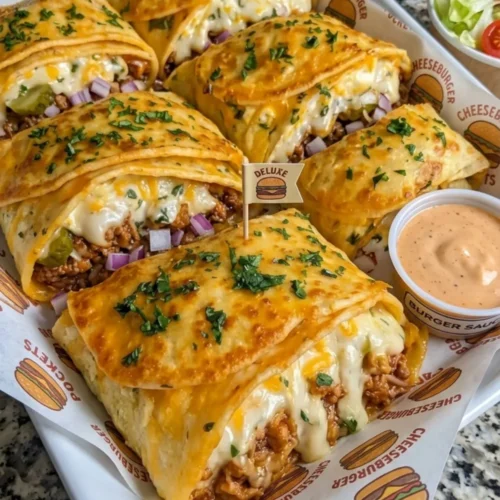
These Cheeseburger Pockets wrap a juicy ground-beef cheeseburger filling in golden, flaky dough for an easy handheld dinner. Each pocket has seasoned beef, melted cheddar, ketchup, mustard, onion, and optional pickles—everything you love about a classic burger, but in a portable hand pie.
Ingredients
For the cheeseburger filling
- 1 pound lean ground beef
- 1 small yellow onion finely diced
- 1 garlic clove minced, optional
- 1/2 teaspoon salt
- 1/4 teaspoon black pepper
- 1/2 teaspoon smoked paprika
- 1 tablespoon ketchup
- 1 tablespoon yellow mustard
- 1 teaspoon Worcestershire sauce optional
- 1/2 cup diced dill pickles optional
- 1 1/2 cups shredded sharp cheddar cheese divided
For the pockets
- 2 tubes refrigerated crescent roll dough 8 ounces each
- Or use 1 pound pizza dough puff pastry, or refrigerated biscuit dough
- 1 large egg
- 1 tablespoon water
- 1 tablespoon sesame seeds optional
- Cooking spray or a little olive oil
For serving
- Ketchup
- Mustard
- Burger sauce or special sauce
- Ranch dressing
- Dill pickle slices
- French fries potato wedges, or a green salad
Instructions
- reheat the oven. Heat the oven to 375°F / 190°C. Line a large baking sheet with parchment paper.
- Cook the beef and onion. Place a large skillet over medium-high heat. Add the ground beef and diced onion. Cook for 7–9 minutes, breaking the beef into small crumbles, until it is fully browned and the onion is soft.
- Drain excess grease. Carefully drain or blot away excess fat from the skillet. This keeps the filling from making the dough greasy or soggy.
- Season the filling. Stir in garlic, salt, black pepper, smoked paprika, ketchup, mustard, Worcestershire sauce, and diced pickles if using. Cook for 1 more minute, then remove the skillet from the heat.
- Add some cheese. Stir 1 cup of shredded cheddar into the warm beef mixture. The cheese does not need to melt completely; it will melt again inside the pockets while baking.
- Prepare the dough. Unroll the crescent dough. Press the perforated seams together to form solid sheets. Cut the dough into 6 equal rectangles. If using pizza dough, roll it into a rectangle and cut it into 6 pieces.
- Fill the pockets. Place approximately 1/3 cup of cheeseburger filling on one side of each dough rectangle, leaving a 1/2-inch border around the edges. Add a small extra sprinkle of cheddar if desired.
- Seal the hand pies. Fold the empty half of each dough rectangle over the filling. Press the edges firmly together, then crimp with a fork. Cut two or three small slits in the top of each pocket to let steam escape.
- Add egg wash. Whisk the egg and water together. Brush the top of each pocket with egg wash, then sprinkle with sesame seeds if using.
- Bake. Bake for 15–18 minutes, until the dough is puffed, golden brown, and fully cooked through.
- Cool and serve. Let the pockets rest for 5 minutes before serving. Serve warm with ketchup, mustard, burger sauce, or ranch dressing.
- Why You’ll Love These Cheeseburger Pockets
- Cheeseburger Pockets give you the comfort and flavor of a homemade cheeseburger in a convenient, easy-to-hold form. The seasoned ground beef, gooey cheese, tangy ketchup and mustard, and buttery golden crust make every bite satisfying.
- They are especially useful when you want a meal that feels fun but does not require standing at the grill. Unlike standard burgers, these pockets are easy to pack, store, reheat, and serve to a group.
- A family-friendly handheld dinner
- Kids and adults both enjoy the familiar cheeseburger flavor. The sealed dough keeps the filling inside, so this recipe is less messy than regular burgers and works well for school lunches, picnics, road trips, and casual dinners.
- For children who do not like pickles or onions, simply leave those ingredients out of their individual pockets.
- Easy for busy weeknights
- The filling comes together in one skillet, and refrigerated crescent roll dough makes assembly fast. You can have six warm cheeseburger hand pies on the table in under 40 minutes.
- If you already have cooked ground beef in the refrigerator, the recipe becomes even quicker. Warm the beef with the seasonings, fill the dough, and bake.
- Great for meal prep and freezing
- Make a double batch, cool the baked pockets completely, and freeze them for later. They can be stored frozen for approximately 2–3 months when well wrapped.
- This makes them useful for days when you need a fast lunch or dinner without cooking from scratch.
- Easy to customize
- You control the burger flavors. Use American cheese for a classic fast-food-style pocket, add bacon for a bacon cheeseburger version, use Pepper Jack for spice, or add sautéed mushrooms for a mushroom Swiss cheeseburger pocket.
- Ingredients for Ground Beef and Cheese Hand Pies
- The ingredients are simple, but each one helps create an authentic cheeseburger flavor inside a crisp, buttery crust.
- Ground beef and onion
- Lean ground beef works best because it gives you rich burger flavor without releasing too much grease. Ground beef with around 85–90% lean meat is a good choice.
- Finely diced yellow onion adds sweetness and moisture as it cooks. Chop it small so it blends into the meat filling and does not make the pockets bulky.
- You can substitute ground turkey, ground chicken, or plant-based ground meat. If using a lean protein such as turkey, add a small splash of olive oil while cooking to keep the filling moist.
- Ketchup, mustard, and burger seasonings
- Ketchup and yellow mustard provide the familiar tang of a cheeseburger. Worcestershire sauce adds savory depth, while smoked paprika brings a gentle smoky note.
- You can also use:
- A teaspoon of pickle juice for extra tang.
- A dash of hot sauce for heat.
- Burger seasoning instead of salt, pepper, and paprika.
- Onion powder or garlic powder if you do not have fresh onion or garlic.
- A small amount of mayonnaise for a richer, creamy filling.
- Avoid adding too much sauce. Excess moisture can leak out and make the pocket seams open during baking.
- Cheddar cheese and alternatives
- Sharp cheddar gives the filling a bold cheese flavor, but many other cheeses work well:
- American cheese: Creates a classic diner-style cheeseburger flavor.
- Mozzarella: Makes the filling mild and extra stretchy.
- Monterey Jack: Melts smoothly with a creamy flavor.
- Pepper Jack: Adds a spicy kick.
- Swiss cheese: Excellent for a mushroom Swiss variation.
- Use freshly shredded cheese when possible for the smoothest melt.
- Crescent roll dough and dough options
- Refrigerated crescent roll dough is quick, buttery, and easy to work with. Pressing the seams together is important because it creates a solid piece of dough that will not separate as the pockets bake.
- You can also make this recipe with:
- Store-bought pizza dough for a chewier crust.
- Puff pastry for a flaky, bakery-style hand pie.
- Refrigerated biscuit dough for soft, thick pockets.
- Homemade pizza dough if you prefer a from-scratch version.
- Crescent dough, pizza dough, and biscuit dough are all commonly used formats for cheeseburger pocket recipes.
- How to Make Cheeseburger Pockets
- Making cheeseburger pockets is simple, but the key is to keep the filling relatively dry and seal the dough carefully.
- Cook the cheeseburger filling
- Start with a hot skillet and cook the beef with the onion until the meat is no longer pink. Break the beef into small crumbles as it cooks. Small crumbles make the pockets easier to fill and seal.
- Drain excess fat after browning. Then add the ketchup, mustard, Worcestershire sauce, smoked paprika, salt, pepper, garlic, and pickles. Stir until the filling is evenly seasoned.
- Remove the pan from the heat before adding the cheese. This prevents the cheese from becoming overly oily or stringy in the skillet. It will finish melting inside the pockets.
- Prepare the dough
- Unroll the crescent dough on a clean work surface. Press the perforations together with your fingers or a rolling pin. Cut the sheet into six evenly sized rectangles.
- If you use a different dough, aim for pieces approximately 5–6 inches wide. The dough should be large enough to fold over about 1/3 cup of filling without stretching too thin.
- Fill and seal the pockets
- Place filling on only one half of each dough rectangle. Leave a clear border around the edge because filling placed too close to the edge can prevent a good seal.
- Fold the dough over the filling. Pinch the edges first, then press them with the tines of a fork. This creates a stronger seal and gives the pockets a classic hand-pie appearance.
- Cut a few small slits in the top of each pocket. These vent holes allow steam to escape and help the crust bake evenly.
- Bake until golden brown
- Brush the pockets with egg wash before baking. This gives the crust a shiny, deep golden color. Sesame seeds are optional but add a burger-bun look.
- Bake at 375°F / 190°C for 15–18 minutes. Different dough brands and ovens vary, so begin checking at 14 minutes. The pockets are ready when the crust is deeply golden and the bottom is cooked through.
- Oven recommendations for related cheeseburger pocket recipes range from about 350°F to 425°F, with most baking times falling between 10 and 20 minutes based on the dough used and the pocket size.
- Cheeseburger Pocket Variations
- This recipe is easy to change without changing the basic method. Choose a variation that fits your family’s favorite burger order.
- Bacon cheeseburger pockets
- Cook 4–6 strips of bacon until crisp, crumble them, and stir them into the beef filling. Use sharp cheddar or American cheese, then serve with a little burger sauce or ranch for dipping.
- For even more bacon flavor, sprinkle a little cooked bacon over the cheese before folding the dough.
- Big Mac-inspired cheeseburger pockets
- For a Big Mac-inspired version, add diced pickles, finely shredded lettuce after baking, and a homemade special sauce for dipping.
- To make an easy special sauce, combine:
- 1/4 cup mayonnaise
- 1 tablespoon ketchup
- 1 teaspoon yellow mustard
- 1 tablespoon finely chopped dill pickles or pickle relish
- 1/4 teaspoon garlic powder
- 1/4 teaspoon onion powder
- Do not put lettuce inside before baking because it releases water and becomes soft. Add it after baking or serve it on the side.
- Mushroom Swiss cheeseburger pockets
- Sauté 1 cup finely chopped mushrooms with the onions until the mushrooms release and cook off their moisture. Use Swiss or Gruyère cheese instead of cheddar.
- This variation has a rich, savory flavor and pairs well with a little Dijon mustard in the filling.
- Spicy jalapeño cheeseburger pockets
- Add diced pickled jalapeños, fresh jalapeño, or a pinch of cayenne pepper to the beef filling. Use Pepper Jack cheese or a mix of Pepper Jack and cheddar.