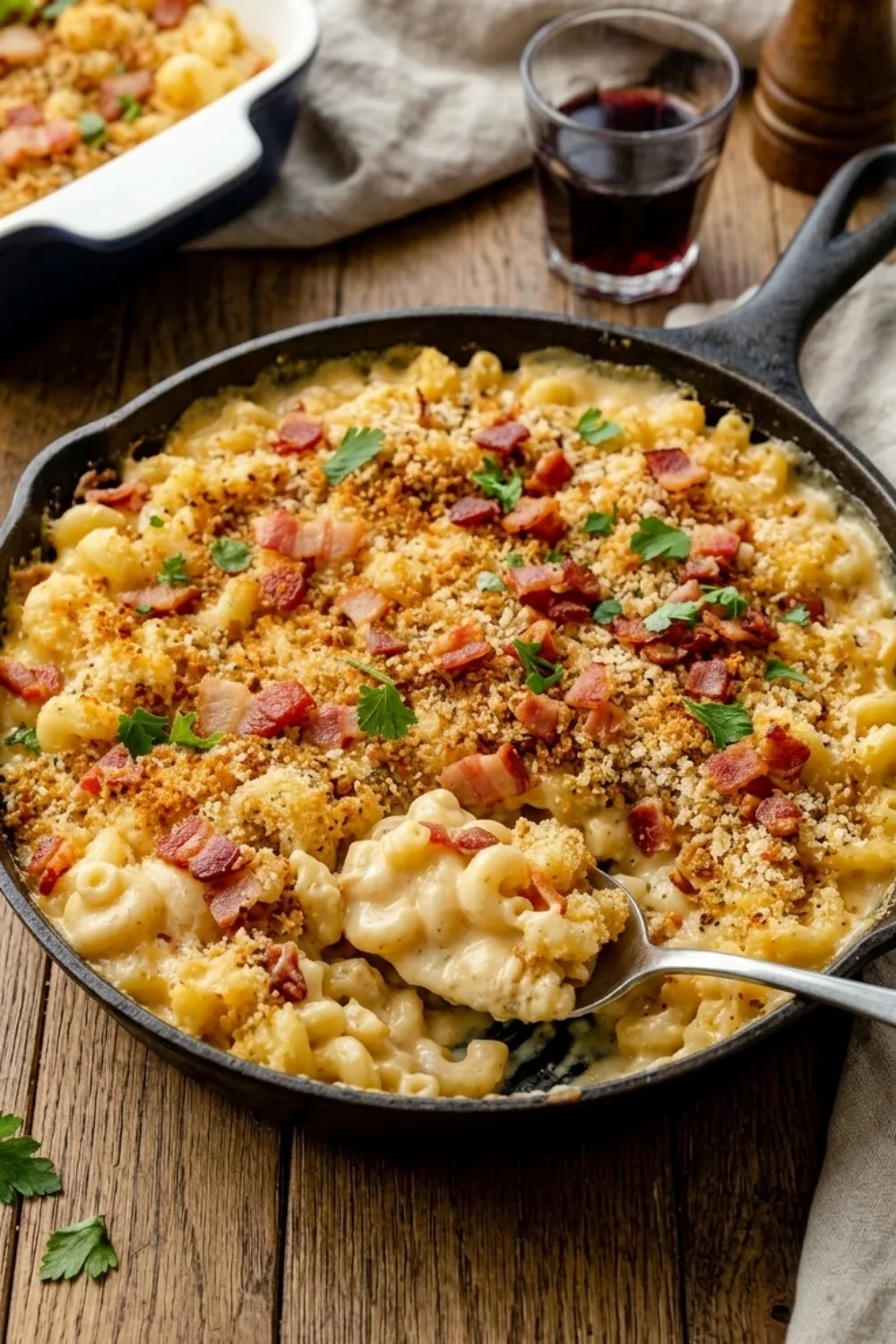
This bacon mac and cheese recipe is rich, creamy, comforting, and loaded with crispy bacon in every bite. Tender elbow macaroni is coated in a smooth homemade cheese sauce made with sharp cheddar, mozzarella, Gruyère, and Parmesan, then finished with a golden panko topping.
It is the kind of cozy homemade meal that works equally well as a family dinner, a holiday side dish, a game-day recipe, or a potluck favorite. The secret is making a proper cheese sauce with a simple butter-and-flour roux, using freshly shredded cheese, and avoiding high heat once the cheese is added.
Why You’ll Love This Bacon Mac and Cheese
This is not a boxed macaroni and cheese recipe. It is a homemade bacon mac and cheese with a silky, flavorful sauce, plenty of real cheese, and savory bacon throughout. Every forkful has creamy pasta, gooey cheese, and smoky, crisp bacon.
The cheese blend gives the sauce a balanced flavor. Sharp cheddar provides the classic mac and cheese taste, mozzarella adds a stretchy texture, Gruyère brings a slightly nutty richness, and Parmesan adds a salty finish. You can use only cheddar if you prefer a simpler recipe, but combining cheeses makes the sauce more interesting.
This recipe also works for many occasions. Serve it as a main dish with a simple green salad, roasted broccoli, or steamed green beans. You can also serve smaller portions as a side dish with roasted chicken, barbecue, burgers, or holiday meats.
Creamy homemade cheese sauce in every bite
The creamy texture comes from a roux-based cheese sauce. A roux is simply butter and flour cooked together before milk is added. It helps the sauce thicken and gives the macaroni a smooth coating instead of a thin, watery sauce.
Adding the milk gradually while whisking helps prevent lumps. Once the sauce thickens, lower the heat before adding the cheese. This is important because cheese can become grainy or oily when overheated.
Crispy bacon adds salty, smoky flavor
Bacon turns classic macaroni and cheese into a more filling, savory meal. Cook the bacon until it is crisp, then crumble it into bite-sized pieces. Add most of the bacon to the pasta mixture and save some for the top.
For even more flavor, you can use one tablespoon of the rendered bacon fat in place of some of the butter when making the roux. This adds a subtle smoky bacon flavor to the cheese sauce.
A comforting dinner or crowd-pleasing side dish
Bacon macaroni and cheese is comfort food at its best. It is warm, creamy, and satisfying, especially during cooler weather. It can be served as a generous main dish for a simple dinner or as a smaller side for a larger meal.
For holidays such as Thanksgiving, Christmas, or Easter, this baked bacon mac and cheese can be prepared in advance and baked just before serving. It is also a reliable potluck dish because it stays rich and flavorful even after sitting out briefly.
Easy enough for weeknight meals and holidays
Although this recipe tastes special, it uses straightforward ingredients and simple cooking methods. You do not need complicated techniques or unusual equipment. A large pot, saucepan, whisk, baking dish, and oven are enough.
To save time on a busy night, cook the bacon while the pasta water comes to a boil. Then shred the cheese and prepare the sauce while the macaroni cooks. The recipe can be on the table in about 45 minutes.
Ingredients for Creamy Bacon Mac and Cheese
The best bacon mac and cheese starts with everyday ingredients that each have a clear purpose. Pasta gives the dish structure, bacon adds savory flavor, and a combination of cheeses creates the creamy sauce.
Freshly grated cheese is strongly recommended. Packaged pre-shredded cheese is often coated with anti-caking ingredients that can stop it from melting as smoothly. Grating a block of cheese takes a few extra minutes but makes a major difference in the final sauce.
Elbow macaroni and the best pasta shapes to use
Elbow macaroni is the classic choice because its curved shape catches plenty of sauce. Cook it just until al dente, meaning it is tender but still has a slight bite. The pasta continues to soften while baking, so overcooked macaroni can become mushy.
If you do not have elbow macaroni, use cavatappi, shells, rotini, penne, or small rigatoni. Choose pasta with ridges, curves, or hollow spaces that can hold the thick cheese sauce.
Bacon, butter, flour, and milk for the sauce
Regular bacon works well in this recipe, but thick-cut bacon gives larger, meatier pieces. Cook it until crisp enough to crumble easily. Drain it on a paper towel-lined plate, then reserve a little for the topping.
Butter and all-purpose flour form the roux, which thickens the sauce. Whole milk makes the sauce creamy without being too heavy. For an even richer bacon mac and cheese, replace one cup of the milk with half-and-half or evaporated milk.
Sharp cheddar, mozzarella, Gruyère, and Parmesan cheese
Sharp cheddar is the main cheese in this recipe because it creates the familiar flavor people expect from macaroni and cheese. Mozzarella makes the sauce smoother and adds a light cheese pull. Gruyère gives the dish a nutty, restaurant-style flavor, while Parmesan adds a salty finish.
If you cannot find Gruyère, substitute more cheddar, Monterey Jack, fontina, or gouda. Smoked gouda is especially delicious if you want a slightly smoky flavor that matches the bacon.
Optional panko breadcrumb topping and seasonings
A panko breadcrumb topping makes this baked bacon mac and cheese crisp and golden. Toss panko breadcrumbs with melted butter and Parmesan before sprinkling them over the pasta.
For seasoning, use garlic powder, onion powder, black pepper, paprika, and a small amount of Dijon mustard. Dijon mustard does not make the dish taste strongly of mustard; instead, it deepens the cheese flavor and balances the richness of the sauce.

How to Make Bacon Mac and Cheese
Making homemade bacon mac and cheese is simple when the recipe is prepared in the right order. Start by cooking the bacon and pasta, then make the cheese sauce, combine everything, and bake until bubbling.
Have all ingredients ready before you begin the sauce. Shred the cheese, measure the milk, and prepare the seasonings. Cheese sauce comes together quickly, and preparing in advance makes the process smooth and stress-free.
Cook the macaroni until just al dente
Bring a large pot of salted water to a boil. Add elbow macaroni and cook according to the package directions, but stop cooking about one minute before the recommended time. The pasta should be slightly firm because it will finish cooking in the oven.
Before draining, reserve about one-half cup of pasta water. This starchy water can help loosen the cheese sauce later if it becomes too thick. Drain the macaroni, but do not rinse it, because the starch on the pasta helps the sauce cling better.
Cook the bacon and save a little bacon fat
While the pasta cooks, place chopped bacon in a large skillet over medium heat. Cook until the bacon is crisp, stirring occasionally. Transfer it to a paper towel-lined plate and set aside.
If you want extra bacon flavor in the sauce, carefully reserve one tablespoon of the bacon fat. You can add it to the butter when making the roux. Do not use too much, since bacon fat can make the finished dish overly salty or greasy.
Make a smooth roux and creamy cheese sauce
Melt butter in a saucepan over medium heat. Whisk in all-purpose flour and cook for about one minute. This removes the raw flour taste while creating the base that thickens the sauce.
Slowly pour in warm or room-temperature milk, whisking constantly. Continue cooking for several minutes until the sauce thickens enough to coat the back of a spoon. Stir in garlic powder, onion powder, paprika, black pepper, and Dijon mustard.
Lower the heat to very low. Add the shredded cheddar, mozzarella, Gruyère, and Parmesan one handful at a time. Stir until each addition melts before adding more cheese. Never boil the sauce after adding cheese.
Combine the pasta, bacon, and cheese sauce before baking
Add the drained pasta and most of the cooked bacon to the cheese sauce. Stir gently until every piece of macaroni is coated. If the sauce seems too thick, stir in a splash of reserved pasta water or milk.
Transfer the bacon macaroni and cheese to a greased baking dish. Top with buttered panko breadcrumbs, extra cheese if desired, and the reserved bacon. Bake until hot, bubbling around the edges, and golden on top.
Tips for the Best Baked Bacon Mac and Cheese
A few small details can make the difference between a good macaroni and cheese recipe and a truly creamy, flavorful one. Focus on the cheese, heat level, pasta texture, and baking time.
The biggest rule is simple: do not rush the cheese sauce. Use low heat, add cheese gradually, and avoid boiling. This protects the texture of the cheese and keeps the sauce smooth.
Grate your own cheese for the smoothest sauce
Block cheese melts more smoothly than packaged shredded cheese. Pre-shredded cheese often contains starch or anti-caking ingredients that can make a sauce look grainy or less creamy.
For the best result, shred the cheddar, mozzarella, Gruyère, and Parmesan just before cooking. A box grater works perfectly, and a food processor with a shredding attachment can make the job faster for larger batches.
Keep the heat low when adding cheese
High heat can cause melted cheese to separate into oil and clumps. Once the milk mixture has thickened, reduce the burner to low or remove the pan from the heat briefly before stirring in the cheese.
If your cheese sauce begins to look grainy, add a small splash of warm milk and stir gently over very low heat. Avoid boiling, which can make the problem worse.
Use pasta water if the cheese sauce becomes too thick
Macaroni absorbs sauce as it sits and continues to absorb even more while baking. Reserved pasta water is useful because it loosens the sauce without making it watery. The starch in the water also helps the sauce stay smooth.
Add one tablespoon at a time until you reach the right consistency. You can also use warm milk or broth, but pasta water is especially effective.
Bake until the topping is golden and crisp
Bake the macaroni and cheese just long enough to heat everything through and brown the topping. Overbaking can dry out the pasta and make the sauce less creamy.
If you want a darker, crunchier top, place the dish under the broiler for one to two minutes at the end. Watch it closely because breadcrumbs can burn quickly.
Serving, Storage, and Recipe Variations
This creamy bacon mac and cheese is filling enough to serve as the main course, but it also makes an excellent side dish. Choose lighter vegetables or salads to balance the richness of the cheese and bacon.
Leftovers can be stored and reheated successfully, especially if you add a splash of milk before warming them. The recipe is also easy to customize with proteins, vegetables, spices, or different cheeses.
What to serve with bacon macaroni and cheese
Serve bacon mac and cheese with a crisp green salad dressed with lemon vinaigrette, roasted broccoli, green beans, asparagus, or Brussels sprouts. The fresh, slightly acidic flavors help balance the creamy pasta.
For a larger meal, pair it with barbecue chicken, baked chicken thighs, grilled steak, pulled pork, or burgers. For a casual family meal, serve it with garlic bread and a simple vegetable side.
Make-ahead instructions for holidays and gatherings
Prepare the bacon mac and cheese through the step of transferring it to the baking dish. Cover tightly and refrigerate for up to 24 hours. Keep the breadcrumb topping separate so it stays crisp.
When ready to bake, let the dish sit at room temperature for about 20 to 30 minutes. Add the topping and bake. You may need to add five to 10 extra minutes because the pasta begins cold.
How to store and reheat leftovers without drying them out
Store leftover bacon mac and cheese in an airtight container in the refrigerator for up to four days. Reheat individual portions in the microwave with a splash of milk, stirring halfway through.
For larger portions, place the macaroni and cheese in a baking dish, add a few tablespoons of milk, cover with foil, and bake at 350°F until hot. Remove the foil during the last few minutes if you want the topping to become crisp again.
Easy variations with jalapeños, chicken, or vegetables
Add diced jalapeños or a pinch of cayenne pepper for spicy bacon mac and cheese. You can also stir in cooked shredded chicken to make the dish more substantial.
For vegetables, try steamed broccoli, roasted cauliflower, sautéed spinach, peas, caramelized onions, or roasted red peppers. You can also replace part of the cheddar with smoked gouda, pepper jack, fontina, or Monterey Jack.
Bacon Mac and Cheese FAQ
Can I make bacon mac and cheese without baking it?
Yes. Once the macaroni, bacon, and cheese sauce are mixed together, you can serve the dish immediately as stovetop bacon mac and cheese. The baked version has a crisp topping, but it is not required.
What cheese is best for bacon mac and cheese?
Sharp cheddar is the best main cheese because it has a classic bold flavor. For a smoother and more complex sauce, combine cheddar with mozzarella, Gruyère, fontina, Monterey Jack, or gouda.
Can I freeze bacon mac and cheese?
You can freeze it, but creamy pasta sauces may change texture slightly after thawing. For the best result, freeze the assembled but unbaked mac and cheese without the breadcrumb topping. Thaw overnight in the refrigerator, add the topping, and bake until hot.
Why is my homemade mac and cheese grainy?
Grainy mac and cheese usually happens when cheese is overheated or when pre-shredded cheese does not melt smoothly. Use freshly grated cheese, keep the heat low, and do not boil the cheese sauce after adding cheese.
Bacon Mac and Cheese Recipe

Ingredients
For the Bacon Mac and Cheese
- 12 ounces elbow macaroni
- 8 slices bacon chopped
- 4 tablespoons unsalted butter
- ¼ cup all-purpose flour
- 3 cups whole milk warmed
- 1 teaspoon Dijon mustard
- ½ teaspoon garlic powder
- ½ teaspoon onion powder
- ¼ teaspoon smoked paprika
- ¼ teaspoon black pepper
- 2 cups sharp cheddar cheese freshly shredded
- 1 cup mozzarella cheese freshly shredded
- 1 cup Gruyère cheese freshly shredded
- ½ cup Parmesan cheese freshly grated
- ½ teaspoon salt or to taste
- ¼ to ½ cup reserved pasta water if needed
For the Panko Topping
- ¾ cup panko breadcrumbs
- 2 tablespoons melted butter
- ¼ cup Parmesan cheese finely grated
- 2 tablespoons cooked crumbled bacon reserved from the recipe
Instructions
- Preheat the oven to 375°F. Lightly grease a 9-by-13-inch baking dish.
- Bring a large pot of salted water to a boil. Cook the elbow macaroni until just al dente, about one minute less than the package instructions. Reserve ½ cup of pasta water, then drain the pasta without rinsing.
- While the pasta cooks, add chopped bacon to a large skillet over medium heat. Cook until crisp, about 7 to 9 minutes. Transfer bacon to a paper towel-lined plate. Reserve 2 tablespoons of crumbled bacon for the topping.
- In a medium saucepan, melt the butter over medium heat. Whisk in the flour and cook for one minute, stirring constantly.
- Slowly add the warm milk while whisking continuously. Cook for 4 to 6 minutes, until the sauce thickens enough to coat the back of a spoon.
- Stir in Dijon mustard, garlic powder, onion powder, smoked paprika, black pepper, and salt.
- Reduce the heat to low. Add cheddar, mozzarella, Gruyère, and Parmesan one handful at a time, stirring until smooth after each addition. Do not allow the sauce to boil after adding the cheese.
- Add the cooked macaroni and most of the bacon to the cheese sauce. Stir until well coated. Add a little reserved pasta water if the sauce is thicker than you prefer.
- Transfer the macaroni and cheese to the prepared baking dish.
- In a small bowl, combine panko breadcrumbs, melted butter, Parmesan, and the reserved bacon. Sprinkle evenly over the macaroni and cheese.
- Bake for 15 to 18 minutes, until hot and bubbling. Broil for 1 to 2 minutes at the end if you want a deeper golden topping, watching carefully.
- Rest for 5 minutes before serving.
Notes
- Provides protein from bacon, milk, and cheese.
- Supplies calcium from cheddar, mozzarella, Gruyère, and Parmesan.
- Delivers carbohydrates for energy from pasta.
- Can be made more balanced by serving it with roasted vegetables or a fresh salad.
- Use turkey bacon, reduced-fat milk, or extra vegetables for a lighter variation.