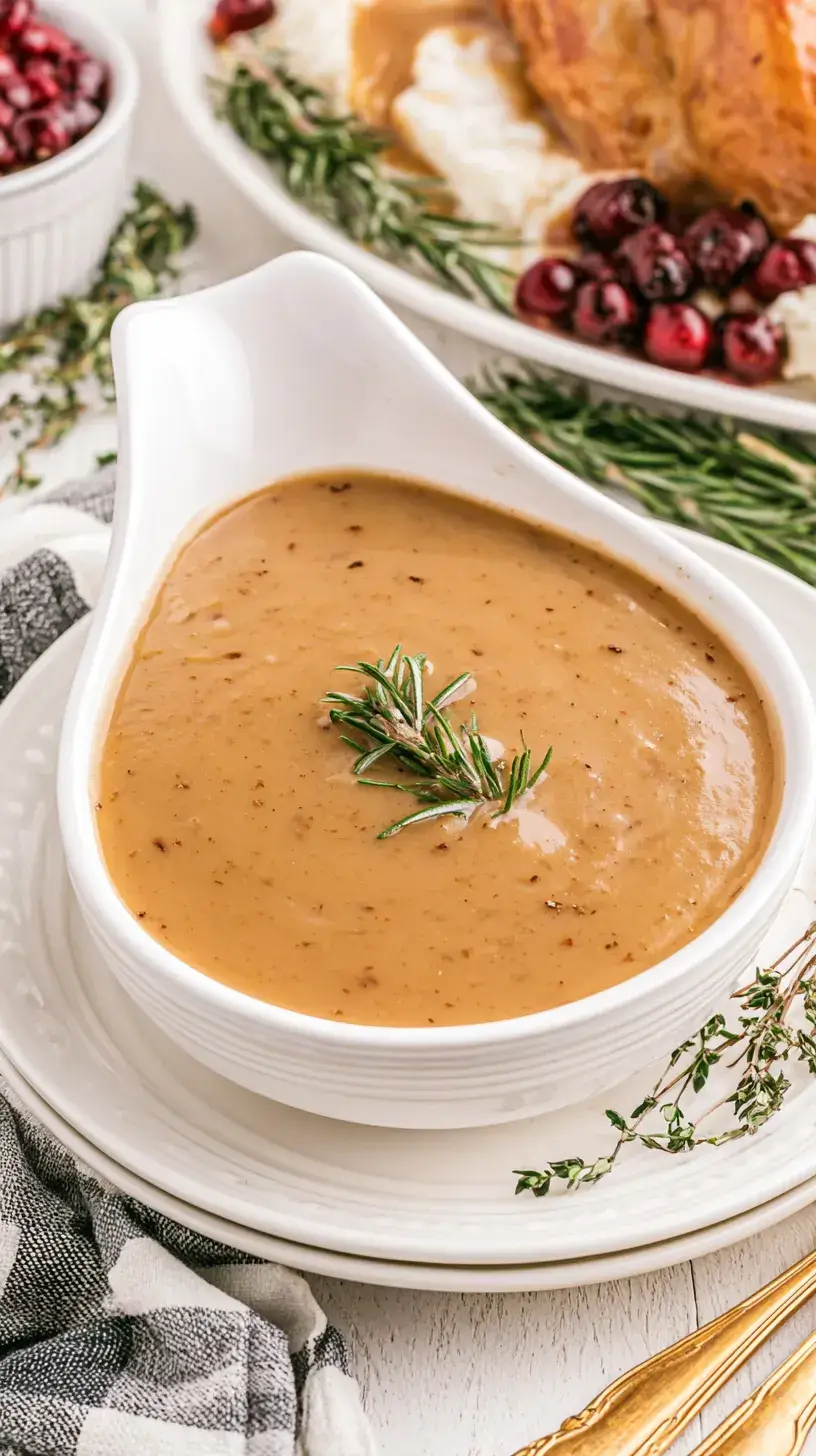
Homemade turkey gravy for Thanksgiving is the crowning touch to your holiday feast. This recipe delivers rich, smooth, and lump-free gravy made from turkey drippings, stock, and a few pantry staples. It’s easy to customize, perfect for mashed potatoes, stuffing, and roast turkey, and far superior to store-bought versions.
Why Make Homemade Turkey Gravy for Thanksgiving
Richer flavor than store-bought gravy
Homemade turkey gravy boasts deep, savory flavor that canned or boxed gravies can’t match. By using real turkey drippings, stock, and aromatics, you create a sauce with layers of umami, richness, and complexity. The result is a gravy that enhances every bite of turkey, mashed potatoes, and stuffing.
Using turkey drippings and giblets for depth
Turkey drippings—the browned bits and fat left in the roasting pan—are packed with flavor. Deglazing the pan with stock or wine lifts these bits, infusing the gravy with roasted goodness. Adding giblets (heart, liver, gizzard) and neck to a simmering stock creates a concentrated, gelatin-rich base that thickens naturally and adds body.
Control over salt, thickness, and texture
Making gravy at home lets you control every element: salt levels, thickness, and texture. Whether you prefer a light, pourable gravy or a thick, spoonable sauce, you can adjust the roux or slurry to your liking. You also avoid preservatives and excessive sodium found in many commercial gravies.
Ingredients and Tools for Lump-Free Turkey Gravy
Turkey drippings, stock, and broth options
- Turkey drippings: Collect 1/4–1/2 cup of fat and browned bits from the roasting pan.
- Turkey or chicken stock: Use 4–6 cups of homemade or low-sodium store-bought stock. For deeper flavor, simmer giblets and neck in water with onion, carrot, and celery for 1–2 hours.
- Broth substitutes: If stock is unavailable, use chicken broth enhanced with a splash of soy sauce or Worcestershire for umami.
Quality stock is the foundation of great gravy.
Roux vs cornstarch slurry: thickening methods
- Roux: A mixture of equal parts butter and flour cooked together. Roux adds richness and a nutty flavor. Use 1/4 cup butter and 1/4 cup flour for a standard batch.
- Cornstarch slurry: Mix 2–3 tablespoons of cornstarch with an equal amount of cold water. Slurries create a glossy, clear thickening without added fat, ideal for gluten-free gravy.
Choose roux for traditional flavor or slurry for gluten-free needs.
Essential tools: whisk, sieve, and gravy boat
- Whisk: A sturdy whisk ensures smooth incorporation of flour or cornstarch, preventing lumps.
- Sieve or fine-mesh strainer: Straining the gravy removes giblet pieces, herbs, and any lumps for silky texture.
- Gravy boat: Serve gravy in a warm gravy boat to keep it pourable at the table.
Having the right tools makes the process seamless.
Step-by-Step Homemade Turkey Gravy Instructions
Deglazing the roasting pan and collecting drippings
- After removing the roast turkey from the pan, place the pan on the stovetop over medium heat.
- Pour 1–2 cups of turkey or chicken stock into the pan. Use a wooden spoon or spatula to scrape up the browned bits (fond) from the bottom and sides.
- Let the liquid simmer for 2–3 minutes to dissolve the fond completely.
- Strain the liquid through a fine-mesh sieve into a bowl, pressing on the solids to extract flavor. Discard solids.
This deglazing step captures the essence of roasted turkey.
Making a smooth roux and whisking in stock
- In a large saucepan, melt 1/4 cup of butter over medium heat.
- Sprinkle in 1/4 cup of all-purpose flour and whisk constantly for 2–3 minutes until the mixture turns light golden (this cooks out the raw flour taste).
- Gradually whisk in 4 cups of warm turkey stock, adding 1 cup at a time. Whisk vigorously after each addition to prevent lumps.
- Bring the mixture to a gentle simmer, continuing to whisk until it thickens (about 5–7 minutes).
For slurry method, skip the roux and whisk cornstarch slurry into simmering stock instead.
Straining, seasoning, and adjusting consistency
- Once the gravy reaches your desired thickness, remove it from heat.
- Strain through a fine-mesh sieve into a clean bowl or gravy boat to ensure smoothness.
- Season with salt and freshly ground black pepper to taste. Add a pinch of thyme, sage, or a splash of Worcestershire for depth if desired.
- If the gravy is too thick, whisk in additional warm stock. If too thin, simmer longer or add a bit more slurry.
Serve immediately for the best texture and flavor.
Variations, Make-Ahead, and Troubleshooting
Giblet gravy, wine-enhanced, and herb-infused variations
- Giblet gravy: Simmer chopped giblets and neck in stock for 1–2 hours. Strain, then use the stock in your gravy. Fold finely chopped cooked giblets into the finished gravy.
- Wine-enhanced: Deglaze the roasting pan with 1/2 cup of dry white or red wine before adding stock. Reduce by half to concentrate flavor.
- Herb-infused: Add a sprig of thyme, sage, or rosemary to the simmering gravy. Remove before serving.
These variations elevate the gravy for special occasions.
Make-ahead and reheating without breaking the sauce
- Make-ahead: Prepare gravy up to 2 days in advance. Cool completely, then store in an airtight container in the refrigerator.
- Reheating: Reheat gently on the stovetop over low heat, whisking frequently. Add a splash of stock or water if the gravy thickens upon standing.
Avoid boiling, as it can cause the sauce to separate.
Fixing lumps, thin or thick gravy, and bland flavor
- Lumpy gravy: Strain through a fine-mesh sieve or blend briefly with an immersion blender.
- Too thin: Simmer longer to reduce, or whisk in additional cornstarch slurry (1 tablespoon cornstarch mixed with 1 tablespoon cold water).
- Too thick: Whisk in warm stock or water until desired consistency is reached.
- Bland flavor: Add a pinch of salt, pepper, or a splash of soy sauce, Worcestershire, or lemon juice to brighten.
Small adjustments can rescue any gravy mishap.
Serving, Storing, and FAQs for Thanksgiving Gravy
Best ways to serve gravy (turkey, mashed potatoes, stuffing)
Homemade turkey gravy is essential for:
- Roast turkey: Drizzle over sliced turkey for moisture and flavor.
- Creamy mashed potatoes: Smother potatoes for the ultimate comfort combo.
- Stuffing or dressing: Pour over the top to moisten and enrich.
- Crockpot beef and potato soup or turkey chili: Use as a flavorful base or topping.
Its versatility makes it a holiday staple.
Cooling, storing, and freezing turkey gravy safely
- Cooling: Let gravy cool to room temperature within 2 hours of cooking.
- Storing: Transfer to an airtight container and refrigerate for up to 4 days.
- Freezing: Freeze in a freezer-safe container or bag for up to 3 months. Thaw overnight in the refrigerator before reheating.
Label with the date for easy tracking.
FAQs: gluten-free gravy, no-drippings method, and more
Q: How can I make gluten-free turkey gravy?
A: Use a cornstarch slurry instead of a flour roux. Ensure your stock and any additives (like Worcestershire) are certified gluten-free.
Q: What if I don’t have turkey drippings?
A: Use chicken broth enhanced with 2–3 tablespoons of melted butter and a splash of soy sauce or Worcestershire for umami.
Q: Can I make gravy ahead of time?
A: Yes. Prepare up to 2 days in advance and reheat gently on the stovetop, adding stock as needed.
Q: Why is my gravy lumpy?
A: Lumps form when flour or cornstarch isn’t fully incorporated. Whisk constantly when adding liquid, and strain the finished gravy for smoothness.
Homemade Turkey Gravy for Thanksgiving

Ingredients
- 1/4 –1/2 cup 60–120 ml turkey drippings (fat and browned bits from roasting pan)
- 1/4 cup 57 g unsalted butter (if additional fat is needed)
- 1/4 cup 30 g all-purpose flour
- 4 –6 cups 960–1440 ml turkey or chicken stock, warmed
- Salt and freshly ground black pepper to taste
- Optional: 1–2 tablespoons Worcestershire sauce or soy sauce for umami
- Optional: 1 sprig fresh thyme or sage remove before serving
- Optional: Giblet stock simmer giblets and neck in 4 cups water for 1–2 hours, then strain
Instructions
- Collect drippings: After removing roast turkey from the pan, pour off all but 1/4–1/2 cup of fat from the roasting pan (add butter if needed to reach 1/4 cup total fat). Place the pan on the stovetop over medium heat.
- Deglaze the pan: Pour 1–2 cups of warm stock into the pan. Use a wooden spoon or spatula to scrape up the browned bits (fond) from the bottom and sides. Simmer for 2–3 minutes to dissolve the fond completely. Strain through a fine-mesh sieve into a bowl, pressing on solids. Discard solids.
- Make the roux: In a large saucepan, melt 1/4 cup of butter over medium heat. Sprinkle in flour and whisk constantly for 2–3 minutes until the mixture turns light golden (this cooks out the raw flour taste).
- Whisk in stock: Gradually whisk in 4 cups of warm turkey stock (including the deglazed liquid), adding 1 cup at a time. Whisk vigorously after each addition to prevent lumps.
- Simmer and thicken: Bring the mixture to a gentle simmer, continuing to whisk until it thickens (about 5–7 minutes). For thicker gravy, simmer longer or add a cornstarch slurry (2 tablespoons cornstarch mixed with 2 tablespoons cold water).
- Season: Remove from heat. Season with salt, pepper, and Worcestershire or soy sauce if using. Add a sprig of thyme or sage for 5 minutes, then remove.
- Strain and serve: Strain through a fine-mesh sieve into a gravy boat or serving bowl for smoothness. Serve immediately over turkey, mashed potatoes, or stuffing.
Notes
Calories: ~45 Total Fat: 3.5 g Saturated Fat: 2 g Cholesterol: 10 mg Sodium: ~180 mg Total Carbohydrates: 2 g Dietary Fiber: 0 g Sugars: 0 g Protein: 1 g Nutrition values are estimates and may vary based on