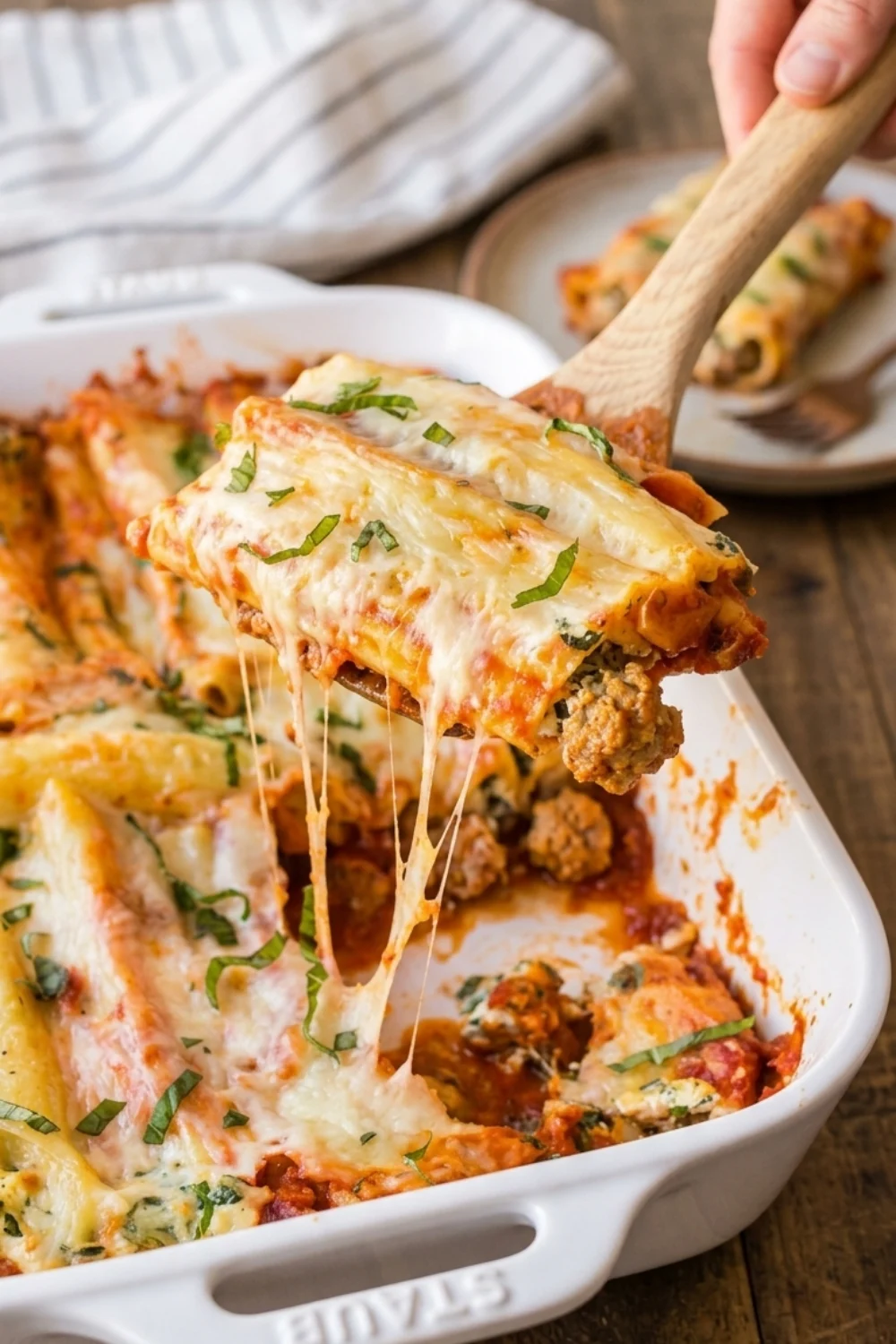
This Italian sausage manicotti bake is a comforting pasta casserole filled with creamy ricotta, seasoned Italian sausage, mozzarella, Parmesan, and rich marinara sauce. It is cheesy, hearty, and ideal for family dinners, Sunday meals, holidays, or make-ahead entertaining.
Each manicotti shell is filled with a flavorful sausage and cheese mixture, then baked under a generous layer of tomato sauce and melted mozzarella. The result is tender stuffed pasta with a bubbling golden cheese topping and classic Italian-inspired flavor in every bite.
Ingredients for Italian Sausage Manicotti Bake
This baked manicotti recipe uses accessible ingredients, but each one contributes to the final texture and flavor. Use a good-quality marinara sauce that you enjoy eating on its own, because it forms the base of the sauce around the stuffed pasta.
Manicotti Shells and Pasta Options
Manicotti shells are large tube-shaped pasta designed for stuffing. Most packages contain around 12 to 14 shells, which is enough for one standard 9-by-13-inch baking dish.
Cook the manicotti only until just tender enough to fill. Overcooked pasta can split when handled and may become too soft after baking in sauce. Follow the package instructions, but reduce the boiling time by about one to two minutes if the package does not specify “al dente.”
If you cannot find manicotti shells, jumbo pasta shells are a good substitute. The filling and baking method remain similar, but jumbo shells are easier to fill because they have an open shape.
Italian Sausage and Tomato Sauce
Italian sausage gives the manicotti filling a rich, savory flavor. You can use mild Italian sausage for a family-friendly bake or hot Italian sausage if you like a little heat. Remove the casings if your sausage is sold in links.
Use jarred marinara sauce for convenience, or use homemade tomato sauce if you have it. A simple marinara made with tomatoes, garlic, basil, olive oil, and herbs works beautifully with sausage and cheese.
For a richer sauce, stir a little tomato paste into the marinara. This step is optional, but it gives the sauce deeper tomato flavor and helps it cling to the manicotti.
Ricotta, Mozzarella, and Parmesan Cheese
Ricotta creates a creamy filling, while mozzarella gives the casserole its stretchy melted-cheese texture. Parmesan adds a nutty, salty finish and makes the filling taste more complete.
Whole-milk ricotta gives the richest texture, but part-skim ricotta also works. If your ricotta seems very wet, drain it in a fine-mesh strainer for 10 to 15 minutes before mixing it with the sausage. This prevents excess moisture from collecting in the baking dish.
Use shredded low-moisture mozzarella for the best melt. Fresh mozzarella can release more water during baking, so it is less reliable for a pasta casserole unless it is drained very well.
Herbs, Garlic, and Italian Seasoning
Garlic, parsley, basil, Italian seasoning, and black pepper bring freshness to the sausage and cheese filling. You can use dried herbs for convenience, but fresh parsley and basil add bright flavor and color.
A small pinch of red pepper flakes is optional if you use mild sausage and want gentle warmth. Taste the filling before adding extra salt because Italian sausage and Parmesan both contain salt.
For a more traditional baked pasta flavor, add a small amount of grated Parmesan to the marinara sauce as well as the filling.
How to Make Sausage and Ricotta Filling
A good manicotti filling should be creamy enough to pipe or spoon into the pasta, but thick enough that it stays inside the shells. Cooking the sausage first and letting it cool slightly protects the ricotta from becoming too warm or loose.
Cooking Italian Sausage for Manicotti
Heat a large skillet over medium-high heat. Add the Italian sausage and cook, breaking it into small crumbles with a wooden spoon or spatula. Cook until browned and no longer pink.
Add finely diced onion, if using, and cook until softened. Stir in minced garlic during the final minute, just until fragrant. Drain any excess fat from the skillet, especially if you are using pork sausage with a higher fat content.
Let the sausage cool for about 10 minutes before mixing it with the cheese. Warm sausage is fine, but it should not be steaming hot when it meets the ricotta and egg.
Making a Creamy Ricotta Cheese Mixture
In a large bowl, combine ricotta cheese, an egg, grated Parmesan, chopped parsley, Italian seasoning, salt, and black pepper. The egg helps the filling set during baking, while Parmesan brings savory flavor.
Stir until smooth and evenly combined. If the mixture is unusually thick, add one or two tablespoons of marinara sauce. If it is loose, add extra Parmesan or allow the mixture to sit for a few minutes before filling the pasta.
Use a spoon to check the texture. The ricotta mixture should hold its shape on the spoon rather than run off quickly.
Combining Sausage, Cheese, and Herbs
Fold the cooled sausage mixture into the ricotta mixture. Add about half of the shredded mozzarella, reserving the rest for the top of the casserole.
Mix gently but thoroughly so that sausage is distributed through the filling. Taste a small amount of the cooked filling mixture if desired and adjust pepper, herbs, or red pepper flakes.
You can fill the manicotti with a spoon, but transferring the filling to a large zip-top bag or piping bag makes the process faster and neater. Snip off a corner of the bag wide enough for the sausage crumbles to pass through.
How to Adjust the Filling Consistency
If the filling is too stiff to pipe, stir in a tablespoon or two of marinara sauce. Add only a small amount at a time, because too much sauce can make filling the shells messy.
If the filling seems too loose, add two to three tablespoons of grated Parmesan or a little more ricotta. You can also refrigerate the filling for 15 minutes to firm it up before stuffing.
The goal is a thick, creamy mixture that fills the pasta evenly and stays put during baking.
How to Fill Manicotti Shells
Filling manicotti may seem delicate, but it becomes easy with a few simple techniques. Handle the pasta gently and avoid forcing too much filling into each shell.
Should You Cook Manicotti Before Filling?
Most dried manicotti shells should be boiled before filling, but always check the package instructions. Cook them in generously salted water until just al dente, then drain carefully.
Rinse the cooked shells briefly with cool water to stop the cooking process and make them easier to handle. Arrange them in a single layer on a parchment-lined baking sheet or clean kitchen towel so they do not stick together.
Some brands offer oven-ready manicotti. If you use oven-ready shells, make sure your sauce has enough moisture and follow the package guidance, as the baking time may be longer.
Easy Ways to Fill Manicotti Without Breaking It
A piping bag, pastry bag, or large zip-top bag is the easiest way to fill manicotti. Spoon the filling into the bag, press it toward one corner, and snip off the tip.
Pipe filling into one end of each shell, then turn it around and fill from the other end. This method helps fill the center without pressing hard enough to break the pasta.
If you prefer using a spoon, use a narrow spoon handle to gently guide the filling into the shell. Work slowly, especially if the manicotti is fragile.
How Much Filling to Add to Each Shell
Fill each manicotti shell until it is full but not bursting. A typical shell takes about 1/4 to 1/3 cup of filling, depending on its size.
Avoid overfilling, because excess filling can spill into the sauce and make the dish look messy. If you have extra filling after stuffing all the shells, spoon it around the manicotti in the baking dish or save it for a small pasta bake.
Do not worry if a shell cracks slightly. Place the cracked side facing down in the baking dish, cover it well with sauce, and it will usually bake beautifully.
Arranging Stuffed Manicotti in the Baking Dish
Spread about 1 cup of marinara sauce over the bottom of a lightly greased 9-by-13-inch baking dish. This prevents the pasta from sticking and gives the manicotti moisture as it bakes.
Arrange the stuffed manicotti in a single layer over the sauce. Place them seam-side down or with any cracked side facing down.
Pour the remaining marinara sauce evenly over the top, making sure all of the pasta is covered. Covering the pasta with sauce helps keep it tender and prevents dry edges.
How to Bake Manicotti with Italian Sausage
The casserole bakes in two stages: first covered so the pasta and filling heat through, then uncovered so the mozzarella becomes melted and golden. This creates tender pasta without sacrificing the cheesy top.
Layering Marinara Sauce and Stuffed Pasta
Start with sauce on the bottom of the baking dish, then add the filled manicotti in one even layer. Spoon or pour marinara over every shell.
If you like a saucier pasta bake, use an additional 1/2 to 1 cup of sauce. Manicotti absorbs some sauce as it bakes, especially if you use pasta that is slightly undercooked.
For extra flavor, add a few spoonfuls of the sausage mixture or a pinch of Italian seasoning to the marinara before layering.
Adding Mozzarella and Parmesan
Sprinkle the remaining mozzarella cheese evenly over the sauce-covered manicotti. Finish with Parmesan for a golden, savory crust.
Cover the dish tightly with aluminum foil for the first part of baking. To prevent cheese from sticking to the foil, lightly spray the underside with cooking spray or tent the foil so it does not touch the cheese.
Remove the foil near the end of baking so the mozzarella can become bubbly and lightly browned.
Baking Time and Temperature
Bake the Italian sausage manicotti at 375°F (190°C). Bake covered for 25 minutes, then uncover and bake for another 10 to 15 minutes.
The casserole is ready when the sauce is bubbling around the edges, the cheese is fully melted, and the center is hot. If you are assembling the dish ahead of time from the refrigerator, add about 10 extra minutes to the covered baking time.
Let the manicotti rest for 10 minutes after baking. This allows the sauce and cheese to settle, making it easier to serve clean portions.
How to Know When Baked Manicotti Is Ready
The top should be bubbly and lightly golden, while the sauce should be hot throughout the center of the dish. If you use a thermometer, the center of the casserole should reach 165°F (74°C), particularly when reheating or baking a prepared dish containing cooked meat and stuffed pasta.health.mo+1
Avoid relying only on browned cheese to judge doneness. The center must be fully heated, especially if the manicotti was prepared in advance and chilled before baking.
Make-Ahead Tips, Sides, and FAQs
Italian sausage manicotti bake is an excellent make-ahead dinner because it holds its structure well and reheats beautifully. You can prepare it earlier in the day, refrigerate it overnight, or freeze it for a future meal.
Can You Assemble Manicotti Ahead of Time?
Yes. Assemble the complete manicotti bake, cover it tightly, and refrigerate for up to 24 hours before baking. Keep the unbaked casserole cold until you are ready to cook it.
When baking from the refrigerator, remove the dish while the oven preheats and add about 10 minutes to the covered baking time. Bake until the center is hot and the cheese is melted.
This is especially helpful for holidays, dinner parties, and busy weeknights because the main preparation is done ahead of time.
How to Freeze Italian Sausage Manicotti Bake
To freeze, assemble the manicotti in a freezer-safe baking dish but do not bake it. Cover tightly with plastic wrap, then foil, and freeze for up to 2 months for best quality.
Thaw the casserole overnight in the refrigerator before baking. Then bake according to the recipe, adding a little extra time if it is still very cold in the center.
You can also freeze baked leftovers in individual portions. This is practical for quick lunches or smaller meals. Reheat until the center is fully hot.
What to Serve with Baked Manicotti
Serve this cheesy sausage manicotti with a crisp green salad, Caesar salad, or arugula salad dressed with lemon and olive oil. The freshness balances the rich cheese and tomato sauce.
Garlic bread, focaccia, breadsticks, or crusty Italian bread are excellent for scooping up extra marinara sauce. For vegetables, try roasted broccoli, zucchini, asparagus, green beans, or a simple sautéed spinach side dish.
For a dinner-party style meal, start with a light antipasto platter and finish with fruit, tiramisu, or a simple Italian-style dessert.
Leftover Storage and Reheating Tips
Cool leftover manicotti promptly, then store it in an airtight container in the refrigerator for up to 3 to 4 days. Refrigerate leftovers within 2 hours of cooking, preferably in shallow containers so they cool more quickly.
Reheat individual servings in the microwave until hot throughout, or reheat larger portions covered in a 325°F (165°C) oven. Add a spoonful of marinara sauce before reheating if the pasta looks dry.
For safe reheating, bring the center of leftovers to 165°F (74°C).
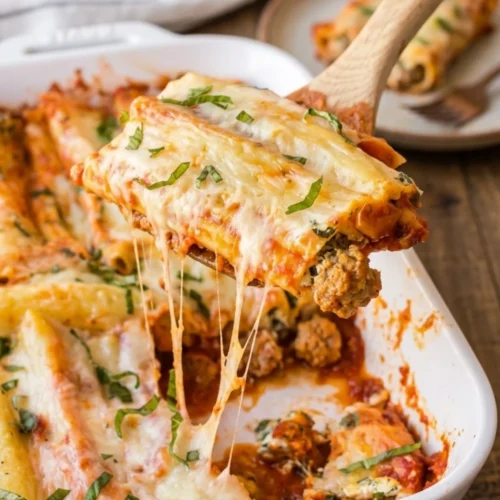
Italian Sausage Manicotti Bake Recipe Card

Ingredients
- 12 manicotti shells
- 1 tablespoon olive oil
- 1 pound mild or hot Italian sausage casings removed if needed
- 1/2 small yellow onion finely diced
- 3 garlic cloves minced
- 15 ounces whole-milk ricotta cheese
- 1 large egg
- 1/2 cup grated Parmesan cheese divided
- 2 cups shredded low-moisture mozzarella cheese divided
- 2 tablespoons chopped fresh parsley or 2 teaspoons dried parsley
- 1 teaspoon Italian seasoning
- 1/4 teaspoon red pepper flakes optional
- 1/2 teaspoon salt or to taste
- 1/2 teaspoon black pepper
- 4 cups marinara sauce divided
- Chopped fresh basil or parsley for garnish, optional
Instructions
- Preheat the oven to 375°F (190°C). Lightly grease a 9-by-13-inch baking dish.
- Bring a large pot of salted water to a boil. Cook manicotti shells until just al dente, following the package directions but reducing the cooking time by 1 to 2 minutes if needed. Drain carefully and rinse briefly under cool water. Arrange the shells in a single layer so they do not stick.
- Heat olive oil in a large skillet over medium-high heat. Add Italian sausage and cook for 5 to 7 minutes, breaking it into small crumbles, until browned and no longer pink.
- Add diced onion and cook for 3 to 4 minutes, until softened. Add garlic and cook for 30 seconds. Drain excess fat if necessary. Remove the skillet from the heat and let the sausage mixture cool for 10 minutes.
- In a large bowl, combine ricotta, egg, 1/4 cup Parmesan, 1 cup mozzarella, parsley, Italian seasoning, optional red pepper flakes, salt, and black pepper.
- Fold the cooled sausage mixture into the ricotta mixture until evenly combined. Transfer the filling to a piping bag or a large zip-top bag with one corner cut off.
- Spread 1 cup marinara sauce over the bottom of the prepared baking dish.
- Fill each manicotti shell from both ends with the sausage and ricotta mixture. Arrange the stuffed shells in a single layer in the baking dish.
- Pour the remaining 3 cups marinara sauce over the manicotti, ensuring all pasta is covered. Sprinkle with the remaining 1 cup mozzarella and 1/4 cup Parmesan.
- Cover tightly with foil and bake for 25 minutes. Remove the foil and bake for 10 to 15 minutes more, until the sauce is bubbling, the cheese is melted, and the center is hot.
- Rest the manicotti bake for 10 minutes before serving. Garnish with fresh basil or parsley if desired.