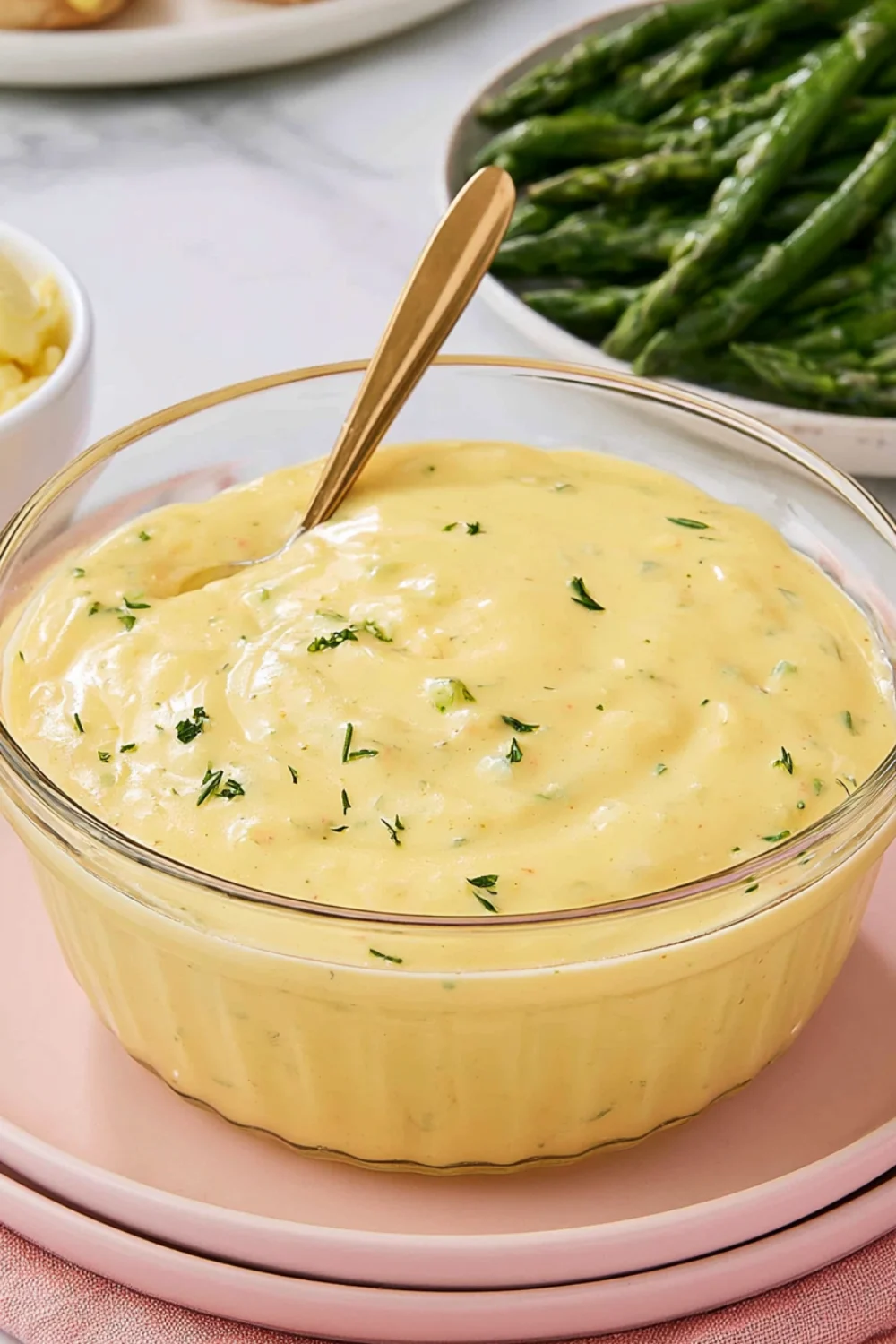
Master this classic French sauce with our foolproof method that delivers silky, luxurious results every time. This creamy hollandaise sauce elevates eggs benedict, asparagus, fish, and countless other dishes with its rich, lemon-buttery flavor and velvety texture.
Why This Hollandaise Recipe Works Every Time
Creamy, Lemon-Buttery, and Rich
This hollandaise achieves the perfect balance of richness from butter, tang from lemon juice, and silkiness from egg yolks. The result is a sauce that’s indulgent without being heavy or cloying.
The lemon-buttery flavor profile complements a wide variety of foods, from delicate fish to hearty vegetables. This versatility makes it a valuable addition to any cook’s repertoire.
The rich, creamy texture coats ingredients beautifully, creating luxurious mouthfeel that transforms simple dishes into something special. A little goes a long way in terms of impact.
The sauce’s indulgent nature makes it perfect for special occasions and weekend brunches. It adds an element of celebration to any meal without requiring extensive preparation.
No Double Boiler Needed
This recipe eliminates the traditional double boiler method that intimidates many cooks. The blender or immersion blender approach is faster, easier, and more foolproof than constant whisking over simmering water.
The simplified method reduces the risk of breaking the sauce or scrambling the eggs, common problems with traditional techniques. This makes hollandaise accessible to cooks of all skill levels.
Less equipment means easier cleanup and less clutter in the kitchen. The blender method requires only a blender and a saucepan for melting butter, compared to the multiple bowls and whisks needed for traditional methods.
The time savings from the simplified method makes hollandaise feasible for weeknight dinners, not just special occasions. This expands the sauce’s utility in everyday cooking.
Ready in About 5 Minutes
From start to finish, this hollandaise comes together in approximately 5 minutes of active preparation. This speed makes it practical for busy cooks who want restaurant-quality results without the time investment.
The quick preparation time means you can make the sauce fresh for each meal, ensuring optimal flavor and texture. There’s no need to make it ahead and risk quality degradation.
The speed of preparation allows you to focus on other components of your meal while still delivering impressive results. This efficiency makes elaborate-feeling meals more manageable.
The 5-minute timeline includes melting the butter, blending the ingredients, and seasoning to taste. Even with this brief preparation, the results rival sauces that take much longer to prepare.
Perfect for Eggs, Asparagus, and Fish
Eggs benedict is the most famous application for hollandaise, but the sauce shines with many other ingredients. The rich, tangy flavor complements the delicate taste of poached or steamed eggs beautifully.
Asparagus spears become something special when draped with warm hollandaise. The sauce’s richness balances the vegetable’s slight bitterness while enhancing its natural sweetness.
Fish, particularly white fish like cod, halibut, or sole, pairs wonderfully with hollandaise. The sauce adds richness to lean fish without overwhelming their delicate flavors.
The sauce also works beautifully with chicken, vegetables, and even some pasta dishes. Its versatility makes it a valuable technique for expanding your culinary repertoire.
Ingredients & Tools
Egg Yolks: Room Temperature Tips
Fresh, high-quality egg yolks provide the best flavor and emulsification properties. Look for eggs with deep orange yolks, which indicate good nutrition and flavor.
Room temperature yolks blend more easily with the butter and create a more stable emulsion. Remove eggs from the refrigerator 30-60 minutes before making the sauce.
Separate the yolks carefully, ensuring no white gets into the mixture. Egg whites can interfere with the emulsification process and affect the final texture.
Have extra yolks on hand in case the sauce breaks and needs to be rescued. A fresh yolk can often save a broken sauce and restore its silky texture.
Butter: Melted but Not Browned
High-quality unsalted butter allows you to control the salt level precisely while providing the best flavor. European-style butters with higher fat content create richer, more luxurious sauces.
Melt the butter slowly over low heat to prevent browning or burning. Browned butter has a different flavor profile that, while delicious, isn’t appropriate for classic hollandaise.
Skim any milk solids from the surface of the melted butter for the clearest, most refined sauce. These solids can interfere with the emulsion and create a less smooth texture.
Keep the butter warm but not hot when adding it to the egg yolks. Butter that’s too hot can scramble the yolks, while butter that’s too cool won’t create a proper emulsion.
Lemon Juice, Salt, and Cayenne/White Pepper
Fresh lemon juice is essential for the bright, acidic note that balances the richness of the butter and egg yolks. Bottled lemon juice lacks the vibrant flavor needed for excellent hollandaise.
The amount of lemon juice can be adjusted to taste, with more lemon creating a tangier sauce and less lemon resulting in a richer, more buttery flavor. Start with the recipe amount and adjust as needed.
Salt should be added gradually and tasted frequently to achieve the perfect balance. Remember that the sauce will be served with other seasoned foods, so don’t over-salt.
Cayenne pepper or white pepper adds subtle heat that enhances the other flavors without making the sauce spicy. White pepper is traditional and provides heat without visible specks.
Blender, Immersion Blender, or Whisk
A standard countertop blender works well for making hollandaise and produces consistently smooth results. The powerful motor creates a stable emulsion quickly and efficiently.
Immersion blenders are excellent for smaller batches and allow you to make the sauce directly in the serving vessel. This can simplify cleanup and reduce the number of dishes.
Traditional whisking methods can be used but require more attention and technique. A balloon whisk and good arm strength are essential for success with this method.
Whichever tool you choose, ensure it’s clean and dry before starting. Any residue can interfere with the emulsification process and affect the final texture.
How to Make Creamy Hollandaise Sauce
Blend Yolks and Lemon Until Pale
Place the egg yolks and lemon juice in your blender and blend on medium speed until the mixture is pale yellow and slightly thickened. This typically takes 30-60 seconds.
The pale color indicates that the yolks are properly aerated and ready to receive the butter. This step is crucial for creating a stable emulsion that won’t break.
Scrape down the sides of the blender as needed to ensure all ingredients are well incorporated. Any unmixed yolk can affect the final texture and consistency.
The mixture should be smooth and uniform in color before proceeding. Any lumps or uneven coloring should be blended out before adding the butter.
Slowly Drizzle in Hot Melted Butter
With the blender running on low speed, slowly drizzle in the hot melted butter in a thin, steady stream. This gradual addition is crucial for creating a stable emulsion.
The entire process of adding the butter should take about 1-2 minutes. Adding it too quickly can cause the sauce to break and separate.
Watch the sauce as you add the butter—it should thicken and become glossy as the emulsion forms. If it looks thin or separated, you may be adding the butter too quickly.
Continue blending for another 30 seconds after all the butter has been added to ensure the emulsion is stable and smooth.
Season and Adjust Thickness
Taste the sauce and add salt, white pepper, and additional lemon juice as needed. The sauce should be well-seasoned but not overly salty, with bright acidity from the lemon.
If the sauce is too thick, thin it with a small amount of warm water or additional lemon juice. Add liquid gradually, blending after each addition, until you achieve the desired consistency.
If the sauce is too thin, you may have added the butter too quickly or the butter may not have been hot enough. Unfortunately, thin sauce is difficult to fix, but you can try blending in another yolk.
The sauce should coat the back of a spoon and hold its shape briefly before flowing off. This indicates proper thickness for serving.
Keeping Sauce Warm Without Breaking
Transfer the finished sauce to a warm bowl and cover to keep warm until serving. The sauce can be held for up to an hour if kept warm but not hot.
Place the bowl over (not in) a pan of warm water to maintain temperature. Direct heat can cause the sauce to break or become too thick.
Stir the sauce occasionally while holding to prevent a skin from forming on the surface. This also helps maintain even temperature throughout the sauce.
If the sauce becomes too thick while holding, whisk in small amounts of warm water to restore the proper consistency. This is normal and doesn’t affect the flavor.
Troubleshooting & Pro Tips
Fixing a Broken or Split Sauce
A broken hollandaise can often be rescued by starting with a fresh egg yolk in a clean bowl and slowly whisking in the broken sauce. This creates a new emulsion that incorporates the broken sauce.
Alternatively, try adding a small amount of cold water to the broken sauce and whisking vigorously. Sometimes this is enough to bring the emulsion back together.
Prevention is better than cure—add the butter slowly and ensure it’s at the right temperature. Rushing the process is the most common cause of broken hollandaise.
Don’t be discouraged if your first attempt breaks. Even experienced cooks occasionally have this happen, and the rescue techniques usually work well.
Adjusting for Thicker or Thinner Consistency
For thicker sauce, reduce the amount of lemon juice or water in the recipe. This creates a richer, more concentrated sauce that’s perfect for dipping or drizzling.
For thinner sauce, add small amounts of warm water or additional lemon juice while blending. This creates a more pourable consistency that’s ideal for drizzling over vegetables or fish.
The sauce will thicken as it cools, so consider this when adjusting consistency. Make it slightly thinner than you want it to be when serving.
Different applications may require different consistencies. Eggs benedict benefits from a thicker sauce that stays in place, while vegetables may be better with a thinner, more pourable consistency.
Avoiding Over-Cooking the Yolks
The key to avoiding scrambled eggs in your hollandaise is to add the butter slowly and ensure it’s not too hot. Butter that’s too hot can cook the yolks and create a grainy texture.
If using a traditional whisking method, keep the bowl over (not in) the simmering water. Direct contact with the hot water can cook the yolks too quickly.
The blender method is more forgiving because the yolks are blended continuously, which helps distribute the heat evenly. This makes it less likely to overcook the yolks.
If you notice the sauce becoming grainy or lumpy, remove it from the heat immediately and whisk in a small amount of cold water. This can sometimes rescue the sauce before it’s too far gone.
Reheating Gently Before Serving
If the sauce has cooled too much, reheat it gently by placing the bowl over warm (not hot) water and whisking constantly. This restores the proper temperature without risking breaking the sauce.
Never reheat hollandaise in the microwave, as the uneven heating can cause it to break or become grainy. The gentle heat of a water bath is much safer.
Small amounts of warm water can be whisked in during reheating to restore consistency if the sauce has thickened too much. This is normal and doesn’t affect the flavor.
Serve the sauce immediately after reheating for best results. Hollandaise is at its peak when fresh and warm, and quality degrades quickly if held too long.
Serving Ideas, Storage & FAQs
Pair with Eggs Benedict, Asparagus, Salmon
Eggs benedict is the classic application for hollandaise, and for good reason. The rich, tangy sauce complements the delicate eggs and provides luxurious mouthfeel that makes the dish special.
Steamed or roasted asparagus spears become something elegant when drizzled with warm hollandaise. The sauce’s richness balances the vegetable’s slight bitterness while enhancing its natural sweetness.
Salmon, whether grilled, baked, or poached, pairs beautifully with hollandaise. The sauce adds richness to the fish without overwhelming its delicate flavor.
The sauce also works wonderfully with chicken, particularly poached or grilled chicken breasts. It transforms simple poultry into something special and restaurant-worthy.
How Long It Lasts and Best Storage Method
Fresh hollandaise is best served immediately, but it can be held for up to 2 hours if kept warm properly. Store it in a warm bowl over (not in) warm water, stirring occasionally.
Refrigerated hollandaise will last 1-2 days but will require gentle reheating and may not have the same silky texture as fresh sauce. The emulsion can break down during storage.
Store refrigerated hollandaise in an airtight container to prevent absorption of refrigerator odors. The sauce can pick up off-flavors if not properly covered.
Bring refrigerated sauce to room temperature before reheating to promote even warming. Cold sauce reheated too quickly is more likely to break.
Can You Freeze Hollandaise?
Hollandaise sauce doesn’t freeze well due to its emulsified nature. Freezing can cause the emulsion to break, resulting in a separated, grainy texture upon thawing.
If you must freeze hollandaise, do so in small portions and thaw slowly in the refrigerator. Reheat gently and whisk vigorously to try to restore the emulsion.
It’s better to make hollandaise fresh as needed, given how quickly it comes together. The 5-minute preparation time makes freezing unnecessary for most applications.
Consider freezing the components separately—egg yolks can be frozen, and butter freezes well. You can then make fresh hollandaise quickly when needed.
Dairy-Free or Lighter Variations
Dairy-free hollandaise can be made using vegan butter substitutes and plant-based egg replacers. The technique remains the same, but the flavor and texture will differ from traditional hollandaise.
For a lighter version, reduce the amount of butter and increase the lemon juice. This creates a tangier, less rich sauce that’s still flavorful but lower in calories.
Greek yogurt can be whisked into hollandaise to create a lighter, tangier version. This works well for vegetables and fish but may not be traditional enough for eggs benedict.
Experiment with different ratios to find the balance that works for your preferences and dietary needs. The basic technique can be adapted for various requirements.
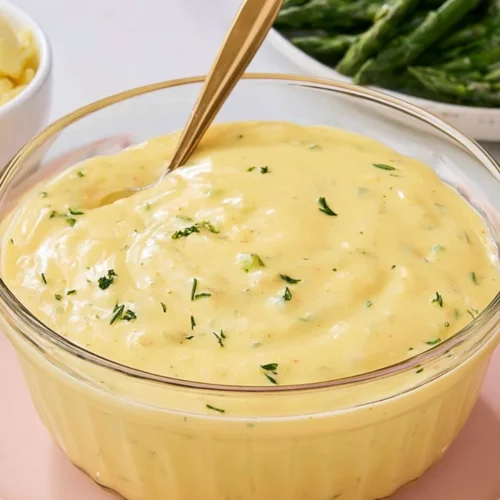
Best Creamy Hollandaise Sauce

Ingredients
- 4 large egg yolks room temperature
- 1/2 cup 1 stick unsalted butter, melted and hot
- 1 tablespoon fresh lemon juice plus more to taste
- 1/4 teaspoon salt
- Pinch of white pepper or cayenne pepper
- 1-2 tablespoons warm water if needed for consistency
Instructions
- Prepare the butter: Melt butter slowly over low heat in a small saucepan. Don’t allow it to brown. Skim any milk solids from the surface. Keep warm but not hot.
- Blend the yolks: Place egg yolks and lemon juice in a blender. Blend on medium speed for 30-60 seconds until the mixture is pale yellow and slightly thickened.
- Add the butter: With the blender running on low speed, slowly drizzle in the hot melted butter in a thin, steady stream. This should take about 1-2 minutes. Don’t add too quickly or the sauce may break.
- Season: Continue blending for 30 more seconds after all butter is added. Add salt and white pepper or cayenne. Blend to combine.
- Adjust consistency: If the sauce is too thick, blend in warm water, 1 tablespoon at a time, until desired consistency is reached. The sauce should coat the back of a spoon.
- Taste and adjust: Taste and add more lemon juice or salt as needed. The sauce should be well-seasoned with bright acidity balancing the richness.
- Keep warm: Transfer to a warm bowl and cover. Keep warm over (not in) a pan of warm water for up to 1 hour. Stir occasionally to prevent a skin from forming.
- To reheat: If the sauce cools too much, place the bowl over warm (not hot) water and whisk gently until warmed through. Add small amounts of warm water if needed to restore consistency.
- Serve immediately over eggs benedict, asparagus, fish, chicken, or vegetables. Store refrigerated leftovers for up to 2 days and reheat gently.