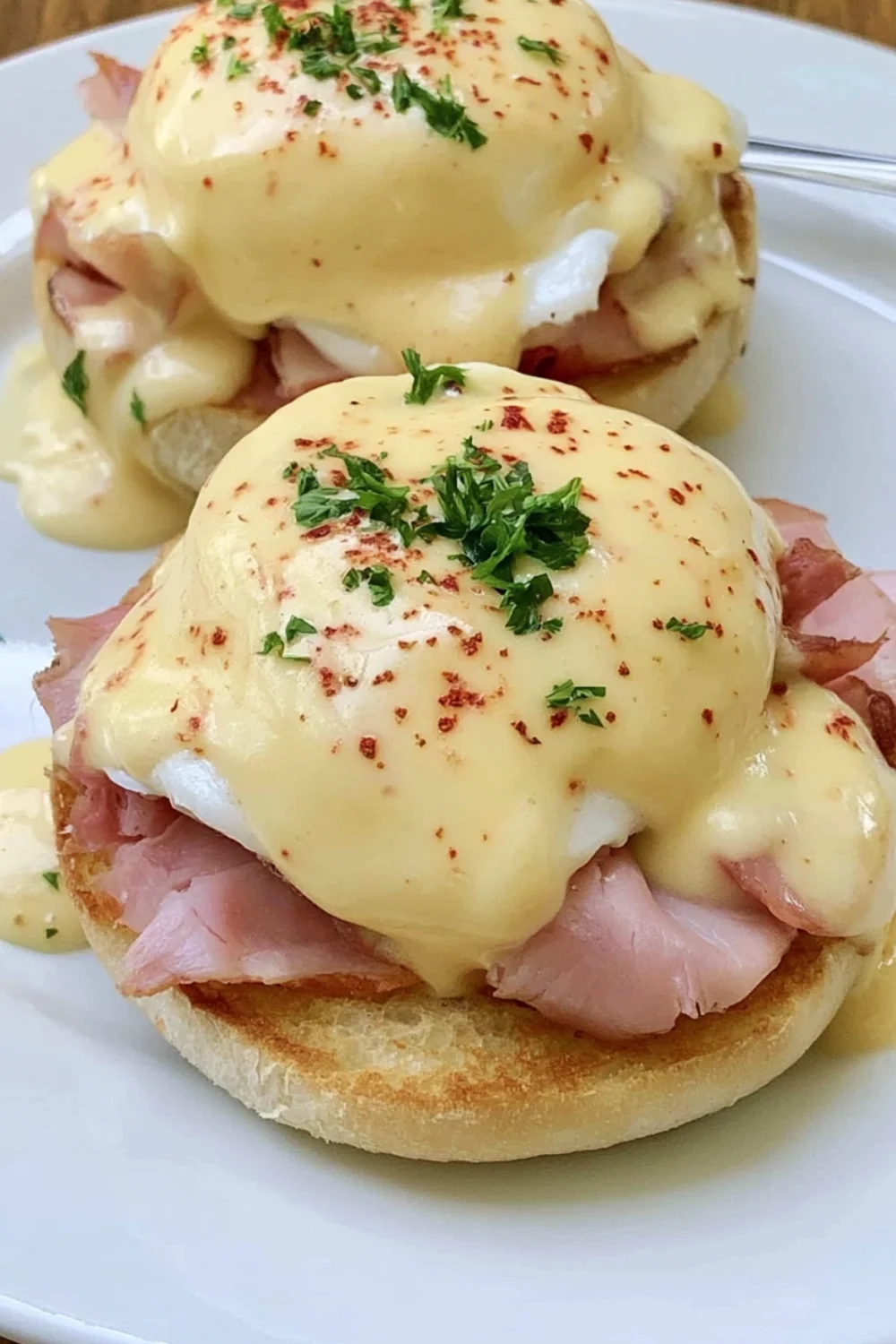
Transform your weekend brunch with this approachable eggs benedict recipe that delivers restaurant-quality results at home. With perfectly poached eggs, silky hollandaise sauce, and classic toppings, this elegant dish is easier to master than you might think.
Why This Is the Easiest Eggs Benedict You’ll Make
Simple Ingredients, Impressive Results
This recipe uses basic, readily available ingredients to create a dish that looks and tastes like it came from a high-end brunch restaurant. The simplicity of the component list belies the sophistication of the final presentation.
Each element—poached eggs, hollandaise sauce, English muffins, and ham—requires minimal preparation but combines to create something truly special. This makes it perfect for impressing guests without spending hours in the kitchen.
The technique-focused approach means success depends more on method than on expensive or exotic ingredients. This makes it accessible to cooks of all skill levels and budgets.
Perfect for Weekend Brunch at Home
Creating eggs benedict at home allows you to enjoy this classic dish without the wait times and expenses associated with restaurant brunch. You can make it exactly when you want it, tailored to your preferences.
The ritual of preparing eggs benedict makes weekend mornings feel special and celebratory. It transforms ordinary days into occasions worth marking with something beautiful and delicious.
Homemade versions often taste better than restaurant iterations, as you can control the quality of every ingredient and ensure everything is prepared fresh and served immediately.
Silky Sauce with Foolproof Method
The hollandaise sauce recipe uses a blender method that eliminates the traditional anxiety about breaking the sauce. This approach is nearly foolproof and produces consistently smooth, silky results.
The blender method requires less constant attention than traditional whisking over a double boiler, freeing you to focus on poaching the eggs perfectly. This makes the entire process more manageable and less stressful.
Even if your first attempt isn’t perfect, the sauce is forgiving and can often be rescued with simple techniques. This reliability makes it suitable for special occasions when you need guaranteed results.
Customizable with Ham, Spinach, or Salmon
While traditional eggs benedict features Canadian bacon or ham, this recipe serves as a foundation for numerous variations. Eggs Florentine substitutes spinach for the meat, creating a lighter, vegetarian-friendly option.
Eggs Royal replaces the ham with smoked salmon, adding luxurious flavor and elegant presentation. This variation is particularly popular for special occasions and holiday brunches.
The basic technique remains the same regardless of toppings, making it easy to experiment with different combinations. Mushrooms, asparagus, crab, or even roasted vegetables can create delicious variations.
Ingredients & Equipment
Eggs: Freshness and Poaching Tips
Fresh eggs are crucial for successful poaching, as the whites hold together better and create neater, more attractive results. Eggs that are a week old or less work best for poaching.
Check freshness by placing eggs in a bowl of water. Fresh eggs sink and lie flat on the bottom, while older eggs stand upright or float.
Room temperature eggs poach more evenly than cold eggs straight from the refrigerator. Remove eggs from the fridge 30-60 minutes before cooking for best results.
Have extra eggs on hand, as even experienced cooks occasionally break a yolk or get an imperfect poach. Practice makes perfect, and the learning process requires a few attempts.
English Muffins and Canadian Bacon/Ham
Quality English muffins provide the perfect base for eggs benedict. Look for muffins with good texture and flavor, preferably from a bakery or reputable brand.
Toast the muffins just before assembling to ensure they’re warm and slightly crisp. Cold or soggy muffins detract from the overall eating experience.
Canadian bacon is traditional and provides lean, mild flavor that doesn’t compete with the eggs and sauce. Regular ham, prosciutto, or even bacon can substitute based on preference and availability.
Warm the meat gently before assembling to ensure all components are at the optimal serving temperature. Cold meat can lower the overall temperature of the dish and affect the sauce consistency.
Butter, Lemon, and Egg Yolks for Hollandaise
High-quality butter makes a significant difference in hollandaise sauce flavor. Use unsalted butter so you can control the salt level precisely.
Fresh lemon juice is essential for the bright, acidic note that balances the richness of the egg yolks and butter. Bottled lemon juice lacks the vibrant flavor needed for excellent hollandaise.
Use fresh, high-quality egg yolks for the richest flavor and best emulsification. The yolks should be at room temperature for optimal blending with the butter.
The ratio of butter to egg yolks affects the sauce’s richness and stability. More butter creates a richer, more stable sauce, while fewer yolks make it lighter but potentially less stable.
Blender vs Saucepan Methods
The blender method is faster and more foolproof, making it ideal for beginners or busy cooks. It requires less constant attention and produces consistently smooth results.
Traditional saucepan methods using a double boiler provide more control over the cooking process and can create slightly different textures. This method is preferred by some purists.
Immersion blenders work well for smaller batches and allow you to make the sauce directly in the serving vessel. This can simplify cleanup and reduce the number of dishes.
Whichever method you choose, the key is gentle heat and gradual incorporation of the butter to create a stable emulsion that doesn’t break or curdle.
Step-by-Step Eggs Benedict
Prepare Hollandaise First and Keep Warm
Start with the hollandaise sauce, as it can be made ahead and kept warm while you poach the eggs. This timing ensures everything is ready to assemble at the optimal moment.
Combine egg yolks and lemon juice in the blender and blend until smooth and slightly thickened. This creates the base for the emulsion that will become your sauce.
With the blender running on low speed, slowly drizzle in the hot melted butter. The gradual addition is crucial for creating a stable emulsion that won’t break.
Season with salt and white pepper to taste, then transfer to a warm bowl and cover to keep warm. The sauce can be held for up to an hour if kept warm but not hot.
Toast Muffins and Warm Ham
Split the English muffins and toast them until golden brown and slightly crisp. This provides textural contrast to the soft eggs and creamy sauce.
Warm the Canadian bacon or ham in a skillet over medium heat until heated through and slightly browned. This enhances the flavor and ensures all components are at serving temperature.
Keep the toasted muffins warm in a low oven while you prepare the eggs. Cold muffins can cause the hollandaise to cool too quickly and affect the overall eating experience.
Arrange the warmed ham on the toasted muffin halves in preparation for final assembly. This organization makes the final assembly quick and efficient.
Poach Eggs to Perfect Doneness
Bring a large pot of water to a gentle simmer with a splash of white vinegar. The water should be barely bubbling, not at a rolling boil, which can break up the eggs.
Crack each egg into a small cup or ramekin before adding to the water. This allows you to check for shell fragments and add the eggs gently to the water.
Create a gentle whirlpool in the water with a spoon, then slide the egg into the center. The swirling water helps the white wrap around the yolk for a neater shape.
Cook for 3-4 minutes for runny yolks, or longer if you prefer more set yolks. The exact timing depends on the size of the eggs and your desired doneness.
Assemble and Serve Immediately
Remove poached eggs from the water with a slotted spoon and drain briefly on paper towels. This removes excess water that could dilute the hollandaise sauce.
Place the poached eggs on top of the ham-topped muffin halves, then immediately spoon warm hollandaise sauce over the top. The heat from the eggs helps keep the sauce at the right consistency.
Garnish with a sprinkle of paprika, chives, or fresh herbs for color and flavor. Serve immediately while everything is warm and the sauce is at its peak.
Provide extra hollandaise sauce on the side for those who want additional richness. It’s better to have too much sauce than too little for this indulgent dish.
Poaching Eggs Like a Pro
Water Temperature and Vinegar Trick
The water should be at a gentle simmer with small bubbles rising from the bottom. Boiling water is too aggressive and will break up the delicate egg whites.
Adding a splash of white vinegar to the water helps the egg whites coagulate more quickly, creating neater, more compact poached eggs. The vinegar flavor doesn’t transfer to the eggs.
Maintain the water temperature throughout the poaching process by adjusting the heat as needed. Water that’s too cool won’t cook the eggs properly, while water that’s too hot will break them up.
Use enough water to allow the eggs to float freely without touching the bottom of the pot. This ensures even cooking and prevents sticking.
Swirling Water and Sliding Eggs In
Creating a gentle whirlpool in the water before adding the eggs helps the whites wrap around the yolks for a neater, more professional appearance. Use a large spoon to create the swirl.
Slide the eggs into the center of the swirl from as close to the water surface as possible. Dropping them from too high can cause them to break apart on impact.
Don’t overcrowd the pot—poach eggs in batches if necessary to give each one adequate space. Overcrowding can cause the eggs to stick together or cook unevenly.
Work efficiently but calmly, as the process becomes easier with practice. The first egg might not be perfect, but you’ll quickly develop a rhythm.
Timing for Runny vs Set Yolks
For classic eggs benedict with runny yolks, poach for 3-4 minutes. The whites should be completely set while the yolk remains liquid and golden.
For medium-set yolks that are slightly thickened but still creamy, poach for 4-5 minutes. This is a good compromise for those who find completely runny yolks too intense.
For fully set yolks, poach for 5-6 minutes or until the yolk is cooked through to your preference. While not traditional for eggs benedict, this accommodates personal preferences.
The exact timing depends on egg size, water temperature, and altitude. Practice with your specific setup to determine the perfect timing for your preferences.
Draining and Trimming Ragged Edges
Remove poached eggs with a slotted spoon and drain briefly on paper towels or a clean kitchen towel. This removes excess water that could dilute the hollandaise sauce.
If the eggs have ragged edges or wispy whites, trim them carefully with kitchen shears or a sharp knife. This creates a neater, more professional appearance.
Some cooks prefer to poach eggs ahead and store them in cold water, then reheat briefly in hot water before serving. This method works well for entertaining but requires careful timing.
Handle the eggs gently throughout the process to prevent breaking the yolks. Even with careful handling, occasional breakage is normal and shouldn’t discourage you.
Variations, Serving & FAQs
Eggs Florentine, Royal, and Other Twists
Eggs Florentine substitutes saut√√√√ spinach for the ham, creating a lighter, vegetarian-friendly version. The spinach should be wilted and well-drained to prevent excess moisture.
Eggs Royal features smoked salmon instead of ham, adding luxurious flavor and elegant presentation. This variation is particularly popular for special occasions and holiday brunches.
Eggs Blackstone replaces the ham with crispy bacon and adds tomato slices for additional flavor and color. This creates a heartier, more substantial variation.
Experiment with different combinations to find your favorites. The basic technique remains the same regardless of toppings, making it easy to try new variations.
Best Sides: Fruit, Salad, Roasted Potatoes
Fresh fruit provides bright, acidic contrast to the rich eggs and sauce. Berries, melon, or citrus segments work particularly well and add color to the plate.
A light green salad with vinaigrette dressing cuts through the richness and adds nutritional balance. Keep the dressing light to avoid overwhelming the delicate flavors.
Roasted potatoes or hash browns provide additional carbohydrates for hearty appetites. The crispy texture contrasts nicely with the soft eggs and creamy sauce.
Keep sides simple and light to allow the eggs benedict to remain the star of the show. Overly complex or heavily seasoned sides can compete with the main dish.
Making Hollandaise Ahead and Reheating
Hollandaise sauce can be made up to an hour ahead and kept warm in a bowl set over (not in) warm water. This allows you to focus on poaching the eggs perfectly.
To reheat cooled hollandaise, place it in a bowl over simmering water and whisk gently until warmed through. Don’t overheat, as this can cause the sauce to break.
Small amounts of warm water can be whisked in to restore consistency if the sauce becomes too thick during holding. This is normal and doesn’t affect the flavor.
Make extra sauce to account for any losses during reheating and to ensure everyone has plenty. It’s better to have leftover hollandaise than to run short.
Common Mistakes and How to Fix Them
Broken hollandaise can often be rescued by starting with a fresh egg yolk and slowly whisking in the broken sauce. This creates a new emulsion that incorporates the broken sauce.
Overcooked eggs with hard yolks result from water that’s too hot or cooking time that’s too long. Adjust temperature and timing for better results next time.
Soggy muffins occur when the hollandaise is too cool or the muffins aren’t toasted properly. Ensure all components are at the right temperature and texture for best results.
Watery poached eggs result from insufficient draining or water that’s too cool. Drain eggs well and maintain proper water temperature throughout cooking.

. Best Easy Eggs Benedict

Ingredients
- 8 large eggs very fresh
- 4 English muffins split
- 8 slices Canadian bacon or ham
- 2 tablespoons white vinegar
- Fresh chives or parsley chopped (for garnish)
- Paprika for garnish
For the Hollandaise Sauce:
- 4 large egg yolks
- 1/2 cup unsalted butter melted and hot
- 1 tablespoon fresh lemon juice
- 1/4 teaspoon salt
- Pinch of white pepper or cayenne
- 1 tablespoon warm water if needed
Instructions
- Make the hollandaise: Place egg yolks and lemon juice in a blender. Blend on medium speed for 30-60 seconds until pale yellow and slightly thickened.
- With the blender running on low speed, slowly drizzle in the hot melted butter in a thin, steady stream over 1-2 minutes. Continue blending for 30 more seconds.
- Season with salt and white pepper. Taste and adjust seasonings. Transfer to a warm bowl, cover, and keep warm over (not in) warm water.
- Prepare the components: Toast English muffin halves until golden brown. Keep warm in a 200-degree Fahrenheit oven.
- Warm Canadian bacon or ham in a skillet over medium heat until heated through and slightly browned, about 2-3 minutes per side.
- Poach the eggs: Fill a large pot with 3-4 inches of water. Add white vinegar and bring to a gentle simmer (small bubbles, not rolling boil).
- Crack each egg into a small cup or ramekin. Create a gentle whirlpool in the water with a spoon, then slide the egg into the center.
- Cook for 3-4 minutes for runny yolks, or 4-5 minutes for medium-set yolks. Remove with a slotted spoon and drain briefly on paper towels.
- Assemble: Place 2 slices of Canadian bacon on each toasted English muffin half. Top with a poached egg, then spoon warm hollandaise sauce generously over the top.
- Garnish with chopped chives, parsley, and a sprinkle of paprika. Serve immediately while warm.